Making Insurance Simple, One Insight at a Time.


What Is PHCS Insurance? Ultimate Guide to the PPO Network
PHCS stands for Private Healthcare Systems, one of the largest PPO networks in the US. Learn what it covers, how to find providers, and where to send claims.
Quick Summary
PHCS insurance, which stands for Private Healthcare Systems, is not a standalone insurance company but rather a Preferred Provider Organization (PPO) network of doctors, hospitals and other providers in the United States. Many different health insurance carriers partner with this network to give their members access to a large list of contracted doctors, hospitals, and specialists at discounted rates. Whether you want to find in-network providers or understand how your health plan works alongside this network, this guide explains what PHCS is, who pays your claims, and what to check before you see a doctor.
Table of Contents
Table of Contents
What is PHCS Insurance?
If you see a specific logo on your health card, you might find yourself searching for the PHCS insurance full form. It stands for Private Healthcare Systems. A common misconception is that this entity is a traditional health insurance carrier. In reality, it is a PPO network. When people ask what type of plan is PHCS, the answer is that it is a Preferred Provider Organization network that partners with various health insurance companies to offer discounted medical services to policyholders.
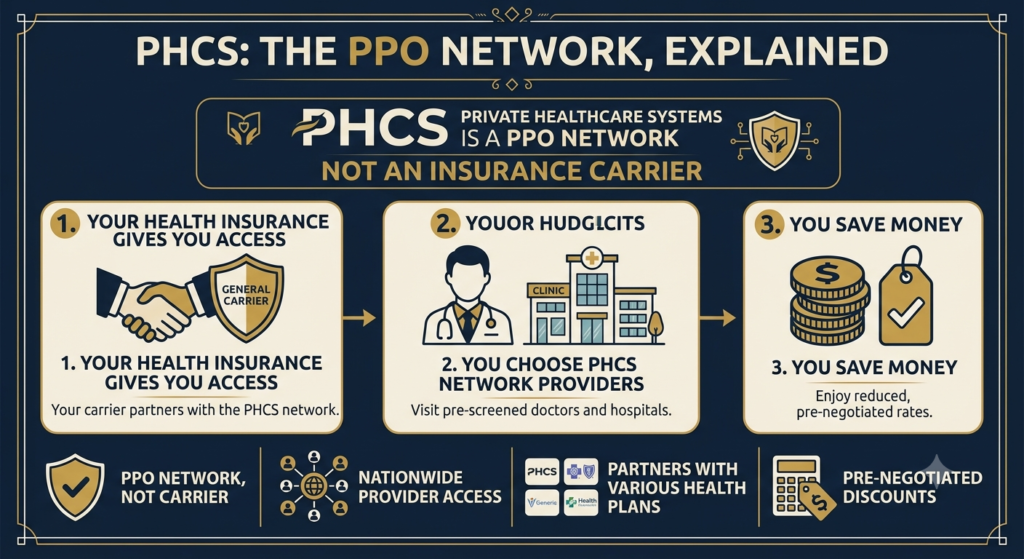
It is important to know who actually provides your coverage. Because it is a network rather than an insurer, you get your actual coverage through an employer-sponsored health plan or an independent insurance carrier. These carriers essentially rent the network so they can offer you a wide array of providers without having to build their own nationwide list of doctors from scratch. In other words, you do not buy PHCS directly. You choose a health plan, and that plan may use the PHCS network. If a plan or card looks unfamiliar, our guide Balance Care Insurance (2026): What It Really Is and How to Verify It shows how to check what you actually have.
How Does PHCS Insurance Work?
So, exactly how does this work? When you visit a doctor or facility that is part of the network, your medical bills are calculated at a specially negotiated, discounted rate. A PPO network gives you more flexibility. Unlike HMO plans that restrict you to a tight local network and require a primary care doctor’s referral to see a specialist, a PPO allows you to visit any specialist directly.
Staying in-network usually means lower out-of-pocket costs, and a PPO typically lets you see specialists without a referral. The exact rules depend on your health plan. You cannot enroll in PHCS itself. You enroll in a health plan, usually through an employer, and that plan decides which networks you can use.
The PHCS Insurance Network Explained
The size and scope of this network prompt many questions about who accepts this insurance and what states use the PHCS network. Claritev, the company behind PHCS, describes its networks as nationwide, and its 2025 company announcement cites 1.4 million contracted providers across all of its networks. Coverage varies by area, so always check whether your own doctors participate.
One of the most frequent questions is whether PHCS and MultiPlan are the same thing. Both are provider networks owned by the same company. That company was called MultiPlan until February 2025, when it changed its name to Claritev. Claritev says it does not offer insurance, administer benefit plans or pay claims to network providers. Health plans and benefit administrators use these networks to give members more choice of providers.
PHCS is not an insurance company, and it is not the same as Cigna, Aetna or any other insurer. Whether a particular plan uses the PHCS network is something only that plan can tell you.
PHCS Insurance Claims and Billing
Managing your health care costs requires understanding PHCS insurance billing statements. If you go to an in-network provider, the billing office will typically submit the claim directly to your insurance company. When figuring out how to file a claim with PHCS insurance, remember that your actual insurance carrier processes the payment, not the network. The network simply dictates the discounted rate applied to the service.
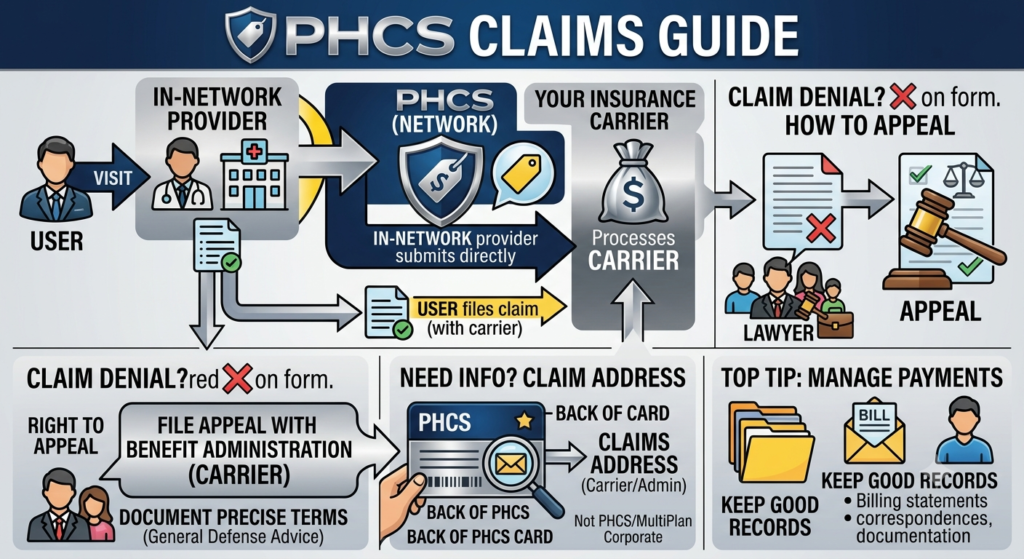
If you ever need to find the PHCS insurance claims address, you should always look at the back of your specific PHCS insurance card. The claims address belongs to your health insurance carrier or administrator, not the MultiPlan corporate office.
Sometimes things do not go smoothly. You might have to navigate how to appeal a PHCS insurance claim denial. When facing a denial, you must file your appeal with the company that administers your benefits. Most health plans must offer an appeal process. Keep your denial letter, medical records and bills, and ask your plan for its appeal steps. Our 2026 Health Insurance Guide: Common Coverage Mistakes to Avoid explains the internal appeal and external review process.
Reviews and Comparisons of PHCS Insurance
Before choosing a health plan, many people ask whether PHCS is a good network. The network is only part of the picture, because your plan decides what is covered and what you pay. A larger network gives you more choices, but the most useful test is simple: check whether your own doctors and hospitals participate.
Confusion can happen because the network does not pay claims. When a bill looks wrong, contact your health plan first. To compare options, ask each plan which networks it uses, search those networks for your doctors, and compare the plan’s deductible and out-of-pocket maximum, not just the network.
PHCS Insurance Resources and Support
To find a provider, use the Find a Provider tool at providersearch.multiplan.com. Claritev says it covers providers that participate in its networks, and that listings are updated daily but may be incomplete. You can also call the number on your member ID card. Always confirm with the doctor’s office that they accept your specific plan before your visit.
Frequently Asked Questions (FAQs)
What is PHCS?
It stands for Private Healthcare Systems. It is a large Preferred Provider Organization (PPO) network of medical professionals and facilities that have agreed to offer their services at discounted rates to members of participating health plans.
How do I find a PHCS provider?
You can find doctors and hospitals by using Claritev’s (formerly MultiPlan) Find a Provider tool at providersearch.multiplan.com, or by calling the specific PHCS insurance phone number listed on the back of your member ID card.
Is PHCS a carrier?
No. It is a network of healthcare providers. Your actual health insurance benefits and claims are managed by a separate insurance company or your employer’s health plan administrator.
How do I choose the best health insurance?
There is no single best insurer, because it depends on where you live, which doctors you use and your budget. Compare the plan’s premium, deductible, out-of-pocket maximum and network instead of relying on a ranking. HealthCare.gov lists the plans available in your state.
Understanding your network is just one piece of navigating health coverage well. For the complete rundown on plan types, costs, and provider networks, read our 2026 Health Insurance Guide: Common Coverage Mistakes to Avoid.
Conclusion
Understanding the role of your provider network makes health coverage easier to use. PHCS is a PPO network that health plans use to offer members more choice of providers. By knowing how to utilize the provider portal, correctly reading your insurance card, and understanding the difference between your network and your carrier, you can take full control of your healthcare journey. Always verify your doctor’s network status before your visit to ensure you receive the best possible discounts and avoid unexpected medical bills.
Disclaimer: The content on Insuria Insights is for general informational purposes only and does not constitute professional insurance, medical, or legal advice. Insuria Insights is not affiliated with PHCS or Claritev (formerly MultiPlan). Networks, plans and benefits vary and change often, so confirm details with your health plan or benefits administrator before making coverage decisions.