Making Insurance Simple, One Insight at a Time.

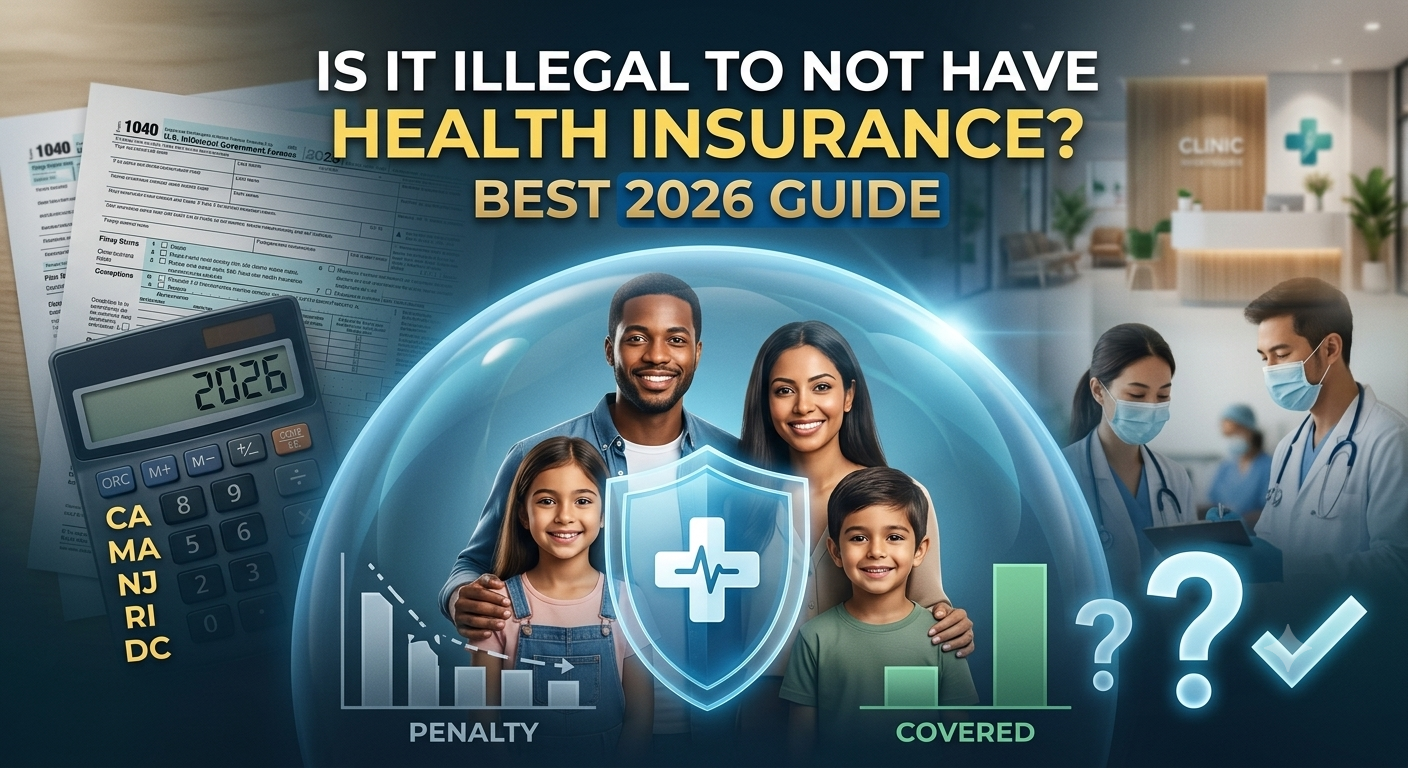
Is It Illegal to Not Have Health Insurance? Best 2026 Guide
Find out if it is illegal to not have health insurance in 2026. Learn about state penalties, ACA exemptions, and affordable coverage options for your family.
Quick Summary
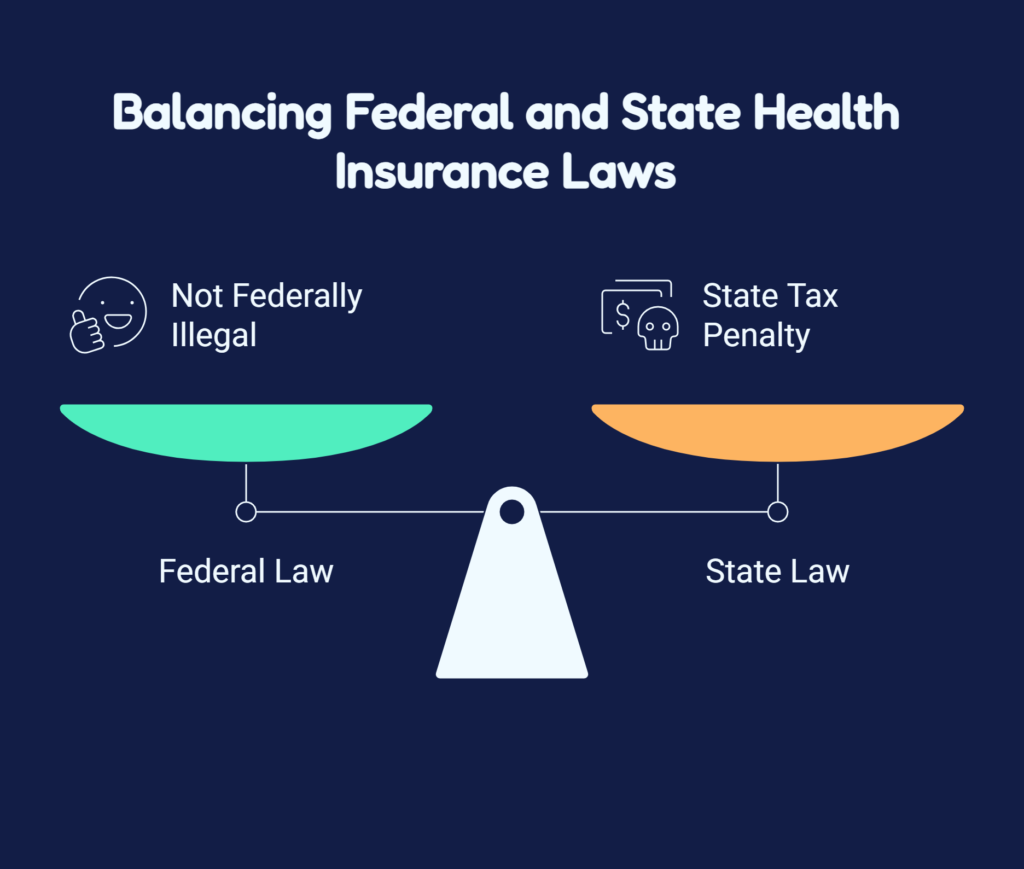
If you are wondering, “is it illegal to not have health insurance?”, the short answer is no at the federal level, but a few states do require coverage. Since 2019, the federal tax penalty for being uninsured has been $0. However, living without coverage carries serious financial risks if you need medical care.
Several states have their own individual mandates. California, Massachusetts, New Jersey, Rhode Island and Washington, D.C. charge a state tax penalty if you are uninsured and not exempt, and Vermont has a mandate without a penalty. This guide covers how these penalties work, the rules for keeping dependents on your plan, and affordable ways to get coverage.
Table of Contents
Table of Contents
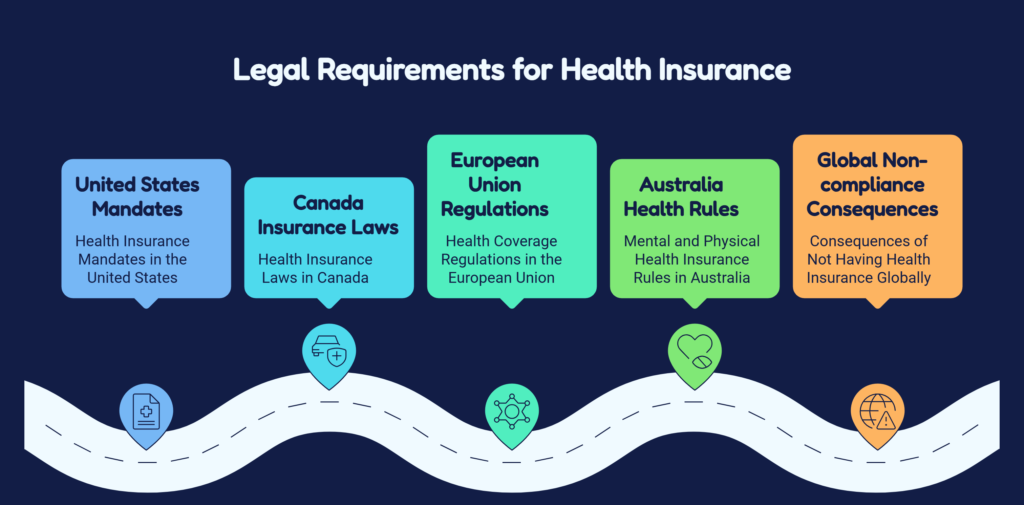
1. Legal Requirements for Health Insurance in the US and Globally
Health Insurance Mandates in the United States
Many Americans ask whether health insurance is mandatory in the US. At the federal level, the Affordable Care Act (ACA) still exists, but the individual mandate penalty was reduced to $0 starting in 2019. It is not a federal crime to lack coverage, and the IRS will not charge you a penalty on your federal tax return. However, a few states enforce their own mandates, as explained below.
Legal Requirements in Different Countries
For comparison, here is how a few other countries handle coverage. These are general descriptions, and the details differ by country.
Canada: Provincial public health insurance plans cover medically necessary hospital and physician services for eligible residents.
European Union: Health systems differ by country. Many guarantee coverage through public services or mandatory insurance contributions.
Australia: Medicare provides public coverage. The government also charges a Medicare Levy Surcharge to some higher-income earners who do not hold private hospital cover.
Where there is no universal coverage: the main consequence of going uninsured is the risk of large, unexpected medical bills.
What happens in the US if you have no health insurance? Under a federal law called EMTALA, hospital emergency departments must screen and stabilize you in an emergency, but you will still be billed for the care, which can lead to serious debt.
2. Understanding Health Insurance Penalties and Exemptions
Penalties for Not Having Health Insurance in the U.S.
What is the penalty for not having health insurance? There is no federal penalty, but state penalties can be significant. Here is how the states with mandates compare.
States with penalties: California, Massachusetts, New Jersey, Rhode Island and Washington, D.C. require coverage and charge a state tax penalty if you are uninsured and do not qualify for an exemption. In California, for example, the penalty for the 2025 tax year is the higher of $950 per adult and $475 per child, or 2.5% of your household income above the filing threshold, according to the California Franchise Tax Board. The other states calculate their penalties differently, so check your state tax agency for the current rules. Vermont has a mandate but does not charge a penalty.
States without penalties: Most other states, including New York, Minnesota, Texas, Illinois, Florida, Indiana and Michigan, do not charge a tax penalty for going uninsured.
How the Affordable Care Act Influences Insurance Penalties
Why is there no federal penalty? The Tax Cuts and Jobs Act of 2017 reduced the federal ACA penalty to $0 starting in 2019. That is why you will not see an IRS penalty today.
Exemptions from Health Insurance Mandates
You can legally avoid health insurance penalties if you qualify for an exemption. Common exemptions include:
- Your income is below the state tax filing threshold.
- The lowest cost plan available to you exceeds a certain percentage of your household income (making it legally “unaffordable”).
- You had a short coverage gap. California exempts a gap of three consecutive months or less, and the Massachusetts Department of Revenue does not penalize a gap of 63 days or less. Other states have their own rules.
3. Securing Coverage for Dependents and Children
Is it Illegal to Not Have Health Insurance for My Child?
It is not federally illegal, but it is financially risky. In states with individual mandates, the penalty can apply to uninsured dependents as well. In California, for example, the flat penalty for the 2025 tax year is $475 per uninsured child.
Many parents ask, “should I have health insurance for my child?” and “what happens if my kids don’t have health insurance?” Children are prone to accidents and need regular pediatric care. Without coverage, routine checkups, vaccinations, and emergency visits must be paid entirely out of pocket. Can I take my child to the doctor without insurance? Yes, doctors will accept self-pay patients, but the fees can be very high.
How Long Can Dependents Stay on Your Plan?
Do I have to keep my child on my health insurance until they are 26? You are not forced to, but you have the right to. Under the ACA, plans that offer dependent coverage must let children stay on a parent’s plan until they turn 26. Coverage usually ends on the 26th birthday or at the end of that birth month, depending on the plan, so check your plan documents.
Can I put a child that isn’t mine on my health insurance? Generally, you can only add biological children, adopted children, stepchildren, or children for whom you have court appointed legal guardianship.
4. How to Obtain Health Insurance if You’re Uninsured
Options for Health Insurance Without Employer Coverage
If you lose your job or your employer does not offer benefits, you still have options. A good place to start is the official marketplace at HealthCare.gov. Open enrollment has set dates each year, but losing job-based coverage and some other life events can qualify you for a special enrollment period.
Eligibility for Government-Sponsored Insurance Programs
How do people with low incomes get coverage? Low-income individuals and families may qualify for Medicaid or the Children’s Health Insurance Program (CHIP). Eligibility rules vary by state.
Guide to Selecting Private Health Insurance
If you earn too much for Medicaid, you can buy a plan on the ACA marketplace. Premium tax credits can lower the monthly cost based on your income, and the amount depends on the rules in effect for that year. Use HealthCare.gov to see the plans and prices available for your household.
Special Health Considerations
Can a person with diabetes get health insurance? Yes. Under the ACA, insurers selling marketplace and other ACA-compliant plans cannot deny you coverage or charge you more because of a pre-existing condition such as diabetes. Short-term plans and some other non-ACA plans can still turn you down, so check what kind of plan you are buying.
If a plan is offered to you outside the ACA marketplace at a very low price, check it carefully. Our guide LifeX Health Insurance: Critical 2026 Risks & Hidden Plan Rules shows why state regulators have warned consumers about one such plan.
5. Frequently Asked Questions (FAQs) About Going Uninsured
Will the IRS penalize for no health insurance?
No. There is no federal tax penalty for going uninsured in 2026. However, if you live in CA, MA, NJ, RI, or DC, your state tax department will penalize you.
Is it okay to live without health insurance?
Is it possible not to have health insurance in the USA? Yes, it is possible and legal in most states, but it is highly advised against. A single unexpected injury or illness can result in tens of thousands of dollars in medical debt.
Why is there a penalty for not having health insurance in some states?
State mandates exist to keep healthcare markets stable. When healthy people buy insurance, their premiums help offset the costs of caring for sick individuals. Without a mandate, only sick people buy insurance, which causes premiums to skyrocket for everyone.
Is there a penalty for not having health insurance in 2026?
Only if you live in California, Massachusetts, New Jersey, Rhode Island, or Washington D.C.
Is it illegal to not have health insurance in the United States in 2026?
No, not under federal law. The federal tax penalty was set to $0 starting in 2019. California, Massachusetts, New Jersey, Rhode Island and Washington, D.C. still require coverage and charge state tax penalties, and Vermont has a mandate without a penalty.
Is it illegal to not have health insurance for my child?
It is not a federal crime. In states with individual mandates, parents can owe a state tax penalty for an uninsured child. In California, for example, the flat amount for the 2025 tax year is $475 per uninsured child.
Will the IRS penalize you if you live in a state with a mandate?
No. The IRS only handles federal tax rules and no longer collects a penalty for lacking coverage. In a state with a mandate, your state tax agency, such as the California Franchise Tax Board, collects the penalty.
Can you go to jail for not having health insurance?
No. Lacking coverage is a civil tax matter, not a crime. You cannot be arrested or face criminal charges for going uninsured in any state.
Is it illegal to not have health insurance for a short gap between jobs?
No. Short coverage gaps are generally exempt from state penalties, but the rules differ. California exempts a gap of three consecutive months or less, and Massachusetts does not penalize a gap of 63 days or less.
Is it illegal to not have health insurance if you are unemployed?
No, it is not a crime. If you are unemployed, you may qualify for an exemption or for Medicaid, depending on your income and your state.
Which states charge a penalty for not having health insurance?
The states that charge a state tax penalty are California, Massachusetts, New Jersey, Rhode Island and Washington, D.C. Vermont has a mandate with no penalty. States such as Texas, Florida, New York, Illinois, Pennsylvania and Michigan do not charge one.
What happens if you go to the hospital without health insurance?
Under federal law (EMTALA), emergency rooms must screen and stabilize emergency patients regardless of insurance status. You will still be responsible for the bill after treatment, and in a state with a mandate you may also owe a state tax penalty.
How is a state penalty calculated?
Each state sets its own formula. California, for example, charges the higher of a flat amount per adult and child or 2.5% of household income above the filing threshold. Massachusetts bases its penalty on income and the cost of coverage available through the state Health Connector, and it applies only to adults. Check your state tax agency for current figures.
State penalties are only one part of the bigger picture on why coverage matters. Our 2026 Health Insurance Guide: Common Coverage Mistakes to Avoid walks through the full landscape, from legal requirements to choosing the right plan.
6. Conclusion
The federal penalty is gone, but going without health insurance is still a serious financial risk. A few states charge a tax penalty, and the cost of emergency care can be high even where there is no penalty. Whether you use Medicaid, the ACA marketplace or an employer plan, review your options and make sure your family is covered.
Disclaimer: This article is for general educational purposes only and is not legal, tax or insurance advice. State laws and penalties change, so confirm the current rules with your state tax agency or a licensed professional.