Making Insurance Simple, One Insight at a Time.


LifeX Health Insurance: Critical 2026 Risks & Hidden Plan Rules
What LifeX health insurance plans are, what state regulators have said about them, and what to check before you enroll in any plan sold this way.
Quick Summary
LifeX health insurance refers to health plans marketed by LifeX Research Corporation, which signs people up as “Research Associates.” LifeX is not a traditional insurance company. In November 2025 the Maine Bureau of Insurance said the LifeX plan is not a major medical plan it regulates, and in February 2026 Tennessee officials said LifeX is not authorized to sell major medical health insurance there. Group plans of this type can fall outside many Affordable Care Act (ACA) protections, so they may require health screening or exclude pre-existing conditions. This page is for information only. We do not sell or endorse any plan.
Table of Contents
Table of Contents
1. What is LifeX Health Insurance?
If you are exploring the healthcare market, you may have seen advertisements or forum discussions about LifeX insurance. LifeX Research Corporation is not a traditional insurance carrier. The Maine Bureau of Insurance describes it as offering coverage by making consumers LifeX employees, rather than by selling a state-licensed major medical policy.
The Research Associate Model
According to the lawsuit described in section 3, LifeX recruits people aged 18 to 40 as paid “Research Associates” and tells them they can buy benefit plans as employees. The ID cards described in that complaint name a company called Benefit Health Plan Inc. as the plan administrator. Maine regulators say the consumers they heard about were reached after searching online for health insurance.
Key Distinctions from Major Medical
Conventional health insurance companies underwrite their own risk and are licensed and supervised by state insurance departments. A self-funded group plan is different: the plan sponsor pays claims from its own funds, and these plans are generally governed by federal law (ERISA) instead of state insurance law. That can mean fewer state-level consumer protections.
2. The Mechanics of Self-Funded Group Health Plans
To grasp how a program like LifeX operates, you must look at the legal framework governing self-funded health plans.
The Role of ERISA
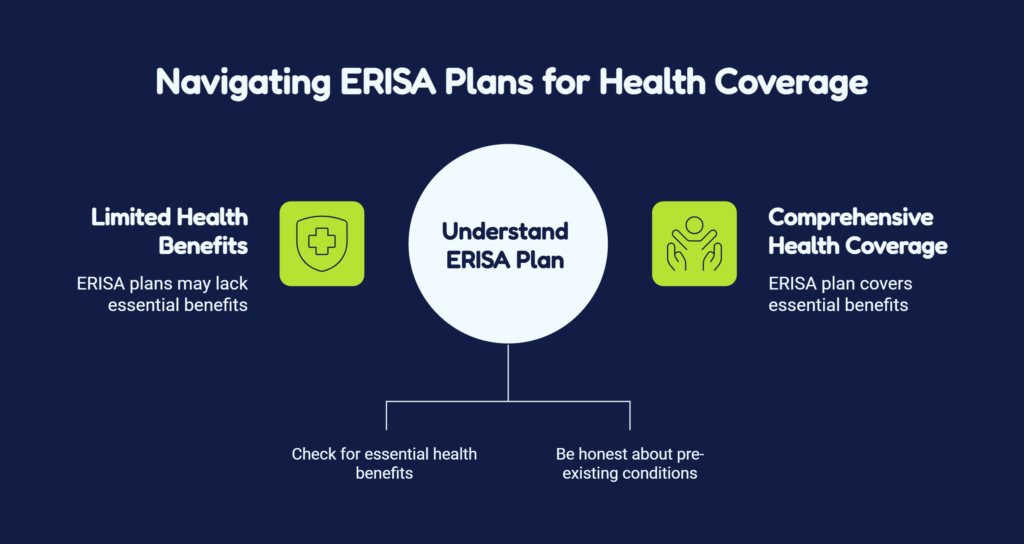
According to the U.S. Department of Labor, the Employee Retirement Income Security Act (ERISA) is a federal law that sets minimum standards for most voluntarily established pension and health plans in private industry. Self-funded employer plans generally fall under it. Because ERISA is a federal statute, it preempts many state insurance laws. This means an ERISA plan does not necessarily have to offer the “Essential Health Benefits” mandated by the ACA, such as comprehensive maternity care or mental health coverage, depending on how the specific plan is drafted. These rules were written for employer plans that cover real employees. Maine regulators said they were concerned about a plan offered to consumers who had searched online for individual health insurance.
Medical Underwriting and Pre-existing Conditions
One of the most critical aspects of joining an alternative group plan is the application process. Traditional ACA plans guarantee issue coverage, meaning you cannot be denied for a pre-existing condition. Some alternative group plans instead require a detailed health assessment before enrollment. If you misrepresent your medical history or fail to disclose a pre-existing condition, the plan administrator may refuse to cover associated claims.
3. What Regulators and Courts Have Said
Several state agencies and a federal court filing have raised concerns about LifeX. Here is what each source says, with dates.
Maine Bureau of Insurance (November 2025)
On November 24, 2025, the Maine Bureau of Insurance warned that salespeople were contacting consumers who had searched online for health insurance and offering coverage by making them LifeX employees. The Bureau said the LifeX plan is not a major medical plan that it regulates, and that no licensed major medical insurer covers Maine residents through LifeX. It also said some consumers were told a well-known insurer would issue the plan, and that two related companies, Benefit Health Plan, Inc. and Benefit Logistics Captive Insurance Company, are not licensed to sell insurance in Maine.
Tennessee (February 2026)
On February 24, 2026, the Tennessee Department of Commerce & Insurance and the state Attorney General’s office issued a joint notice. According to news coverage of that notice, officials said LifeX is not authorized to sell major medical health insurance in Tennessee, and that consumers reported providers declining claims and member ID cards that did not work.
Lawsuit by Anthem and the Blue Cross Blue Shield Association
In June 2025, Elevance Health (formerly Anthem) and the Blue Cross and Blue Shield Association sued LifeX Research Corporation and related parties in federal court in Georgia. The complaint alleges that LifeX issued ID cards carrying Anthem and Blue Cross Blue Shield marks even though it had no contract or affiliation with them. The court granted a temporary restraining order in July 2025 and a preliminary injunction later that month. The case was still open on the latest public docket we could review (December 2025). A complaint contains allegations, not findings, so read it that way.
Consumer reviews
Online reviews of LifeX are mixed, and we cannot verify them, so we do not rely on them here. Given the notices above, treat any promise of very low rates with caution until you have confirmed in writing who is responsible for paying your claims.
4. Comparing Traditional ACA Coverage vs. Alternative Models
When deciding how to protect your health and finances, weighing the pros and cons of traditional insurance against alternative models is essential.
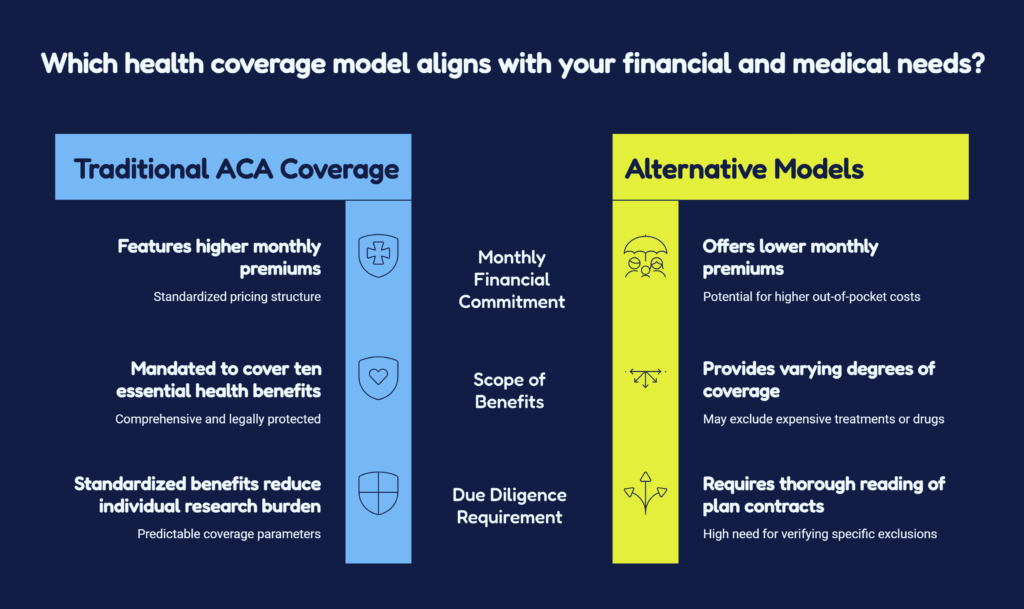
- Cost: Alternative plans may advertise lower monthly premiums, but you must factor in potential out-of-pocket maximums and specific exclusions.
- Coverage Scope: ACA plans cover ten essential health benefits by law. Self-funded group plans offer varying degrees of coverage and may exclude certain expensive treatments or prescription drugs.
Red flags to check before you enroll
The Maine Bureau of Insurance listed these warning signs when someone sells you health coverage:
- The caller will not name the insurance company.
- The caller says they are an agent but will not give a producer license number.
- You cannot review the plan details before you buy.
- You are pushed to buy right away for a low rate.
- You are required to join an association or pay an application fee.
Before you share personal or financial information, confirm the seller’s license with your state insurance department. To see how to check what a plan really is, read our Balance Care Insurance (2026): What It Really Is and How to Verify It. To understand coverage rules where you live, see Is It Illegal to Not Have Health Insurance? Best 2026 Guide.
5. Frequently Asked Questions (FAQs)
Is LifeX a traditional insurance company?
No. Maine regulators said the LifeX plan is not major medical insurance that they regulate, and Tennessee officials said LifeX is not authorized to sell major medical health insurance there.
Will alternative group plans cover my pre-existing conditions?
It depends entirely on the specific plan document. Many self-funded alternative plans require medical underwriting and may deny enrollment or exclude coverage for pre-existing conditions, unlike standard ACA plans.
What is a third-party administrator (TPA)?
A TPA is an organization that processes insurance claims or certain aspects of employee benefit plans for a separate entity. Self-funded plans often hire TPAs to handle the daily administrative tasks of managing the network and paying providers.
Why do some state insurance bureaus issue warnings about these plans?
Maine and Tennessee officials have said that LifeX is not licensed to sell major medical insurance in their states, and Tennessee consumers reported denied claims and ID cards that did not work. If a plan is not state-licensed insurance, the state insurance department may not be able to help with a dispute.
Can I use my current doctor with a self-funded group plan?
You will need to check the specific network utilized by the plan’s administrator. Many alternative plans contract with large national PPO networks, but it is your responsibility to verify that your preferred providers are in-network before seeking treatment.
How can I check whether a health plan is licensed?
Ask for the name of the insurance company and the seller’s producer license number, then confirm both with your state insurance department. You can find yours on the NAIC website’s state insurance departments page.
Alternative plans like this one come with trade-offs worth understanding in context. Our 2026 Health Insurance Guide: Common Coverage Mistakes to Avoid covers how these options compare to traditional coverage.
6. Conclusion
Exploring options like a LifeX health insurance group plan shows how complicated the American healthcare market has become. Plans sold this way may advertise lower premiums, but they can shift significant risk onto you, and state regulators have warned that LifeX is not licensed major medical insurance. Before you leave a traditional, state-regulated health insurance policy, confirm in writing who pays your claims, review the plan documents, understand the limits on pre-existing conditions, and check the seller’s license with your state insurance department.
(Disclaimer: This blog post is designed exclusively for educational and informational purposes to help you understand the broader US insurance landscape. We do not sell health insurance policies, nor do we provide direct financial or legal counsel. Insuria Insights is not affiliated with LifeX Research Corporation. Always consult with a licensed insurance broker or healthcare advisor before making changes to your medical coverage.)