Making Insurance Simple, One Insight at a Time.


Disability Insurance Lawyer: Guide to Claims & Appeals
Denied your benefits? Learn how a disability insurance lawyer can help you navigate complex appeals, protect your legal rights, and secure your claim.
Quick Summary
Navigating the complexities of a short-term or long-term disability claim can be an overwhelming experience, especially when dealing with a severe health condition. Securely obtaining your benefits often requires a deep understanding of policy guidelines, strict deadlines, and state or federal legal frameworks. This comprehensive guide outlines the entire lifecycle of a claim, your explicit rights as a policyholder, and the step-by-step process of appealing an adverse decision. By understanding how a specialized disability insurance lawyer protects your interests and guides you through structural appeals, you can confidently secure the financial safety net you deserve.
Table of Content
Table of Contents
Understanding Disability Insurance Claims
Types of Disability Insurance
Disability insurance is designed to replace a portion of your income if an illness or injury prevents you from working. Generally, coverage is divided into short-term disability (STD) and long-term disability (LTD). Short-term policies typically cover a few weeks up to a few months, while long-term policies can extend for years or even until retirement age. Policies can be purchased individually or provided through an employer group plan.
While evaluating standard coverage options, you might also be exploring specialized supplemental health or life policies that offer added safety nets. If so, feel free to read our deep dive into Loyal American Life Insurance: Your Complete 2026 Guide to see how supplemental structures fit into a comprehensive financial plan.
How to File a Disability Insurance Claim
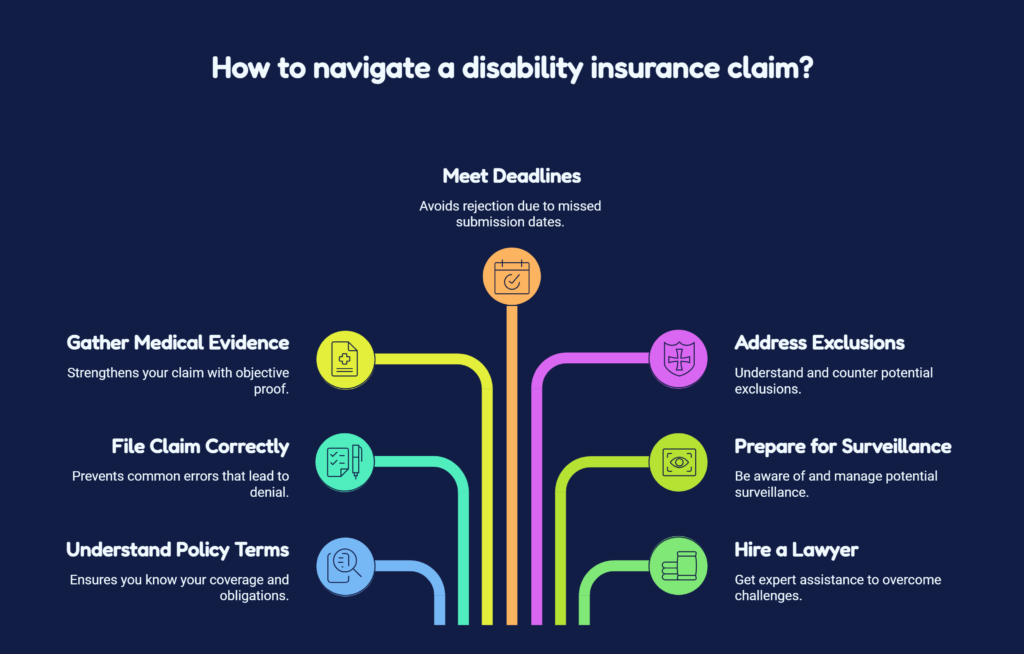
Filing a claim requires meticulous preparation. The process begins with notifying your employer or insurance provider of your condition. You must then submit a detailed application containing statements from you, your employer, and your treating physicians. It is critical to ensure that every form is filled out completely and submitted within the strict timeline defined by your provider.
Understanding Your Policy Terms
Every insurance contract contains highly specific language that governs your eligibility. Key elements include the elimination period (the waiting period before benefits kick in) and the precise definition of disability. Some policies use an “own occupation” definition, meaning you are disabled if you cannot perform your specific job. Others use an “any occupation” definition, which requires you to prove you cannot perform any gainful work suitable for your education and experience.
Common Reasons for Claim Denial
Insurance companies are profit-driven corporations, and denials are remarkably common. Some of the most frequent justifications for a claim denial include:
- Insufficient Medical Evidence: Lacking objective diagnostic testing, lab results, or consistent treatment logs.
- Missing Deadlines: Failing to submit forms or medical updates within the designated windows.
- Policy Exclusions: The insurer claiming your illness is a pre-existing condition or falls under an excluded category.
- Surveillance Contradictions: Insurers hiring private investigators to record your daily activities to claim your condition is not severe.
How a Disability Insurance Lawyer Can Assist with Claims
Engaging a professional early in the filing process can dramatically reduce administrative errors. When you hire a disability insurance lawyer, they will thoroughly review your medical charts and collaborate directly with your physicians to secure compelling supportive statements. A qualified disability insurance lawyer knows exactly what adjusters are looking for and will ensure your application perfectly aligns with your specific policy requirements.
Legal Rights and Disability Insurance
The Legal Framework of Disability Insurance
The rules governing your claim depend heavily on how you obtained the policy. Private individual policies are governed by state contract laws, giving you the right to sue an insurer in state court for bad faith if they unfairly deny your claim.
Employer-Provided Disability Insurance: What You Should Know
If your policy was provided by a private employer, it is almost certainly governed by a complex federal law known as the Employee Retirement Income Security Act (ERISA). ERISA significantly favors insurance companies. Under ERISA, you cannot sue your insurer for emotional distress or punitive damages, and you are generally barred from presenting new evidence in court if it was not submitted during the initial administrative appeal process.
Your Rights as an Insured Individual
As a consumer, you have the right to receive a full, written explanation detailing exactly why your claim was rejected. You also possess the right to request and receive a complete copy of your administrative claim file, which includes all internal notes, medical consultant reviews, and vocational assessments used to make the decision.
Federal Protections and How State Laws Affect Disability Claims
While federal mandates like ERISA set a baseline for employer-sponsored plans, individual policies rely entirely on state regulations. For instance, working with a disability insurance lawyer california involves utilizing strict state-level consumer protection acts unique to the West Coast. Similarly, consulting a disability benefits lawyer texas or a disability benefits lawyer nyc requires navigating distinct local insurance codes and regional court trends that dictate how contract terms are interpreted.
Hiring a Disability Insurance Lawyer
Reasons to Hire a Disability Insurance Lawyer
Navigating an insurer’s dense legal and medical terminology is difficult without formal training. Retaining a dedicated disability insurance lawyer levels the playing field against major insurance groups. A specialized disability insurance lawyer understands the exact tactics insurers use to minimize payouts and can build an airtight case file that protects your financial future.
How to Choose the Right Disability Insurance Lawyer for Your Needs
When searching for representation, it is vital to select a disability insurance lawyer who specializes specifically in disability law rather than a general practitioner. Look for a disability insurance lawyer with extensive experience handling your specific type of claim (ERISA vs. individual private policy) and a verified track record of successful administrative appeals or federal litigation.
Questions to Ask During Your Initial Consultation
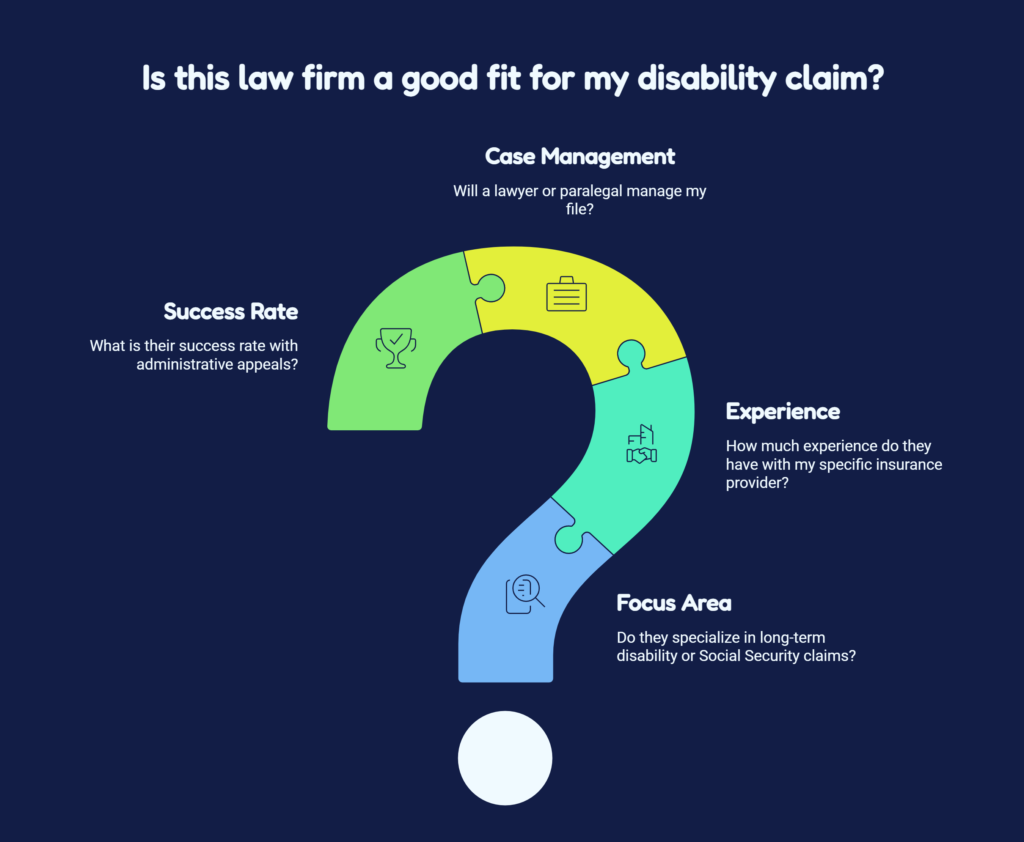
To ensure a firm is a good fit, come prepared with targeted questions:
- Do you focus primarily on long-term disability insurance or Social Security claims?
- How much experience do you have dealing with my specific insurance provider?
- Will a dedicated disability insurance lawyer personally manage my file, or will it be handed off to a paralegal?
- What is your firm’s success rate with administrative appeals?
Legal Fees and Cost Structures
Understanding disability insurance lawyer fees before signing an agreement prevents future surprises. Most reputable firms providing a disability insurance lawyer operate on a contingency fee basis. This means they do not charge any upfront or hourly legal fees. Instead, their payment is a set percentage (typically between 25% and 40%) of the back-due benefits they successfully recover for you. If your disability insurance lawyer does not win your case, they do not get paid.
What Not to Tell Your Disability Insurance Lawyer
When speaking with your legal representative, absolute transparency is vital. However, a common rule of thumb for what not to tell your disability insurance lawyer is to avoid exaggerating your symptoms or misrepresenting your physical limitations. An experienced disability insurance lawyer needs objective, accurate facts to defend you properly. Making unsubstantiated claims or hiding alternative income sources can completely ruin your credibility and compromise your case.
Fighting a Denied Disability Insurance Claim
Steps After Your Disability Claim is Denied
If you receive a denial letter, do not panic. The first step is to carefully note the deadline to file an appeal. For ERISA-governed policies, you typically have exactly 180 days from the date of receipt to submit a formal administrative appeal. Missing this deadline completely forfeits your right to your benefits. Next, formally request your complete administrative file from the insurer.
Gathering Evidence for Your Appeal
An administrative appeal is your absolute last opportunity to insert supportive evidence into your record. If your case eventually goes to federal court, judges will only look at what was submitted during this phase. Essential evidence to gather includes:
- Advanced diagnostic imaging (MRIs, CT scans, EMGs).
- Detailed functional capacity evaluations (FCE) measuring your physical limits.
- Specific medical opinions detailing why you cannot sustain an 8-hour workday.
- Statements from former supervisors detailing how your illness impacted your performance.
Understanding the Appeals Process and Timeline
Once your comprehensive appeal packet is compiled and submitted, the insurance company will review the file. But how long does an appeal take? Under federal law, an insurer typically has 45 days to make a determination on an ERISA appeal, though they can request a single 45-day extension if they provide a valid reason. This means the administrative review process frequently spans three to four months.
The Role of a Lawyer in Disputing Denied Claims
The benefits of legal representation in appeals cannot be overstated. The role of a lawyer in disputing denied claims is to act as an objective strategist. They cross-examine the insurance company’s chosen medical consultants, highlight legal errors made during the initial review, and craft a persuasive legal brief that forces the insurer to reconsider or face federal litigation.
Navigating Regional and Corporate Search Trends
When individuals experience a sudden career interruption, they frequently research specific regional specialists or national legal powerhouses online to safeguard their claims.
Looking for Help Near Your Location
Many claimants begin their journey by tracking down localized support using search phrases like disability insurance lawyers near me or disability benefits lawyer near me. Depending on their geographical location, users frequently narrow their focus to pinpoint highly specialized regional advocates, searching for top-rated professionals such as the best disability lawyers in arizona. Because definitions of disability can cross national lines for corporate workers, search platforms also see high volumes for Canadian corporate hubs, such as individuals seeking a certified disability insurance lawyer Calgary to handle cross-border policy requirements.
Analyzing Firm-Specific Digital Footprints
A massive portion of public research centers around well-known, large-scale consumer law firms. Many disabled workers dive into consumer forums looking for a Morgan & morgan disability lawyer to manage their corporate appeals. Before committing to representation, claimants regularly analyze public sentiment by reading through detailed Morgan and Morgan disability reviews and evaluating the firm’s verified Morgan and Morgan disability success rate.
Furthermore, prospective clients regularly crowdsource honest peers-to-peer experiences by reviewing candid discussions on the Morgan and Morgan disability reddit threads. Beyond the largest national names, users frequently look into prominent boutique groups like Roeschke Law Disability attorneys, or run broad assessments to identify the top 10 disability lawyers near me alongside the absolute best lawyers for Social Security Disability to handle their complex litigation.
FAQs
When should you call a disability lawyer?
You should call a specialized attorney as soon as you anticipate missing extended time from work, or immediately upon receiving an initial denial letter. Getting an expert involved during the early application phase helps avoid the common paperwork mistakes that trigger denials.
Is COPD considered a disability for Social Security?
Yes, Chronic Obstructive Pulmonary Disease (COPD) can be considered a disability by the Social Security Administration if it severely impairs your lung function. The administration evaluates specific breathing test metrics, such as your FEV1 or FVC levels, to determine if your condition meets their strict medical listings.
Does neuropathy qualify for disability?
Neuropathy can qualify for disability benefits if it causes severe, documented functional limitations. To qualify, you must show that the nerve damage results in a significant disruption of your ability to walk, stand, or use your hands effectively for fine motor tasks.
How hard is it to get disability with a lawyer?
While obtaining disability benefits is always a rigorous process due to strict institutional guidelines, having a lawyer significantly improves your chances of approval. A lawyer ensures all medical files are perfectly organized and helps avoid technical filing errors that result in automatic rejections.
What is the hardest disability to get approved for?
Conditions that rely heavily on subjective symptoms rather than visible, objective lab results are generally the hardest to get approved for. These include chronic fatigue syndrome, fibromyalgia, mental health conditions like depression or anxiety, and certain traumatic brain injuries.
What not to say when applying for disability?
When applying, do not say that you can work part-time if your goal is to prove total disability, and never guess or speculate about your medical limitations. Avoid making vague statements about your health; instead, focus strictly on specific, objective examples of how your illness prevents you from executing daily work tasks.
What are signs you will be approved for disability?
Strong signs of an impending approval include having a pile of objective medical imaging, consistent ongoing treatment with a medical specialist, a supportive functional assessment from your primary doctor, and a long, stable work history prior to your diagnosis.
How much SSDI will I get if I make $60,000 a year?
If you have maintained an average lifetime salary of $60,000 a year, your estimated Social Security Disability Insurance (SSDI) benefit will typically fall between $1,800 and $2,100 per month. The exact amount is calculated based on your historical lifetime earnings record rather than your current salary at the exact moment you became disabled. For official, personalized estimates, you can review your earnings statement on the official Social Security Administration portal.
Claim disputes often come down to details buried in the fine print of your policy. Get a clearer understanding of how coverage works in our 2026 Health Insurance Guide: Common Coverage Mistakes to Avoid.
Conclusion
Securing short-term or long-term disability benefits is a multi-step journey that requires careful preparation, clear medical documentation, and a thorough understanding of your contractual rights. Whether you are navigating an employer group plan governed by complex federal laws or managing a private policy under local state guidelines, the process leaves little room for operational error. Partnering with an experienced disability insurance lawyer is often the most effective way to protect your livelihood, counter unfair corporate denials, and ensure you receive the long-term financial security you are entitled to.