Making Insurance Simple, One Insight at a Time.


How Much Do Braces Cost Without Insurance? 2026 Cost Guide
How much do braces cost without insurance? Typical ranges for metal, ceramic, lingual braces and aligners, plus payment plans and ways to save.
Quick Summary
How much do braces cost without insurance? Most published estimates put traditional metal braces between about $3,000 and $7,500, with ceramic braces, clear aligners, and lingual braces costing more. The final price depends on the type of appliance, how complex your case is, how long treatment lasts, and where you live.
This guide compares the ranges two published sources give, explains what dental insurance and Medicaid usually cover, and shows the main ways to lower or spread out the cost, from in-house payment plans to HSAs and nonprofit programs for children.
Table of Contents
Table of Contents
- How Much Do Braces Cost Without Insurance?
- How Much Do Braces Cost Without Insurance for Kids, Teens and Adults?
- What Dental Insurance and Medicaid Cover
- Ways to Pay for Braces Without Insurance
- At-Home Aligners and Other Alternatives
- Questions to Ask Before You Start
- Frequently Asked Questions
- Conclusion
1. How Much Do Braces Cost Without Insurance?
Cost by Type of Braces
The price of braces depends first on the type you choose. Published ranges vary because orthodontic fees vary by practice and region, so the table below shows two sources side by side rather than a single number. DentalPlans.com publishes 2026 estimates, and Healthline, which was medically reviewed, publishes ranges from 2021. Treat both as estimates and get a written quote before you decide.
| Treatment | DentalPlans.com (2026) | Healthline (2021) |
|---|---|---|
| Metal braces | $3,000 to $7,000 | $3,000 to $7,500 |
| Ceramic braces | $4,000 to $8,000 | $2,000 to $8,500 |
| Clear aligners (Invisalign and similar) | $3,500 to $8,500 | $3,000 to $7,000 |
| Lingual braces | $8,000 to $13,000 | $5,000 to $13,000 |
| At-home aligners | $1,500 to $2,500 | Not covered |
Sources: DentalPlans.com, “How Much Do Braces Cost in 2026” (a company that sells dental savings plans); Healthline, medically reviewed April 2021. Ranges are estimates and vary by orthodontist and location.
Metal braces are usually the most affordable option, while lingual braces, which sit behind the teeth, are generally the most expensive. Healthline also notes the overall price generally falls between $3,000 and $10,000.
What Changes How Much Braces Cost Without Insurance
How much do braces cost without insurance for your case? It depends on several factors. More severe crowding or bite problems take longer to correct, and a longer treatment means more visits. The American Association of Orthodontists (AAO) says costs are influenced by the type, complexity, and duration of treatment. Location matters too, because overhead and local demand differ from city to city. Ask whether the quote includes everything, such as appointments, X-rays, and retainers, since these can add to the total.
2. How Much Do Braces Cost Without Insurance for Kids, Teens and Adults?
Orthodontic treatment can start in childhood or adulthood, and how much braces cost without insurance is similar in the types and ranges above. What changes is the treatment itself. A growing child’s jaw responds to treatment differently than an adult’s fully developed jaw, and one industry estimate says adult braces typically cost about 20% to 25% more than braces for kids and teens because tooth movement is slower. Your orthodontist can tell you whether your case is likely to cost more.
Instead of searching for how much braces cost without insurance at every age, ask for a written treatment plan showing the total fee, the expected length of treatment, and what is included. That is the number that matters for your budget.
3. What Dental Insurance and Medicaid Cover
Knowing what coverage pays helps you judge how much braces cost without insurance in your own situation. If you do have coverage, braces are not always included. Healthline notes that most dental plans do not cover braces for adults, though some offer an add-on orthodontic plan, and that plans that do cover braces for children usually require them to be medically necessary. Many dental plans pay a percentage of treatment up to a lifetime maximum, and the AAO advises checking the coverage percentage, lifetime maximum, age limits, and whether the orthodontist must be in-network.
One industry estimate puts typical lifetime orthodontic maximums at roughly $1,000 to $1,500, which covers only part of a $5,000 treatment.
Medicaid works differently. Under federal rules, Medicaid must cover medically necessary treatment for beneficiaries under age 21, and the National Health Law Program notes that orthodontia is generally considered medically necessary only for children with a handicapping malocclusion. Each state decides how it assesses that standard, so rules and approval rates vary. Check your state’s Medicaid and CHIP program for details.
If you have a high-deductible health plan, you may be able to use an HSA to pay for braces. Our 2026 Health Insurance Guide: Common Coverage Mistakes to Avoid explains how these plans work.
4. Ways to Pay for Braces Without Insurance
Many orthodontic offices do not expect the full amount up front, which makes how much braces cost without insurance easier to manage month by month. The table below summarizes the most common options and what to watch for.
| Option | How it helps | Watch out for |
|---|---|---|
| In-house payment plan | Spreads the fee over the length of treatment, often with low or no interest, according to the AAO | Down payments, fees, and what happens if treatment runs longer |
| HSA or FSA | Pays with pre-tax dollars; IRS Publication 502 lists braces as a dental treatment | FSAs generally follow a use-it-or-lose-it rule within the plan year |
| Medical credit card | May offer a 0% introductory rate | Deferred interest can be charged on the full balance if it is not paid off in time |
| Medicaid or CHIP | May cover medically necessary orthodontic care for children | Strict medical-necessity rules that vary by state |
| Nonprofit programs | Gifted Smiles, Smiles Change Lives, and Smile for a Lifetime serve eligible children under 18 | Eligibility rules and waiting lists |
| Pay-in-full or family discounts | The AAO suggests asking about discounts for upfront payment, multiple family members, or referrals | Make sure the discount is written into your agreement |
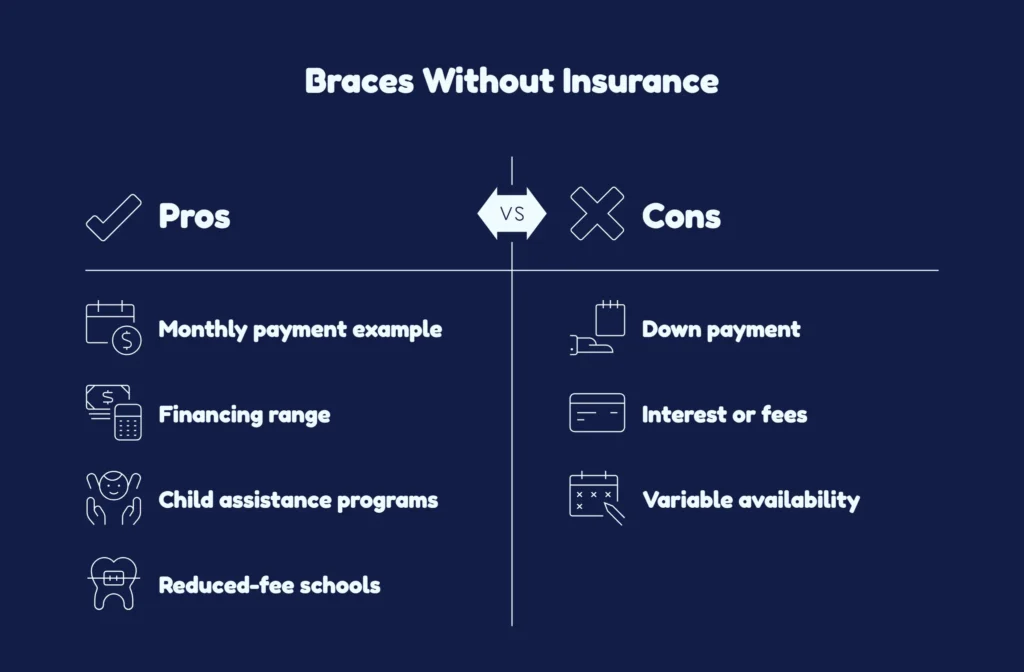
How Much Do Braces Cost Without Insurance Per Month? A Payment Plan Example
As an example, a $4,800 treatment paid over 24 months works out to $200 a month before any down payment. One industry source puts typical in-house orthodontic financing at roughly $100 to $250 a month depending on the total, down payment, and term. Always ask whether a plan charges interest or fees.
Low-Cost Care for Children
For children, how much braces cost without insurance can drop sharply through assistance programs. The AAO lists three nonprofit programs that provide treatment for children under 18 at low or no cost: Gifted Smiles, Smiles Change Lives, and Smile for a Lifetime. Dental schools that run orthodontic programs may also offer treatment at reduced fees, though availability and treatment time vary.
For more guidance on cost factors, insurance questions, and savings ideas, see the AAO’s guide: How Much Do Braces Cost? Factors, Insurance, & Savings.
5. At-Home Aligners and Other Alternatives
How much do braces cost without insurance if you choose an at-home kit? Aligner kits can cost far less, with DentalPlans.com listing roughly $1,500 to $2,500, but they are not right for every case. Because moving teeth safely depends on healthy roots and gums, get an in-person exam before starting any aligner treatment, including a kit shipped to your home. If the exam shows you need complex correction, a cheaper kit may end up costing more.
For an overview of what to consider if you also need other dental work, such as an implant, see our guide on Single Tooth Implant Cost Without Insurance: Avoid Costly Surprises.
6. Questions to Ask Before You Start
The questions below help you pin down how much braces cost without insurance in writing. Because how much braces cost without insurance varies by practice, get quotes from at least two or three orthodontists. Many offer free or low-cost initial consultations, according to the AAO.
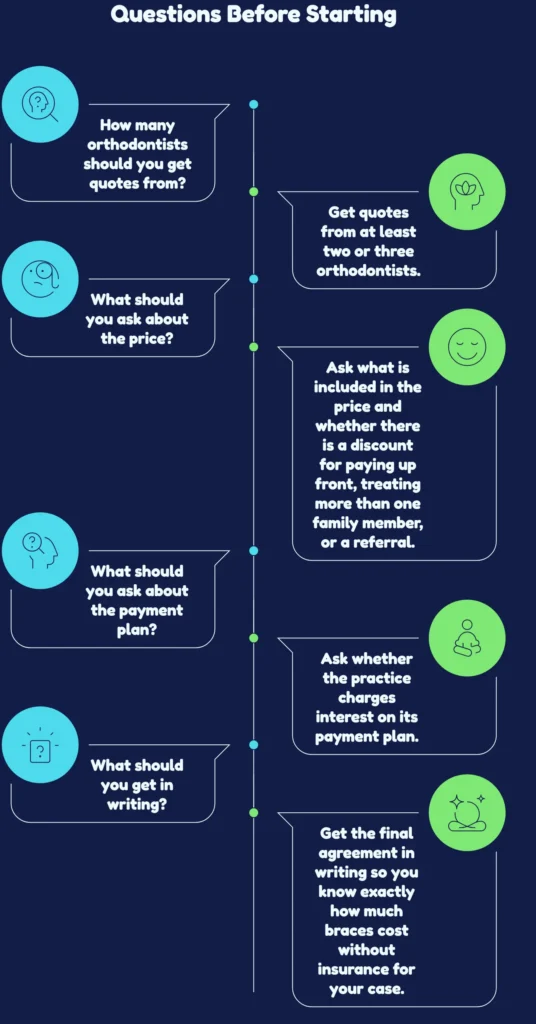
Ask what is included in the price, whether there is a discount for paying up front, for treating more than one family member at the same time, or for a referral, and whether the practice charges interest on its payment plan. Get the final agreement in writing so you know exactly how much braces cost without insurance for your case.
7. Frequently Asked Questions
How much do braces cost without insurance?
Most published ranges put metal braces at about $3,000 to $7,500, ceramic braces and clear aligners somewhere between about $2,000 and $8,500, and lingual braces from about $5,000 to $13,000. Your orthodontist’s written quote is the number that counts.
How much do braces cost without insurance near me?
It depends on your local orthodontists. Schedule consultations with two or three practices in your area, and ask for a written quote. The AAO notes that many orthodontists offer free or low-cost initial consultations.
How much do braces cost without insurance per month?
It depends on the total and the plan. A $4,800 treatment spread over 24 months comes to $200 a month, and one industry source lists typical in-house plans at about $100 to $250 a month.
How much do braces cost without insurance for adults?
Adults pay the same types of fees as other patients, though one estimate says adult treatment can cost 20% to 25% more because tooth movement is slower. Most dental plans do not cover braces for adults.
How much do braces cost without insurance for kids and teens?
Costs for children and teens fall in the same ranges as above. Some children qualify for Medicaid coverage if treatment is medically necessary, and nonprofit programs help eligible children under 18.
What is the cheapest way to get braces without insurance?
Traditional metal braces are usually the most affordable type, and options such as in-house payment plans, nonprofit programs for children, and pay-in-full discounts can lower the cost further. Traditional metal braces are usually the most affordable, based on published ranges from DentalPlans.com and Healthline.
Are braces covered by dental insurance?
Sometimes. Coverage is more common for children than adults, often requires medical necessity, and is usually limited by a lifetime maximum, so check your plan.
Can I use an HSA or FSA for braces?
Often yes. IRS Publication 502 lists braces among dental treatments that qualify as medical expenses, though your plan administrator makes the final decision, and cosmetic-only procedures generally do not qualify.
Can I negotiate the cost of braces?
You can ask. The AAO suggests asking about discounts for up front payment, for multiple family members starting together, and for referrals.
Do braces payment plans require a credit check?
It depends on the provider. In-house plans vary by practice, while third-party financing such as a medical credit card typically involves a credit application. Ask before you apply.
8. Conclusion
How much do braces cost without insurance? For most people the answer is a few thousand dollars, with metal braces usually the lowest and lingual braces the highest. Compare written quotes from several orthodontists, find out what dental insurance or Medicaid will cover, and ask about payment plans, HSAs, and discounts. A clear, itemized agreement before you begin protects you from surprises later.
Disclaimer: This information is provided for general educational purposes only and does not constitute professional dental, medical, insurance, or financial advice. Prices, insurance coverage, and program eligibility vary by provider, location, and plan and change over time. Always confirm costs with an orthodontist and coverage details with your insurer or a licensed insurance professional before starting treatment.