Making Insurance Simple, One Insight at a Time.

Attorneys for Insurance Claims: Avoid Unfair Denials
Struggling with a denied payout? Learn what attorneys for insurance claims do, how fees work, and what to check before you hire one.
Quick Summary
When an insurer delays, underpays, or denies a valid claim, a lawyer can help you understand your options. Attorneys for insurance claims represent policyholders in auto, property, home, life, and disability disputes. They review the policy, deal with the insurer, negotiate a settlement, and file a lawsuit if needed. This guide is a broad overview of how that process works, with links to our detailed guides by claim type.
Table of Contents
Table of Contents
1. Understanding Attorneys for Insurance Claims
What Do Attorneys for Insurance Claims Do?
Attorneys for insurance claims represent policyholders who are not getting a fair payout from their insurer. They are different from insurance defense attorneys, who are hired by insurers to defend them against claims and lawsuits. A policyholder’s lawyer reviews your coverage, deals with the adjuster, and presses the insurer to honor the policy.
When to Hire Attorneys for Insurance Claims
Consider legal help if your insurer denies your claim, delays payment without a valid reason, or offers a settlement that does not cover your actual losses. Simple, low-value claims can often be handled on your own, but disputes over large losses, injuries, or coverage are usually worth a consultation with an insurance claims lawyer.
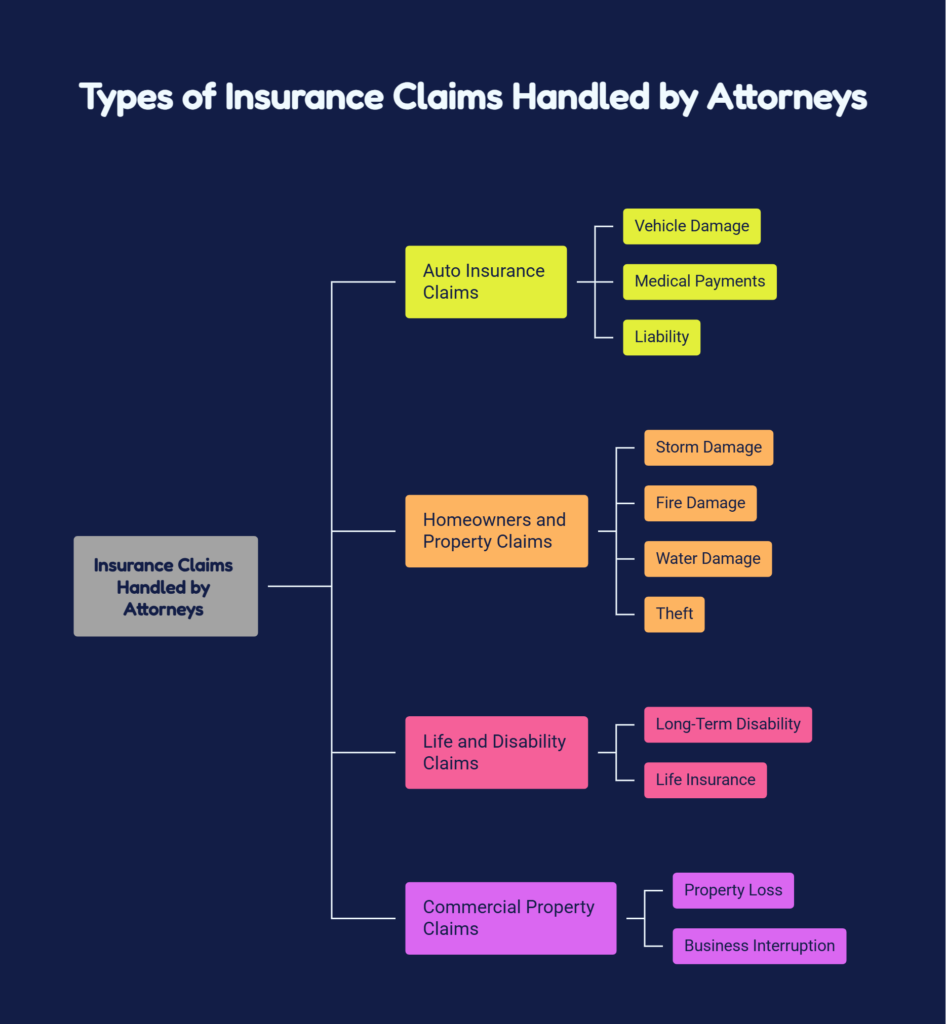
Types of Claims Attorneys for Insurance Claims Handle
- Auto Insurance Claims: Disputes over vehicle damage, medical payments, or liability. For accident settlements in particular, see our guide, Car Insurance Attorney: When to Hire One and How Settlements Work.
- Homeowners and Property Claims: Disputes over damage from storms, fire, water, or theft. Our Ultimate 2026 Home Insurance Guide: Best Protection Tips explains what home policies usually cover.
- Life and Disability Claims: Denied payouts for life insurance or long-term disability. See Denied Life Insurance Claim: How a Lawyer Can Help and Disability Insurance Lawyer: Guide to Claims & Appeals.
- Commercial Property Claims: Property loss and business interruption claims for business owners.
How Attorneys for Insurance Claims Can Benefit You
A policyholder’s attorney handles correspondence with the adjuster, interprets policy exclusions, estimates the full cost of your losses, and builds the evidence for your claim. Having a lawyer involved can also change how an insurer treats a dispute, though it does not guarantee a particular result.
Common Misconceptions About Insurance Claims Attorneys
Many people assume a lawyer is only for those who want to sue. In practice, most claim disputes are resolved through negotiation or settlement rather than a trial. Another misconception is that you need a physical injury to hire a lawyer. A lawyer can also help with disputes that involve only property, such as a denied home repair claim or a disputed vehicle valuation.
2. Choosing the Right Insurance Claims Attorney
Factors to Consider When Choosing Attorneys for Insurance Claims
Experience in your specific type of loss matters most when you choose a law firm for insurance claims. A lawyer who mainly handles car accidents may not have the technical background to challenge a complex home damage assessment. Check that the lawyer is licensed in your state and in good standing with the state bar.
Questions to Ask Potential Attorneys for Insurance Claims
Before you sign a representation agreement, schedule a consultation and ask:
- Do you represent policyholders, insurers, or both?
- Have you handled claims like mine, and what were the outcomes?
- What percentage do you charge, do you work on a contingency basis, and who pays case costs?
- How often will I receive updates on the status of my claim?
How to Evaluate an Attorney’s Experience in Insurance Claims
Ask about the lawyer’s record with settlements and verdicts, and read client reviews with care, since they can be incomplete. Confirm experience with bad faith claims if your insurer is stalling. A specialized attorney knows how to challenge reports prepared by the insurer’s preferred contractors or adjusters.
Red Flags to Watch For in Attorneys for Insurance Claims
Avoid attorneys who guarantee a specific financial outcome at your first meeting. Other warning signs include poor communication, unclear fee terms, or pressure to accept a quick settlement you are not comfortable with.
3. The Process of Working with Attorneys for Insurance Claims
Initial Consultation with Attorneys for Insurance Claims
Many attorneys for insurance claims offer a free initial consultation, though policies vary by firm. The lawyer will review your policy, the denial or settlement offer, and the strength of your case, then explain your options. A consultation does not obligate you to hire the firm.
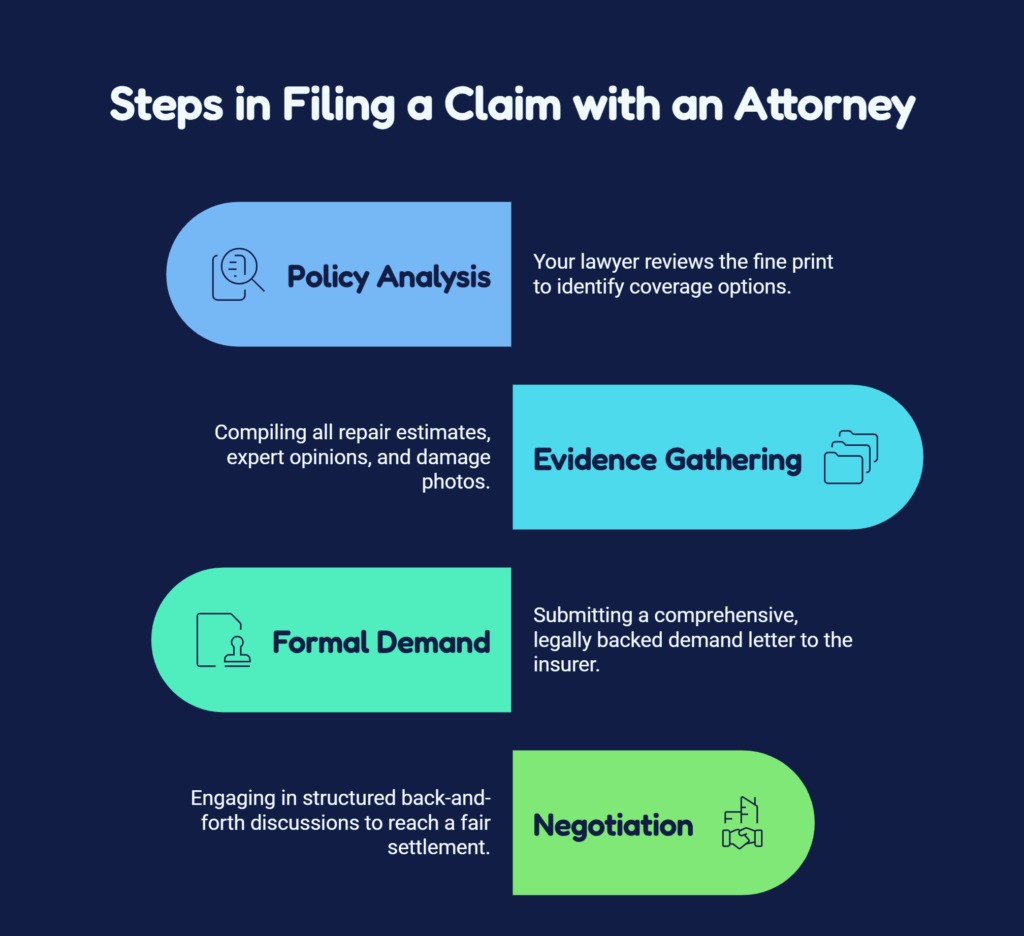
Steps in Filing a Claim with an Attorney
- Policy Analysis: Your lawyer reviews the fine print to identify coverage.
- Evidence Gathering: Compiling repair estimates, expert opinions, and damage photos.
- Formal Demand: Submitting a detailed demand letter to the insurer.
- Negotiation: Working toward a fair settlement through structured discussions.
Negotiating Settlements with the Help of an Attorney
Insurers often take a claim more seriously when a lawyer is involved. A lawyer can counter common lowball arguments, such as claims that damage was pre-existing or that depreciation reduces what the insurer owes, by backing each point with policy language and evidence. Negotiation is a back-and-forth process, and the final number depends on the evidence and the policy terms.
Understanding Litigation in Insurance Claims
If the insurer refuses a reasonable settlement, attorneys for insurance claims may recommend filing a lawsuit. Litigation includes discovery, where both sides exchange evidence, and that process often leads to a settlement before trial. A lawsuit takes time and costs money, so your lawyer should explain the risks first.
How to Communicate Effectively with Your Insurance Claims Attorney
Keep your physical and digital documents organized, answer your lawyer’s questions promptly, maintain a written timeline of events, and forward any direct communication from the insurance company right away.
4. Building a Stronger Insurance Claim
Strategies for Building a Stronger Claim
To support a higher payout under your policy, attorneys for insurance claims may bring in independent adjusters, engineers, or contractors to evaluate your damage. Their findings can counter estimates from the insurer’s in-house adjusters and give your lawyer accurate numbers for negotiation.
The Role of Evidence in Insurance Claims
Evidence is the foundation of an insurance dispute. Documents worth gathering include:
- A copy of your complete insurance policy.
- Date-stamped photographs and videos of the damage.
- Police reports, fire department reports, or official weather records.
- Receipts for emergency repairs, temporary housing, or medical treatment.
- All emails and letters sent to or received from the insurance company.
Timeframes for Resolving Insurance Claims with Attorneys for Insurance Claims
Timelines vary with the type of claim and the complexity of the dispute. A simple auto dispute may resolve in weeks, while a commercial property dispute or a bad faith lawsuit can take many months or longer. Your lawyer should also track the deadlines that apply to your claim, including any time limit in your policy and your state’s statute of limitations.
Common Pitfalls in Insurance Claims and How Attorneys Avoid Them
Many policyholders hurt their own claims by giving recorded statements to an adjuster without advice. Adjusters may ask questions that lead you to admit partial fault or downplay the damage. A lawyer can handle statements for you, or at least prepare you, to avoid costly mistakes.
5. Legal Framework and Insurance Claims
Understanding Insurance Law: A Guide
Insurance policies are contracts governed mainly by state law. Insurers owe policyholders a duty of good faith and fair dealing, and states set the standards for how insurers must handle claims.
State-Specific Rules for Insurance Claims
States set their own rules on how quickly an insurer must acknowledge a claim, investigate it, and make a decision. Your state insurance department can tell you the deadlines that apply, and it accepts complaints about claim handling. The NAIC state insurance department directory lists every state department.
How Legal Changes Affect Your Insurance Claim
Insurance laws change, and updates can affect coverage requirements, dispute processes, and penalties for late payment. A lawyer who handles these cases keeps up with changes in your state, and you should confirm current rules before relying on any general article.
Bad Faith Insurance and Lawyers
Bad faith generally means an insurer denied a valid claim, refused to investigate a loss, or delayed or underpaid without a reasonable basis. If you believe your insurer is acting this way, talk to a bad faith insurance lawyer about your state’s rules.
Remedies differ by state. In many states a successful bad faith claim can lead to damages beyond the policy benefits, such as attorney fees or, in some cases, punitive damages. Employer plans governed by ERISA have different and more limited remedies.
6. Frequently Asked Questions (FAQs)
Should I get a lawyer for my insurance claim?
Consider hiring one of the attorneys for insurance claims if your claim is large, fault is disputed, or the insurer has issued a partial or full denial. Simple, low-value claims can often be handled on your own.
Can I get a lawyer if insurance won’t pay?
Yes. A lawyer can review the denial, draft an appeal, and file a lawsuit if needed to enforce the policy.
What does a claims lawyer do?
A claims lawyer analyzes insurance contracts, gathers evidence of your losses, negotiates with adjusters, drafts demand letters, and files lawsuits when negotiation fails.
Will insurance provide a lawyer?
If another party sues you after an accident, your liability insurance typically requires your insurer to provide and pay for an attorney to defend you. If you are suing your own insurer for denying a claim, it will not provide a lawyer, so you must hire your own.
How do I sue my homeowners insurance company?
You generally must show that the insurer breached the policy or acted in bad faith. Your lawyer would file a complaint in court describing the policy terms, the covered loss, and how the insurer failed to honor them. Many policies set a time limit for suing, so ask about it early.
What is the 80% rule for home insurance?
Many homeowners policies include an 80% rule. If you insure your home for less than 80 percent of its replacement cost, the insurer may pay only part of a partial loss, based on the ratio of the coverage you carry to the coverage required. Review your policy and confirm how your insurer applies it.
What not to tell the attorney?
You should never lie, omit details, or exaggerate facts when speaking with your lawyer. Avoid guessing about details you do not know. It is better to say “I do not remember” than to give inaccurate information that can later damage your case.
What insurance covers attorney fees?
Legal expense insurance is a specialized policy that covers legal fees for certain disputes. Separately, the liability coverage in auto and homeowners policies generally pays for your legal defense if a third party sues you over a covered accident.
Is it expensive to hire an attorney?
Not necessarily. Many lawyers for policyholders work on a contingency basis, which means no upfront fees. The percentage and who pays case costs come from the fee agreement, so read it before you sign. A contingency fee still reduces what you keep, so compare the likely recovery with and without a lawyer.
Can I complain to my state insurance department instead of hiring a lawyer?
Yes. Most states accept consumer complaints about claim handling at no cost, and filing one does not stop you from hiring a lawyer later. A complaint may prompt the insurer to review the claim, but it does not replace legal advice.
How long do I have to sue my insurer?
It depends on your state and your policy. Many policies include a contractual time limit for suing, and states set a statute of limitations for contract and bad faith claims. Ask a lawyer about the deadline early, because waiting can end your options.
7. Conclusion
An insurance dispute can feel overwhelming, and insurers have teams of adjusters and lawyers working for them. Attorneys for insurance claims give policyholders an advocate who can read the policy, gather evidence, negotiate, and file suit if needed. Whether you face an auto claim denial or a home damage dispute, compare your options, ask about fees, and act before your deadlines pass. No lawyer can guarantee a result.
Disclaimer: This article is general information, not legal advice, and reading it does not create an attorney-client relationship. Laws, deadlines, and fee rules differ by state and by policy, so speak with a licensed attorney about your claim.