Making Insurance Simple, One Insight at a Time.


The Secret Auto Insurance Guide to Outsmart Your Provider
Want to slash your premiums? Uncover expert loopholes in this secret auto insurance guide to lower your deductibles and outsmart your insurance provider.
Quick Summary
An auto insurance policy serves as a vital financial safety net, protecting drivers against severe financial losses resulting from vehicle accidents, theft, liability claims, and natural disasters. Understanding how auto insurance works requires navigating various coverage types, state mandates, deductible options, and pricing factors like driving history and credit score. This comprehensive auto insurance guide breaks down every essential element, from basic liability to specialized short-term coverage, helping drivers evaluate rates, compare top insurance providers, and manage the claims process with confidence.
Table of Contents
Table of Contents
- Auto Insurance Basics: What It Is and How It Works
- Types of Auto Insurance Coverage Explained
- Key Factors That Affect Auto Insurance Costs and How to Lower Premiums
- How to Choose the Right Auto Insurance Provider
- Special Situations: Short-Term, Non-Owner, and Motorcycle Coverage
- Navigating Claims, Accidents, and Legal Assistance
- Frequently Asked Questions (FAQs)
- Conclusion
1. Auto Insurance Basics: What It Is and How It Works
Understanding what is auto insurance starts with recognizing it as a legal contract between a vehicle owner and an insurance carrier. In exchange for regular premium payments, the insurer agrees to pay for covered financial losses up to policy limits. But how does auto insurance work in practice? When an accident or property event occurs, you file a claim, pay an agreed-upon deductible, and the insurer handles the remaining costs within your coverage terms.
Is Auto Insurance Required by Law?
In almost every US state, driving without minimum auto insurance is illegal. State laws generally mandate basic liability limits to ensure drivers can pay for injuries or damage they cause to others. Driving uninsured can result in severe legal consequences, including license suspension, heavy fines, and personal liability for thousands of dollars in damages.
Key elements of state legal requirements include:
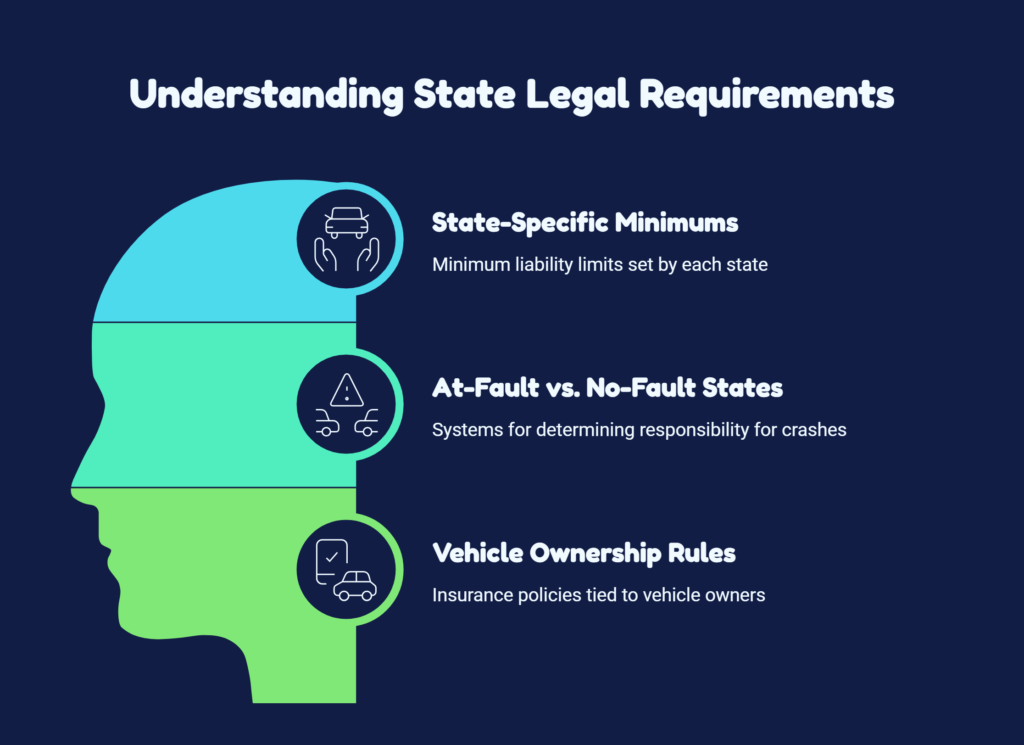
- State-Specific Minimums: Each state sets specific minimum liability requirements, such as 25/50/25 limits ($25,000 bodily injury per person, $50,000 bodily injury per accident, and $25,000 property damage).
- At-Fault vs. No-Fault States: In at-fault states, the driver responsible for the crash pays for damage. In no-fault states, drivers rely on their own Personal Injury Protection (PIP) for medical bills, regardless of who caused the incident.
- Vehicle Ownership Rules: Insurance policies are typically tied to the primary registered owner of the vehicle. If you are financing a car or driving a vehicle owned by someone else, specific rules apply. For a deeper breakdown on legal vehicle registration and coverage boundaries, review Can I Insure a Car Not in My Name? Avoid These 2026 Mistakes.
2. Types of Auto Insurance Coverage Explained
Navigating the various types of auto insurance coverage allows you to tailor a policy to your budget and risk tolerance. While state laws set the baseline, basic liability alone leaves your own vehicle completely unprotected.
Essential Coverage Components
- Liability Coverage: Pays for medical costs, lost wages, and property damage suffered by other people when you are at fault in an accident.
- Collision Coverage: Covers physical damage to your vehicle resulting from a collision with another car, object, or rollover event, regardless of fault.
- Comprehensive Coverage: Protects against non-collision losses, including vandalism, windshield damage, falling objects, natural disasters, and animal strikes.
- Uninsured and Underinsured Motorist Coverage: Protects you if you are hit by a driver who carries no insurance or lacks sufficient liability limits to pay for your damages.
- Personal Injury Protection (PIP) & Medical Payments: Covers medical treatments and lost wages for you and your passengers, irrespective of fault.
| Coverage Type | What It Protects | Mandatory or Optional? |
|---|---|---|
| Bodily Injury Liability | Injuries to other drivers or people | Mandatory in almost all states |
| Property Damage Liability | Damage to other vehicles or property | Mandatory in almost all states |
| Collision Coverage | Physical damage to your vehicle | Optional (required by lenders) |
| Comprehensive Coverage | Theft, weather, vandalism, fires | Optional (required by lenders) |
| Uninsured Motorist (UM) | Damage or injuries caused by an uninsured driver | Mandatory in select states |
Full Coverage vs. Liability
A common misconception is that “full coverage” is a specific policy you purchase. In reality, full coverage refers to a combination of bodily injury liability, property damage liability, collision, and comprehensive coverage.
Deciding between full coverage and basic liability depends largely on your car’s market value and financial situation. If your car is financed or leased, lenders strictly mandate full coverage. If you drive an older vehicle with low market value, maintaining full coverage may cost more annually than the car itself is worth.
Specialized Coverage Extensions
- Theft and Natural Disasters: Comprehensive coverage handles losses from fires, hail, flooding, and auto theft. However, standard policies carry strict limitations regarding property stolen from inside the cabin. To understand the exact boundaries of basic coverage, read Does Liability Insurance Cover Theft? Avoid Costly Mistakes.
- Driving Uninsured Risks: Getting into a collision without adequate insurance carries immense financial and legal exposure. Learn how to protect your assets by reading Car Wreck Without Insurance: Your Complete 2026 Guide.
3. Key Factors That Affect Auto Insurance Costs and How to Lower Premiums
Calculating auto insurance cost involves complex underwriting guidelines. Insurers evaluate risk profiles using historical data, statistical likelihoods, and individual driver characteristics.
Major Factors That Affect Car Insurance Rates
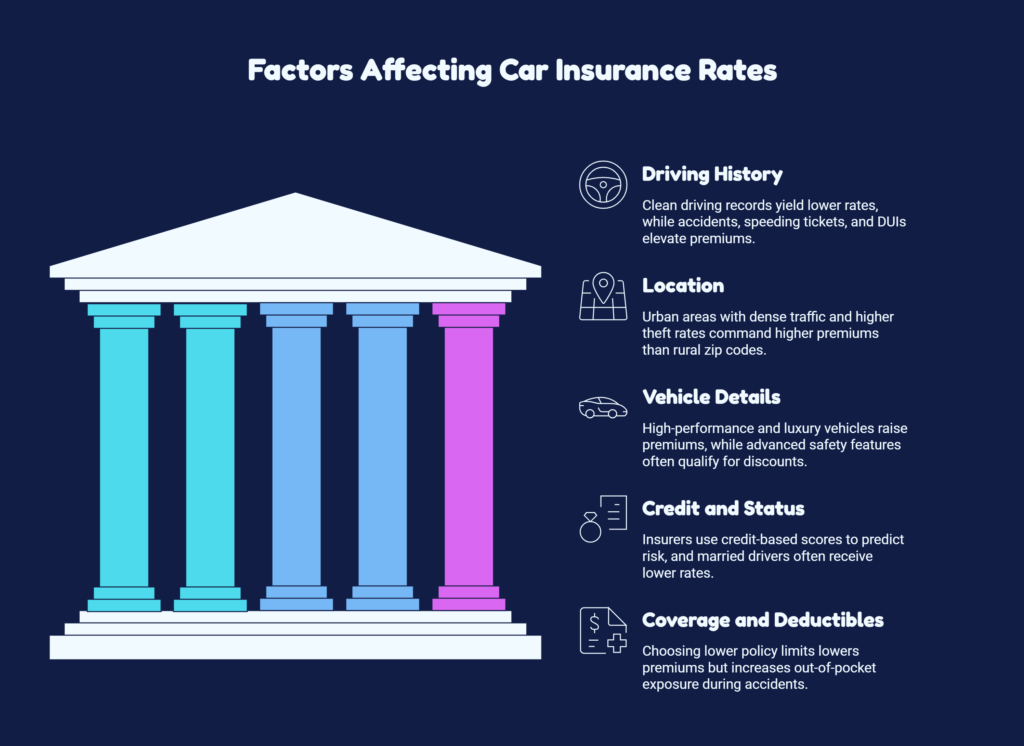
- Driving History: Clean driving records yield lower rates. Accidents, speeding tickets, and DUIs dramatically elevate premiums.
- Location: Urban areas with dense traffic, higher theft rates, and frequent claim filings command higher premiums than rural zip codes. Moving to a new state or city will instantly trigger a rate re-evaluation.
- Vehicle Make and Model: High-performance sports cars, luxury vehicles, and cars with high repair costs raise premiums. Vehicles equipped with advanced safety features often qualify for discounts.
- Credit Score & Marital Status: In most states, insurers utilize credit-based insurance scores to predict claim risk. Married drivers statistically file fewer claims than single drivers, resulting in lower rates.
- Coverage Limits and Deductibles: Choosing lower policy limits lowers premiums but increases out-of-pocket exposure during catastrophic accidents.
According to data from the National Association of Insurance Commissioners (NAIC), the national combined average auto insurance premium reached $1,438 per vehicle in 2023, a 14.42% increase from the prior year.
How to Lower Auto Insurance Premiums
If you want actionable cheap auto insurance tips, implement these strategies to lower your annual costs without sacrificing necessary protection:
Adjust Your Deductible: Raising your collision and comprehensive deductible from $500 to $1,000 can significantly reduce your monthly payments. Just ensure you keep $1,000 set aside in savings in case you need to file a claim.
Bundle Policies: Combining auto insurance with home, renters, or condo insurance typically unlocks multi-policy discounts ranging from 10% to 25%.
Maintain a Clean Driving Record: Safe driving over three to five years clears past violations, qualifying you for clean driver discounts.
Take Advantage of Usage-Based Insurance (UBI): Telematics programs track driving habits like braking, mileage, and speed via a mobile app, rewarding safe drivers with lower rates.
Ask for Unadvertised Discounts: Inquire about discounts for defensive driving courses, good student grades, low annual mileage, or paying your annual policy in full upfront.
4. How to Choose the Right Auto Insurance Provider
Selecting an insurer requires looking beyond price. Evaluating financial stability, customer service responsiveness, and claim settlement history ensures your carrier will fulfill its obligations when you need them most.
Auto Insurance Broker vs. Direct Insurer
- Direct Insurers: Companies that sell policies directly to consumers online or via phone. This model eliminates broker fees, offering streamlined online quote management.
- Independent Brokers: Agents who partner with multiple insurance companies to shop rates on your behalf. Brokers are helpful for drivers with high-risk records or complex coverage needs.
Evaluating Auto Insurance Company Reviews
When researching customer satisfaction, review official complaint indexes provided by state insurance commissioners alongside independent consumer ratings.
To compare carrier options and avoid common marketplace traps, consult these detailed evaluations:
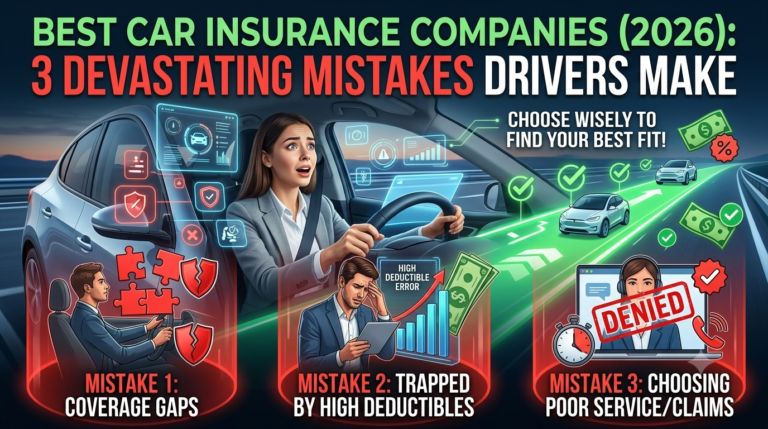
- Learn how to evaluate top national carriers by reading Best Car Insurance Companies (2026): 3 Devastating Mistakes Drivers Make.
- For detailed coverage reviews on regional, specialty, or budget providers, explore:
5. Special Situations: Short-Term, Non-Owner, and Motorcycle Coverage
Not every driving situation fits a standard 6-month or 12-month auto policy. Unique driver profiles require specialized products tailored to specific risks.
| Policy Format | Ideal Target Audience | Key Benefit |
|---|---|---|
| Non-Owner Car Insurance | Drivers who borrow or rent cars | Liability protection without owning a car |
| Short-Term Auto Coverage | Temporary visitors, car buyers | Flexible short-duration coverage |
| Motorcycle Insurance | Two-wheel motor vehicle riders | Specialized bike and equipment cover |
| Classic / Sports Car Insurance | Collector vehicle owners | Agreed-value loss payouts |
Temporary and Non-Owner Coverage
If you frequently borrow vehicles, rely on car-sharing services, or need to maintain continuous insurance coverage to avoid rate spikes during a gap in car ownership, a non-owner car insurance policy offers affordable liability protection.
For drivers needing immediate, short-duration coverage for rental trips, vehicle transfers, or temporary borrowing, explore specialized guides:
- Review temporary auto policy options in One Week Car Insurance: 3 Risky Errors to Avoid (2026).
- If you need short-term motorcycle coverage, read One Day Bike Insurance Cover: 2026 US Guide & Costs.
Motorcycle and Classic Vehicle Insurance
Standard car policies explicitly exclude two-wheeled vehicles, custom classic builds, and vintage sports cars. These vehicles require specialized endorsements that account for agreed value pricing, customized parts, and unique riding risks. For a complete guide to securing custom motorcycle coverage, check out Custom Motorcycle Insurance Guide: Costs, Policies & Top Providers.
6. Navigating Claims, Accidents, and Legal Assistance
Filing an auto insurance claim correctly ensures you receive maximum reimbursement for property damage and medical bills while protecting yourself from unfair claim denials.
Steps to File a Car Insurance Claim
- Document the Scene: Take detailed photographs of all involved vehicles, property damage, skid marks, street signs, and visible injuries.
- File an Official Police Report: Always request law enforcement officers to document the incident, regardless of accident severity.
- Exchange Information: Collect contact details, driver’s license numbers, insurance carrier names, and policy numbers from all involved drivers.
- Notify Your Insurer Promptly: Report the incident to your carrier immediately. Stick strictly to factual information regarding time, location, and involved parties.
- Track Expenses and Records: Maintain organized receipts for car rentals, towing fees, repair estimates, and medical visits.
Managing Denied Claims and Legal Representation
Insurance adjusters work to limit carrier liability. Common reasons for a denied auto insurance claim include alleged policy lapses, unlisted drivers operating the vehicle, or disputes regarding fault.
If you face severe injury claims, fault disputes, or bad-faith claim denials, partnering with specialized legal counsel can help safeguard your rights. Discover how legal experts negotiate settlements in Car Insurance Attorney: Powerful Tactics to Maximize Your Accident Settlement.
7. Frequently Asked Questions (FAQs)
What is 50/100/50 coverage, and is it sufficient?
A 50/100/50 policy provides up to $50,000 in bodily injury coverage per person, $100,000 in total bodily injury coverage per accident, and $50,000 in property damage liability. While this exceeds most minimum state mandates, it may still leave you vulnerable if you cause a multi-vehicle collision involving modern, high-value vehicles or severe medical injuries. Financial experts generally recommend 100/300/100 coverage for robust asset protection.
Is a $500 deductible better than a $1,000 deductible?
A $500 deductible lowers your out-of-pocket costs when you file a claim, but results in higher monthly premium payments. A $1,000 deductible lowers your recurring monthly premium, but requires higher out-of-pocket savings if an accident occurs. Choose a $1,000 deductible only if you maintain an emergency fund capable of covering that cost on short notice.
Is $300 a month considered expensive for auto insurance?
Paying $300 a month ($3,600 annually) is well above the national average for a standard driver with a clean record. However, $300 per month can be typical for high-risk profiles, young drivers, individuals with recent DUIs or multiple at-fault accidents, or drivers insuring luxury sports vehicles in major metropolitan areas.
What should I avoid telling my insurance company after an accident?
Never admit fault, speculate on details you are unsure of, or give recorded statements stating you feel completely uninjured immediately following a crash. Whiplash and soft-tissue injuries often take 24 to 48 hours to present symptoms. Stick strictly to objective facts: time, location, speeds, weather conditions, and contact details.
What lowers auto insurance premiums the fastest?
Increasing your deductibles, qualifying for policy bundling discounts, removing optional coverages on low-value older vehicles, and maintaining a clean driving record free of tickets or claims yield the fastest rate reductions.
8. Conclusion
Navigating auto insurance requires balancing state legal requirements, vehicle values, and personal budget constraints. By understanding how coverage components work, comparing quotes from multiple reputable insurers, and taking advantage of available policy discounts, drivers can secure dependable protection without overpaying. Review your policy annually, adjust coverage limits as your vehicle depreciates, and maintain proactive driving habits to keep your premiums as low as possible over the long term.
Educational Purposes Only: The information provided in this article is for general informational and educational purposes only and does not constitute financial, legal, or professional insurance advice.
No Direct Insurance Sales: We do not underwrite, sell, or directly offer insurance policies, nor do we act as a licensed insurance agency or brokerage.
State Variations and Individual Needs: Auto insurance laws, regulations, coverage requirements, and premium factors vary significantly by state within the United States. Always consult with a licensed insurance agent, qualified financial advisor, or legal professional in your specific state to determine the best coverage options and policy choices for your individual situation.