Making Insurance Simple, One Insight at a Time.


Does Liability Insurance Cover Theft? Avoid Costly Mistakes
Does liability insurance cover theft? Find out what is actually covered, why claims get denied, and how to protect your vehicle from costly losses.
Quick Summary
Does liability insurance cover theft? No. Liability insurance pays for injuries and property damage you cause to other people, so it will not pay for your own stolen car, a stolen catalytic converter, or items taken from your vehicle. Theft of the vehicle itself is covered by comprehensive insurance, which is optional. Belongings stolen from inside the car are usually a homeowners or renters insurance matter. This guide explains who covers what, why theft claims get denied, and the steps to take if your car is stolen.
Table of Contents
Table of Contents
1. What Liability Insurance Covers
Liability insurance is required in nearly every state because it protects other people from the financial harm you cause. A standard auto liability policy has two parts. Bodily injury liability pays for the other party’s medical expenses, lost wages, and related costs if you cause an accident. Property damage liability pays to repair or replace what you damage, such as another driver’s car, a fence, or a storefront.
The key point is that liability pays the other side. If you rear-end another car, your property damage liability fixes their bumper. It does nothing for your bumper, your medical bills, or your car if it disappears from the street. That is why “does liability insurance cover theft” is such a common search. Many drivers assume that “having insurance” protects them from every loss, then find out their state-required policy was never built to replace a stolen car.
2. Does Liability Insurance Cover Theft?
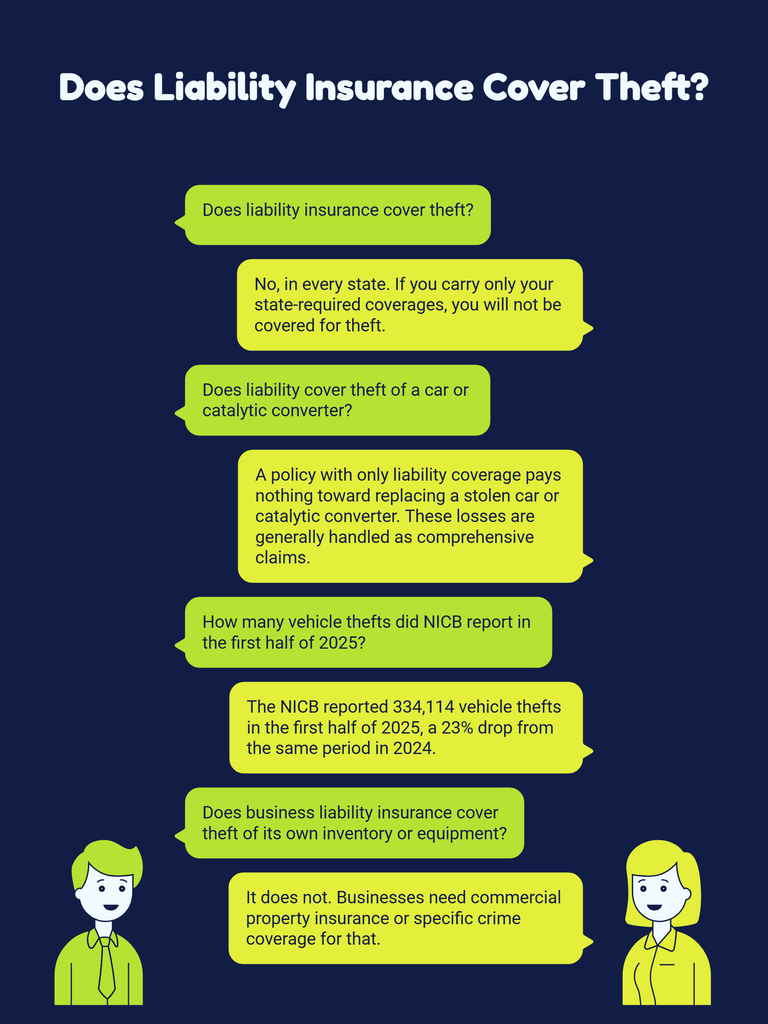
Does liability insurance cover theft? No, in every state. The definition of liability coverage is the same across the country, and state laws only change the minimum limits you must carry. Progressive puts it plainly: if you carry only your state-required coverages, you will not be covered for theft.
Does Liability Insurance Cover Theft of a Car or Catalytic Converter?
If someone drives off with your car, a policy with only liability coverage pays nothing toward replacing it. The same is true when thieves cut off a catalytic converter or smash a window to get inside the car. Does liability insurance cover a stolen catalytic converter? It does not, but these losses are generally handled as comprehensive claims, so check your policy and your deductible.
Vehicle theft is also becoming less common than the headlines suggest. The National Insurance Crime Bureau (NICB) reported 334,114 vehicle thefts in the first half of 2025, a 23% drop from the same period in 2024. That is good news, but one stolen car is still a total loss for the owner without the right coverage.
Does Business Liability Insurance Cover Theft?
General liability, sometimes called public liability, protects a business when a customer is injured or the business damages someone else’s property. It does not cover theft of the business’s own inventory or equipment. Businesses need commercial property insurance or specific crime coverage for that.
3. Which Insurance Covers Theft?
If you are asking does liability insurance cover theft because a car was just stolen, comprehensive is the coverage that matters.
Comprehensive Insurance for Vehicle Theft
Comprehensive insurance pays for damage to your vehicle from events other than a collision, including theft. Progressive states that comprehensive car insurance protects you if your vehicle is stolen. If a stolen car is not recovered, the insurer may pay the car’s actual cash value, which is its current market value rather than the price you paid, minus your deductible. So you pay the deductible first, and the payout will not exceed what the car was worth at the time of the theft.
Does Full Coverage Cover Theft?
“Full coverage” is not a single policy you can buy. It is a common name for a package that combines liability, collision, and comprehensive. Because that package includes comprehensive coverage, full coverage does cover theft. If you are not sure what your policy includes, look at your declarations page for a comprehensive line.
Personal Items Stolen From Your Car
Auto insurance covers the vehicle, not the belongings inside it. If someone breaks in and takes a laptop, the auto policy will not pay for it. Progressive notes that a renters or homeowners policy may cover personal belongings stolen from your car, even when the theft happens away from home. Coverage limits and your deductible still apply, and a low-value loss may not be worth claiming if it is below the deductible. Compare the two policies before you file.
Quick Comparison
The table below answers “does liability insurance cover theft” and similar questions at a glance by showing which policy usually responds to common losses. Your own policy wording and deductibles decide the final answer.
| Loss | Liability | Comprehensive | Homeowners or renters |
|---|---|---|---|
| Stolen car | No | Yes, minus your deductible | No |
| Stolen catalytic converter | No | Typically yes | No |
| Window broken in a break-in | No | Typically yes | No |
| Laptop stolen from the car | No | No | Often, subject to limits and deductible |
| Fire, vandalism or hail | No | Yes | No |
| Damage you cause to another driver | Yes | No | No |
4. Other Losses Liability Insurance Does Not Cover
Does liability insurance cover theft, fire, or vandalism? It covers none of them, and theft is one of several losses that liability coverage does not touch. Fire, vandalism such as keying a car or slashing tires, hail and other weather damage, and glass damage not caused by a covered accident all fall under comprehensive coverage instead.
Towing is usually covered only if you add a roadside assistance option to your policy. A good rule of thumb is that liability handles damage you cause to others, and everything that happens to your own car needs another coverage.
5. What to Do If Your Car Is Stolen
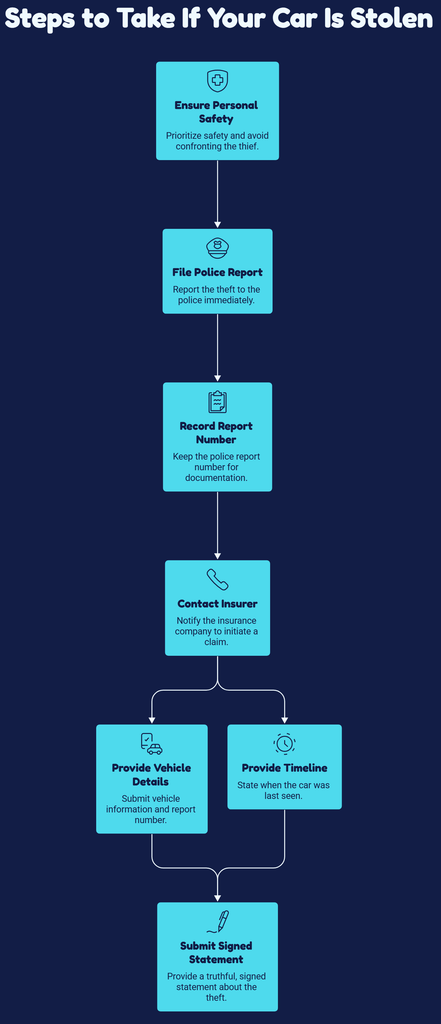
Time matters, so act in this order. Make sure you are safe and do not confront a thief. File a police report right away and keep the report number. Contact your insurer promptly to start a claim, and be ready to give vehicle details, the report number, and a timeline of when you last saw the car. Your insurer may ask for a signed statement about the theft, so answer carefully and truthfully.
If the claim is delayed or denied, you have options. Our guide on Attorneys for Insurance Claims: Avoid Unfair Denials explains when it makes sense to bring in legal help.
6. How to Reduce Your Theft Risk
Park in well-lit areas, lock your doors, and never leave valuables in plain sight. Layered protection works best: a steering wheel lock is a visible deterrent, and a tracking device can help police recover the vehicle. Many modern vehicles also come with an electronic immobilizer, which prevents the engine from starting without the correct key. Ask your insurer whether any anti-theft devices qualify you for a discount on comprehensive coverage, since discounts vary by company and state.
7. Frequently Asked Questions
Does liability insurance include theft?
No. Does liability insurance cover theft of any kind? It does not. Liability insurance covers injuries and property damage you cause to others. It does not pay for theft of your own vehicle or belongings.
Does liability insurance cover theft in California or other states?
No. Does liability insurance cover theft in any state? The answer is the same everywhere, because state laws set minimum liability limits but do not turn liability coverage into theft coverage.
Does liability insurance cover theft of personal items in my car?
No. Liability insurance does not pay for your own belongings. A homeowners or renters policy is the more likely source of coverage.
What kind of insurance covers theft?
Comprehensive insurance covers vehicle theft. Belongings stolen from inside the car are usually covered by a homeowners or renters policy, subject to limits and your deductible.
Does full coverage insurance cover theft?
Yes, because full coverage typically combines liability, collision, and comprehensive. It is the comprehensive part that responds to theft.
Does homeowners insurance cover items stolen from a car?
It often can. A homeowners or renters policy may cover personal belongings stolen from your car, even away from home, but your deductible and the policy’s limits apply.
Can an insurer deny a theft claim?
Yes. Common reasons include having no comprehensive coverage, a lapsed policy, a claim reported late, or suspicion of fraud. If your claim is denied, ask for the reason in writing and review the policy language.
Does insurance cover theft if I left the keys in the car?
It depends on the insurer and policy wording. Some policies still pay, while others limit or exclude losses involving negligence. Read your policy or ask your insurer before assuming.
Does liability insurance cover theft damage like a broken window?
No. Damage from a break-in is typically handled under comprehensive coverage, subject to your deductible.
Does liability insurance cover theft of a catalytic converter?
No. Liability coverage does not apply to your own car. A stolen catalytic converter is typically handled under comprehensive coverage, so check your policy and your deductible.
Coverage gaps like this one are why it pays to understand each part of your policy. Our Auto Insurance Guide (2026): How to Lower Your Premiums walks through every coverage type.
8. Conclusion
Does liability insurance cover theft? It does not. Liability coverage exists to protect other people when you cause harm, and it will not replace a stolen car or the belongings inside it. To protect yourself against theft, add comprehensive coverage, and check that your homeowners or renters policy covers the items you keep in your vehicle. Review your declarations page today, because the answer to does liability insurance cover theft will never change for a liability-only policy, so you know what you actually have before something goes wrong.
Disclaimer: This information is provided for general educational purposes only and does not constitute professional insurance, legal, or financial advice. Coverage, deductibles, and exclusions vary by insurer, policy, and state and change over time. Always check your policy and consult a licensed insurance professional before making coverage decisions.