Making Insurance Simple, One Insight at a Time.

Attorneys for Insurance Claims: Avoid Unfair Denials
Struggling with a denied payout? Learn how specialized attorneys for insurance claims fight bad faith delays and help you secure the maximum recovery you deserve.
Quick Summary
When an insurance provider delays, unfairly underpays, or outright denies a valid claim, hiring dedicated attorneys for insurance claims is the most effective way to protect your rights. These specialized legal professionals advocate for policyholders across auto, property, and home insurance disputes, helping you navigate complex policy language and counter bad faith insurance practices. From evaluating your case during a free initial consultation to negotiating a fair settlement or proceeding to litigation, an experienced insurance claims lawyer levels the playing field against corporate insurers to ensure you receive the maximum payout allowed under your policy.
Table of Contents
Table of Contents
1. Understanding Insurance Claims Attorneys
What Does an Insurance Claims Attorney Do?
Attorneys for insurance claims represent policyholders who are struggling to get fair payouts from their insurance companies. To fully understand what attorneys for insurance claims do, it helps to distinguish them from corporate lawyers. If you search for what kind of lawyers work for insurance companies, you will find insurance defense attorneys who represent the insurer’s interests to minimize payouts. In contrast, dedicated attorneys for insurance claims work solely on your behalf to demand the coverage you paid for. By hiring attorneys for insurance claims, you gain a professional advocate who serves as a direct counterbalance to the defense lawyers hired by the insurance company to minimize your recovery.
When to Hire an Insurance Claims Attorney
You should consider hiring legal counsel if your insurer denies your claim, delays payments without a valid reason, or offers a settlement that does not cover your actual losses. In these high-stakes situations, consulting with skilled attorneys for insurance claims ensures your rights are fully protected from day one. Whether you need a lawyer for insurance claims auto disputes or a property damage insurance claim lawyer, having an advocate is crucial when the financial stakes are high.
Types of Insurance Claims Handed by Attorneys
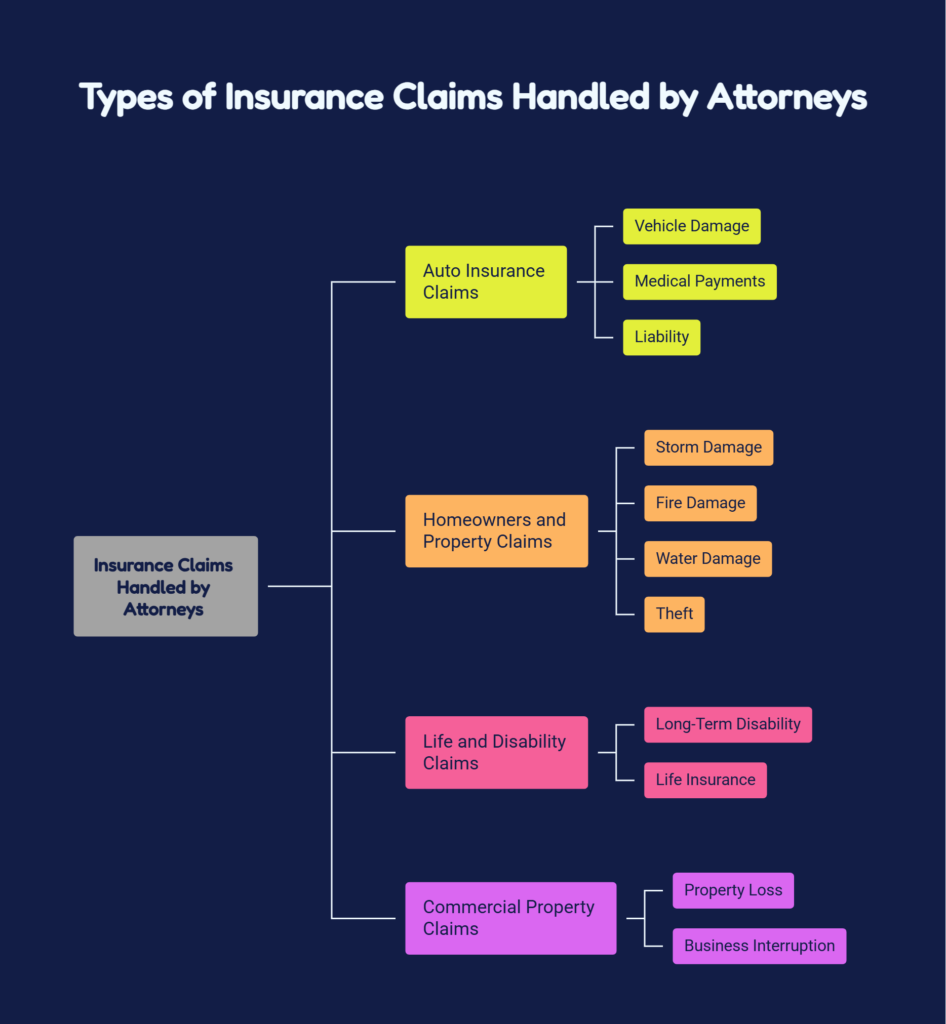
- Auto Insurance Claims: Resolving disputes over vehicle damage, medical payments, or liability. If you are specifically dealing with a motor vehicle accident, consulting a specialized car insurance attorney is crucial to navigating bad faith delays. You can read more about this in our detailed guide: Car Insurance Attorney: Powerful Tactics to Maximize Your Accident Settlement.
- Homeowners and Property Claims: Addressing damage from storms, fire, water, or theft.
- Life and Disability Claims: Challenging denied payouts for long-term disability or life insurance policies.
- Commercial Property Claims: Assisting business owners with complex property loss and business interruption claims.
How Insurance Claims Attorneys Can Benefit You
Experienced attorneys for insurance claims handle all direct correspondence with the insurance adjuster, shielding you from aggressive corporate settlement tactics. They interpret confusing policy exceptions, calculate the true cost of your physical or property damages, and build a strong legal case. They interpret confusing policy exceptions, calculate the true cost of your physical or property damages, and build a strong legal case that forces the insurer to take your claim seriously.
Common Misconceptions About Insurance Claims Attorneys
Many people assume that hiring a lawyer is only for those who want to file a lawsuit in court. In reality, the vast majority of cases handled by lawyers for insurance claims are resolved through negotiation without ever entering a courtroom. Another misconception is that you cannot hire a lawyer if your case does not involve physical injury. However, a property damage insurance claim lawyer can help you resolve disputes strictly related to physical structures and assets.
2. Choosing the Right Insurance Claims Attorney
Factors to Consider When Choosing an Insurance Claims Attorney
When looking for a law firm for insurance claims, experience in your specific type of loss is the most critical factor. An attorney who primarily handles car accidents may not have the technical knowledge required to challenge a complex home property damage assessment.
Questions to Ask Potential Insurance Claims Attorneys
Before signing a representation agreement, schedule an initial consultation and ask:
- Do you specialize in representing policyholders or insurance companies?
- Have you successfully handled claims similar to mine in the past?
- What percentage do most lawyers charge in your firm, and do you work on a contingency fee basis?
- How often will I receive updates on the status of my claim?
How to Evaluate an Attorney’s Experience in Insurance Claims
Look closely at an attorney’s track record of settlements and verdicts. Check professional directories, read client reviews, and verify that they have experience handling bad faith insurance claims. A specialized attorney understands how to challenge the technical reports submitted by the insurance company’s preferred contractors.
Red Flags to Watch Out for in Insurance Claims Attorneys
Avoid attorneys who guarantee a specific financial outcome during your very first meeting. Other warning signs include poor communication, a lack of transparent fee structures, or pressure to accept a quick settlement that you do not feel comfortable with.
3. The Process of Working with an Insurance Claims Attorney
Initial Consultation with an Insurance Claims Attorney
Most reputable attorneys for insurance claims offer a free initial consultation. This meeting is a critical opportunity for the lawyer to evaluate the strength of your case, review the insurer’s denial, and advise you on the best path forward. The attorney will review your insurance policy, look at the insurer’s denial or settlement offer, and advise you on the best path forward.
Steps in Filing a Claim with an Attorney
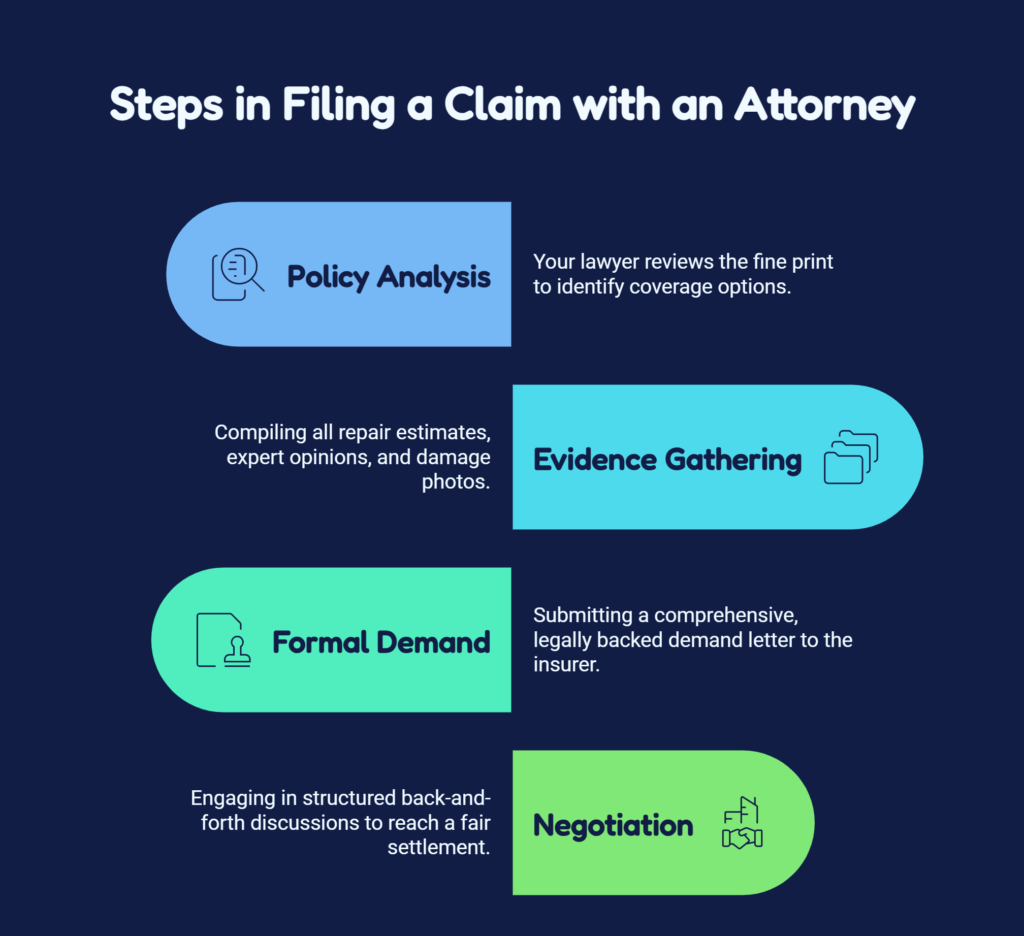
- Policy Analysis: Your lawyer reviews the fine print to identify coverage options.
- Evidence Gathering: Compiling all repair estimates, expert opinions, and damage photos.
- Formal Demand: Submitting a comprehensive, legally backed demand letter to the insurer.
- Negotiation: Engaging in structured back-and-forth discussions to reach a fair settlement.
Negotiating Settlements with the Help of an Attorney
Insurers are far more likely to offer a fair settlement when they know you have hired dedicated attorneys for insurance claims. These specialized attorneys for insurance claims know exactly how to counter common lowball tactics, such as claiming that your property damage was pre-existing or that your vehicle’s depreciation reduces its repair value. By working with attorneys for insurance claims, you ensure that every negotiation point is backed by legal expertise, forcing the insurance company to take your financial demands seriously.
Understanding Litigation in Insurance Claims
If the insurance company refuses to offer a reasonable settlement, your attorneys for insurance claims may recommend filing a formal lawsuit. Litigation involves a formal discovery process where both sides exchange evidence, which often pressures the insurer to settle before the case goes to trial. Throughout this legal process, your attorneys for insurance claims will advocate on your behalf to ensure the court understands the full extent of your damages.
How to Communicate Effectively with Your Insurance Claims Attorney
To help your attorney build the strongest possible case, keep all your physical and digital documents organized. Provide prompt answers to their questions, maintain a written timeline of the events surrounding your claim, and forward any direct communication you receive from the insurance company immediately.
4. Maximizing Your Insurance Claim with Legal Help
Strategies for Maximizing Insurance Claim Settlements
To secure the highest payout allowed by your policy, your attorneys for insurance claims will hire independent claims adjusters, engineers, or contractors to perform an unbiased evaluation of your damages. This thoroughly counters the biased estimates provided by the insurance company’s in-house adjusters, ensuring that attorneys for insurance claims have the accurate data needed to fight for your recovery. By leveraging the expertise of these attorneys for insurance claims, you can effectively challenge lowball offers and hold the insurer to the terms of your policy.
The Role of Evidence in Insurance Claims
Evidence is the foundation of any successful insurance dispute, and attorneys for insurance claims know exactly how to organize it for maximum impact. If you are wondering what all documents are required for an insurance claim, attorneys for insurance claims recommend that you compile:
- A copy of your complete insurance policy.
- Date-stamped photographs and videos of the damage.
- Police reports, fire department reports, or official weather records.
- Receipts for emergency repairs, temporary housing, or medical treatment.
- All email correspondence and letters sent to or received from the insurance company.
Timeframes for Resolving Insurance Claims with Attorneys for Insurance Claims
The timeline for resolving an insurance dispute varies based on the complexity of the case, but working with attorneys for insurance claims often helps keep the process moving efficiently. A straightforward auto dispute might be resolved in a few weeks with the help of attorneys for insurance claims, while a major commercial property dispute or a bad faith lawsuit handled by attorneys for insurance claims can take several months or even over a year. Throughout these periods, your attorneys for insurance claims will help you navigate these timelines while ensuring you do not miss any state-enforced statutes of limitations.
Common Pitfalls in Insurance Claims and How Attorneys Avoid Them
Many policyholders accidentally damage their claims by giving recorded statements to adjusters without legal representation. Insurance adjusters often ask leading questions designed to get you to admit partial fault or downplay the severity of your damages. Attorneys for insurance claims will handle all communications and statements to prevent these costly mistakes, ensuring that the attorneys for insurance claims are the only ones representing your voice to the insurer.
5. Legal Framework and Insurance Claims
Understanding Insurance Law: A Guide
Insurance policies are legally binding contracts governed by state-specific contract laws. These laws require both the policyholder and the insurer to act with utmost good faith. When an insurer fails to meet its obligations, the legal framework provides avenues for policyholders to seek justice.
State-Specific Rules for Insurance Claims
Every state has unique regulations regarding how quickly an insurance company must acknowledge a claim, investigate it, and make a final payment decision. If you are dealing with an attorneys for insurance claims denial, they will use these state-specific consumer protection statutes to hold your insurer accountable.
How Legal Policies and Recent Legislation Affect Your Insurance Claim
Insurance laws change frequently. Recent legislative updates can alter minimum liability coverage limits, state-mandated dispute resolution processes, or the penalties insurers face for delaying payments. Your attorney stays informed on these legislative changes to ensure your claim is processed under the most favorable legal standards.
Bad Faith Insurance and Lawyers
When an insurance provider intentionally denies a valid claim, refuses to investigate a loss, or offers an outrageously low payout without a reasonable explanation, they are acting in bad faith. If your insurer acts in this manner, hiring a bad faith insurance lawyer or a specialized bad faith insurance attorney is essential.
Under the law, a bad faith claim allows you to sue for damages beyond the original policy limits, including emotional distress, attorney fees, and punitive damages. For a comprehensive legal overview of how bad faith is defined in contract law, you can consult the bad faith claim definition by the Cornell Law School Legal Information Institute.
6. Frequently Asked Questions (FAQs)
Should I get a lawyer for my insurance claim?
Yes, if your claim is valued at a high dollar amount, involves disputed liability, or if the insurer has issued a partial or full denial. While simple, low-value claims can often be handled independently, having an attorney ensures you are not taken advantage of during complex negotiations.
Can I get a lawyer if insurance won’t pay?
Absolutely. If your insurer refuses to pay a valid claim, an insurance claims lawyer can step in to review the denial, draft a formal appeal, and, if necessary, file a lawsuit to force the company to honor its contractual obligations.
What does a claims lawyer do?
A claims lawyer analyzes insurance contracts, gathers independent evidence of your losses, negotiates with insurance adjusters, drafts formal demand letters, and files lawsuits to protect policyholders from bad faith practices.
What is the 80 20 rule for lawyers?
In a general business sense, the 80 20 rule suggests that 80% of a law firm’s results or revenue come from 20% of its clients or cases. In terms of productivity, it means focusing on the vital 20% of tasks, like key depositions and expert evidence, that will drive 80% of the settlement’s value.
What are the 4 types of insurance coverage?
While there are dozens of specialized policies, the four primary types of insurance coverage most consumers hold are:
- Auto Insurance: Covers liability, collision, and comprehensive physical damage.
- Homeowners or Renters Insurance: Protects your dwelling, personal property, and offers liability coverage.
- Health Insurance: Covers medical expenses, surgeries, and preventative care.
- Life Insurance: Provides financial support to beneficiaries after the policyholder’s death.
Will insurance provide a lawyer?
If you are sued by another party after an accident, your liability insurance policy typically obligates your insurer to provide and pay for an attorney to defend you. However, if you are suing your own insurance company for denying a claim, they will not provide you with a lawyer; you must hire an independent attorney to represent your interests.
How do I sue my homeowners insurance company?
To sue your homeowners insurance provider, you must first establish that they breached their contract or acted in bad faith. Your attorney will file a formal complaint in civil court detailing the terms of your policy, the nature of your covered loss, and how the insurer failed to honor their legal obligations.
What is the 80% rule for home insurance?
The 80% rule in homeowners insurance dictates that you must maintain coverage equal to at least 80% of your home’s total replacement cost to receive full payment for partial losses. If your coverage falls below 80%, the insurer will only pay a proportional percentage of your claim, leaving you to cover the remaining balance out of pocket.
What not to tell the attorney?
You should never lie, omit details, or exaggerate facts when speaking with your lawyer. However, you should avoid guessing or speculating about details you do not know for sure. It is always better to say “I do not remember” than to provide inaccurate information that can later damage your case.
How much do lawyers pay for insurance?
Lawyers pay varying premiums for legal malpractice insurance, also known as professional liability insurance, depending on their geographic location, areas of practice, and claims history. Annual premiums typically range from $1,500 to $10,000 or more per attorney.
What insurance covers attorney fees?
Legal expense insurance (LEI) is a specialized policy that covers legal fees for specific disputes. Additionally, standard liability insurance policies (such as auto or homeowners liability) cover the cost of legal defense fees if a third party sues you for an accident.
Is it expensive to hire an attorney?
Not necessarily. Most attorneys representing policyholders for insurance claims operate on a contingency fee basis. Under this arrangement, they do not charge any upfront legal fees. Instead, they receive a set percentage of the final settlement or court award, making professional representation accessible regardless of your current financial situation.
Can I afford an insurance claim lawyer?
Yes. Because of contingency fee arrangements, anyone can afford to hire top-tier attorneys for insurance claims. Your attorney’s financial interests will be perfectly aligned with yours, as they only get paid if they successfully secure a financial recovery for you. Your attorney’s interests will be perfectly aligned with yours, as they only get paid if they successfully secure a financial recovery for you.
What are the five rights of property ownership?
In real estate and property law, the five bundle of rights include:
- The Right of Possession: The right to occupy the property.
- The Right of Control: The right to use the property as you see fit within local laws.
- The Right of Exclusion: The right to decide who can enter or use the property.
- The Right of Enjoyment: The right to use the property peacefully without interference.
- The Right of Disposition: The right to sell, rent, transfer, or wills the property to others.
When should you hire a real estate attorney?
You should hire a real estate attorney when dealing with complex property line disputes, commercial real estate transactions, title defects, easement issues, or when purchasing property without standard agent representation.
7. Conclusion
Navigating an insurance dispute alone can leave you feeling overwhelmed and undercompensated. Insurance companies employ vast teams of adjusters and lawyers whose primary goal is to protect their corporate bottom line. By partnering with dedicated attorneys for insurance claims, you gain a powerful ally who understands how to counter bad faith practices, interpret complex policy guidelines, and build a compelling, evidence-backed case. Whether you are facing an auto claim denial or a complicated home property damage dispute, securing professional legal representation is the most reliable step you can take to protect your assets and maximize your final settlement.