Making Insurance Simple, One Insight at a Time.


Car Insurance Attorney: When to Hire One and How Settlements Work
Denied claim or a lowball offer? Learn how a car insurance attorney helps with accident settlements, what fees look like, and when you may not need one.
Quick Summary
A car insurance attorney helps policyholders negotiate, settle, and, if needed, litigate disputes with insurers. Whether you face a denied claim, a low settlement offer, or a dispute over who was at fault, a lawyer can explain your rights and handle communication with the insurer. This guide covers what these lawyers do, how to choose one, how fees work, and how settlements are valued, so you can decide whether you need one.
Table of Contents
Table of Contents
1. Understanding the Role of a Car Insurance Attorney
After a collision, dealing with the insurance side is often overwhelming. Many people wonder what a car insurance attorney does and when to hire one. A car insurance attorney is a lawyer who acts as your advocate in disputes with insurers: interpreting policy details, gathering evidence, and handling communication with the adjuster.
A lawyer who focuses on auto insurance disputes usually knows traffic law, liability rules, and common insurer tactics better than a general practice lawyer. That focus helps when a claim is delayed, denied, or valued too low, and when you suspect the insurer is not handling it fairly.
If you are sorting out a coverage question, such as which policy applies when you drive someone else’s vehicle, a lawyer can give clarity. For more on that topic, see our guide, Can I Insure a Car Not in My Name? Avoid These 2026 Mistakes.
2. Finding the Right Car Insurance Attorney for Your Case
Finding the right representation takes some care. When you search for a car insurance attorney near you, look for a lawyer licensed in your state who regularly handles auto insurance disputes. A proven track record with insurers matters more than advertising.
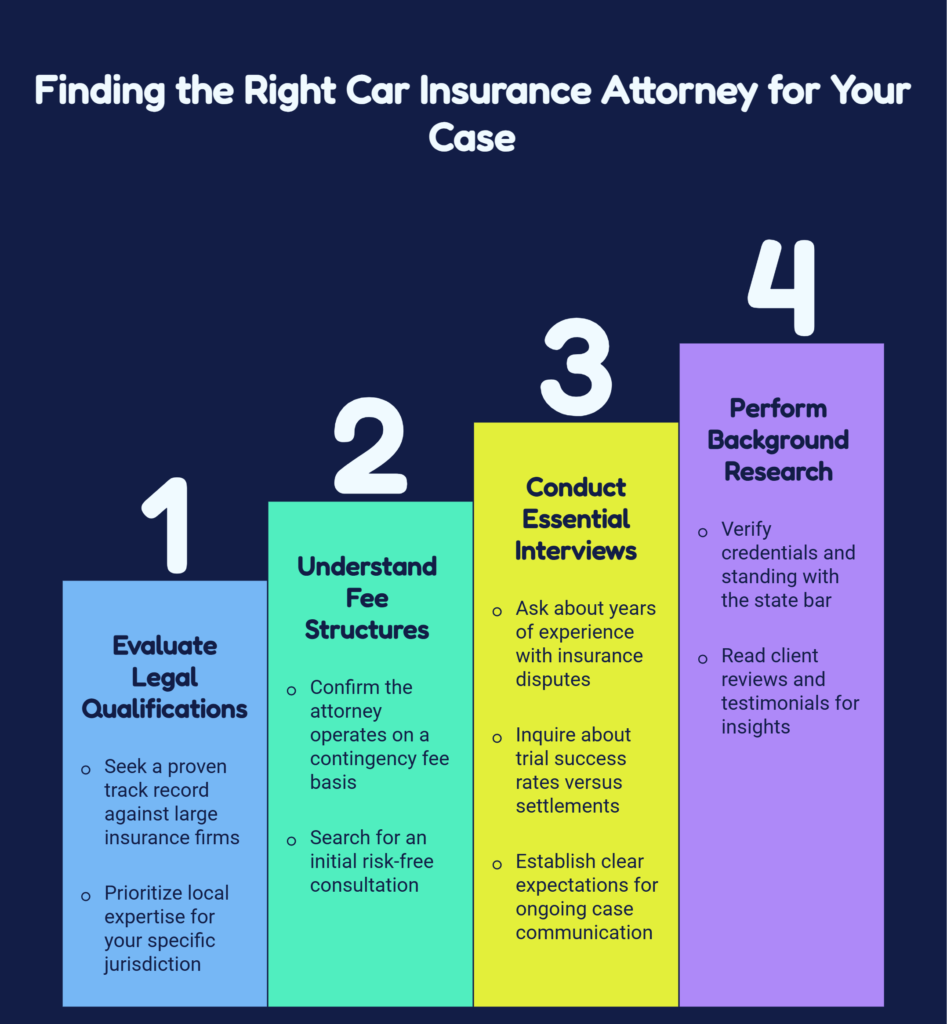
Most car insurance attorneys who handle accident claims work on a contingency fee, which means the fee comes out of what you recover and you generally owe no attorney fee if you do not recover. Ask about case costs separately, since some agreements make you responsible for them regardless of the result. Many lawyers offer a free first consultation.
Questions to ask before you hire:
- How many years of experience do you have dealing directly with insurance disputes?
- How often do your cases settle, and how often do they go to trial?
- How will we communicate throughout the duration of my case?
- What percentage do you charge, and who pays case costs?
Research a car insurance attorney’s background before you sign. Check credentials, read reviews with care, and verify the lawyer’s standing with your state bar association. Local experience helps, because auto insurance and bad faith rules vary by state.
3. How a Car Insurance Attorney Handles Your Accident Claim
Filing a car insurance claim can seem straightforward, but problems often come up. Adjusters work for the insurer and evaluate claims within company guidelines, so what you say to them matters. Having a car insurance attorney handle communication helps you avoid accidentally admitting fault or accepting a low offer too quickly.
First-Party vs. Third-Party Claims
A first-party claim is filed with your own insurer, for example under collision, medical payments, or uninsured motorist coverage. A third-party claim is filed against the at-fault driver’s insurer. The rules, deadlines, and the insurer’s duties differ for each, and an attorney can tell you which route fits your situation.
When Fault Is Shared
If more than one driver shares the blame, most states reduce your recovery by your percentage of fault, and a few strict states can bar recovery if you are even partly at fault. An attorney can gather evidence to challenge an unfair fault assessment.
Attorneys also assist with denied or underpaid claims by organizing the documentation needed to show liability and damages and by negotiating with the insurer. A property-damage-only dispute, such as an insurer disputing repair costs, may not need a lawyer, but a consultation can help you decide.
If negotiations stall, your attorney may prepare for court by gathering expert witnesses, compiling medical and repair bills, and building the case for a judge or jury. Every state sets a deadline for filing a lawsuit, so do not wait.
4. Legal Options After a Car Insurance Claim Denial
A denial letter is frustrating, but it is not always the end of the road. Knowing your rights under your policy and state insurance law is the first step toward fighting back.
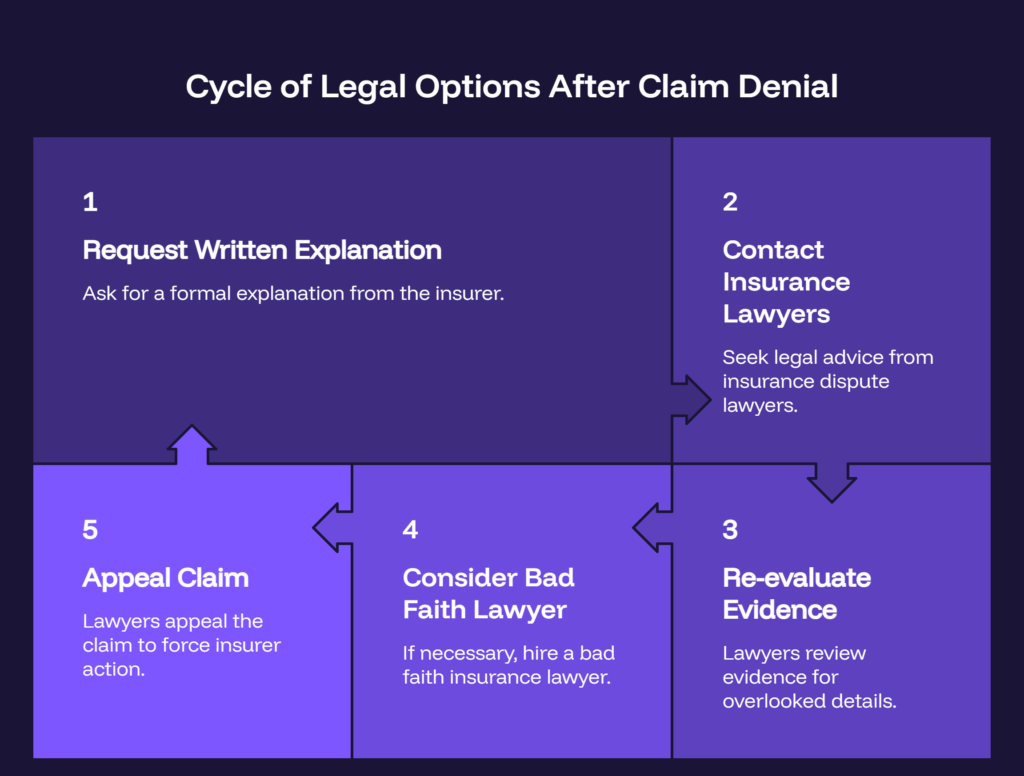
After a denial, request a written explanation from the insurer, keep copies of everything, and consider contacting an insurance dispute lawyer. A lawyer can re-examine the evidence and check whether the insurer applied the policy correctly.
If your insurer is unreasonably delaying or denying a valid claim, you may need a bad faith insurance lawyer. Bad faith rules differ by state, so ask about the law where you live. You can also file a complaint with your state insurance department, which many states handle online. If your denied claim involves another type of insurance, our guide, Attorneys for Insurance Claims: Avoid Unfair Denials, covers the general process.
5. How a Car Insurance Attorney Values Your Claim
Calculating a claim’s value goes beyond your mechanic’s bill. Damages can include future medical expenses, lost wages, property damage, and pain and suffering, depending on your state and the facts. A lawyer can help document each category and estimate what the claim is worth.
Negotiation is easier when the insurer knows you are prepared to go to court. Representation does not guarantee a higher payout, and attorney fees come out of the settlement, so compare what you would likely receive with and without a lawyer. Our guide, Car Wreck Without Insurance: Legal Risks and Your Next Steps (2026), explains what changes if you were uninsured at the time of the crash.
6. Frequently Asked Questions (FAQs)
What is an insurance attorney called?
They are commonly referred to as a car insurance attorney, auto insurance claim attorney, or personal injury lawyer, depending on the specifics of the case.
Does car insurance provide an attorney?
If you are sued by another driver after an accident, your liability coverage typically requires your insurance company to provide and pay for an attorney to defend you. However, if you are suing your own insurance company (or the at-fault driver’s company) to get a payout, your insurance will not give you a lawyer for that; you must hire your own.
Should I get a lawyer for my insurance claim?
If your claim is simple and involves minor property damage, you may not need a lawyer. If there are injuries, disputed fault, or signs the insurer is acting in bad faith, talking to a lawyer is worth considering.
How much is a car insurance lawyer?
Many accident lawyers work on a contingency fee, meaning they take a percentage of the final settlement instead of billing hourly. The percentage and who pays case costs are set in your fee agreement.
What percentage does a car accident lawyer take?
It varies by firm, state, and case stage. Contingency percentages are often higher if a case goes to trial than if it settles early, and some states limit fees in certain cases. Get the percentage and the treatment of case costs in writing before you sign.
Is $100,000 a good settlement?
Whether $100,000 is a good settlement depends on your damages, including medical bills, lost wages, future care, and pain and suffering, and on the policy limits available. A lawyer can compare the offer to the full value of your claim.
What is the new law for car insurance in California?
The new law for car insurance in California, Senate Bill 1107, raised the minimum liability limits. The old 15/30/5 minimums ($15,000 for injury per person, $30,000 per accident, and $5,000 for property damage) increased to 30/60/15 ($30,000, $60,000, and $15,000) when the law took effect on January 1, 2025. Check your policy and the California Department of Insurance for the limits that apply to you.
Will I pay a penalty for having no insurance in CA?
Yes. Driving without insurance in California can result in fines, a vehicle impound, and a suspension of your driving privileges.
How do I file a complaint against an insurance company in California?
If you need to file a formal complaint against your insurer, you can submit it online through the California Department of Insurance consumer portal at no charge.
Can you sue a car insurance company without a lawyer?
Yes, you can legally represent yourself in court (known as acting pro se). However, handling complex legal procedures and facing an experienced corporate legal team alone is very difficult and not recommended.
What are red flags for insurance companies?
Red flags include unreasonable delays in processing your claim, failing to provide a written explanation for a denial, aggressive pressure to accept a fast but low settlement, and asking you to sign medical releases that give them access to your entire unrelated medical history.
Which insurance company has the most complaints?
Complaint ratios fluctuate annually. To find accurate, up-to-date data on which insurers have the highest volume of consumer complaints, you can check the National Association of Insurance Commissioners (NAIC) database or your local state department of insurance website.
What not to tell the attorney?
You should never lie or hide facts from your attorney. However, avoid exaggerating your injuries, guessing about facts you are unsure of, or discussing your case on social media, since those actions can hurt your claim.
Legal disputes often come down to what your policy actually covers. Get a clearer picture of coverage types and provider obligations in Auto Insurance Guide (2026): How to Lower Your Premiums.
7. Conclusion
Dealing with the aftermath of an accident is stressful enough without a fight over your claim. Whether you need help with a routine dispute or a bad faith denial, a car insurance attorney can explain your options, handle the insurer, and help you decide whether a settlement is fair. Ask the right questions at a free consultation, understand how fees work, and remember that no lawyer can guarantee an outcome.
Disclaimer: This article is general information, not legal advice, and reading it does not create an attorney-client relationship. Laws, deadlines, and fee rules differ by state, so speak with a licensed attorney about your claim.