Making Insurance Simple, One Insight at a Time.


Life Insurance Guide: Avoid These 5 Costly Policy Traps
Don’t fall for overpriced premiums. Our life insurance guide breaks down hidden fine print, denied claim triggers, and simple ways to lower monthly rates.
Quick Summary
This comprehensive life insurance guide breaks down everything from the fundamental definition of coverage to the complexities of filing a claim. We cover the core differences between term and whole life, how your age dictates your rates, and the exact steps to find coverage without a medical exam. You will also learn how to navigate beneficiary disputes, read provider reviews, and ultimately select the right financial protection for your family.
Table of Contents
Table of Contents
1. Why Life Insurance Matters for Every Family
1.1 Who Needs Life Insurance and Why
Life insurance is often misunderstood as a product only for older adults or the wealthy, but it plays a critical role for anyone whose income, presence, or labor supports another person financially. Parents with young children, primary household earners, homeowners with an outstanding mortgage, and even stay-at-home spouses who provide childcare and household management all have a genuine need for coverage, since their absence would create a real financial gap for the people who depend on them.
The core purpose of a policy is simple: it replaces lost income and covers outstanding obligations, such as a mortgage, credit card debt, or a child’s future education costs, so your family isn’t forced to make difficult financial decisions during an already painful time. Business owners also rely on life insurance to fund succession plans or protect a company against the sudden loss of a key partner.
Before comparing specific policies or providers, it helps to understand exactly how coverage works, what it costs, and how claims are actually paid out. The sections below walk through each of these in detail, starting with the fundamentals of how a policy functions.
2. Life Insurance Basics: How It Works
Many people know they need coverage to protect their families, but they often lack a clear understanding of the fundamental mechanics of a policy.
2.1 What is life insurance?
It is a legally binding contract where you pay regular premiums to an insurance company, and in return, the insurer guarantees a tax-free payout (known as a death benefit) to your chosen beneficiaries upon your passing. This financial safety net ensures your loved ones are not left with unmanageable debt or a sudden loss of income. If you want a structured blueprint on how to protect your household, reading The Best Life Protect Insurance Guide: Secure Your Family is a great next step.
2.2 How does life insurance work?
It works by pooling financial risk; policyholders pay premiums into a collective fund, and the insurance company manages those funds to ensure they can pay out a lump sum when a covered individual dies. The math is managed by actuaries who assess the statistical probability of a payout.
2.3 What are the types of life insurance?
The primary types of life insurance fall into two broad categories: temporary term life insurance that lasts for a specific number of years, and permanent life insurance (like whole or universal) that lasts your entire life and builds cash value over time.
3. Coverage Types: Finding the Right Fit
Selecting the correct policy requires understanding the distinct advantages and limitations of each product on the market.
3.1 Term Life vs. Whole Life Insurance
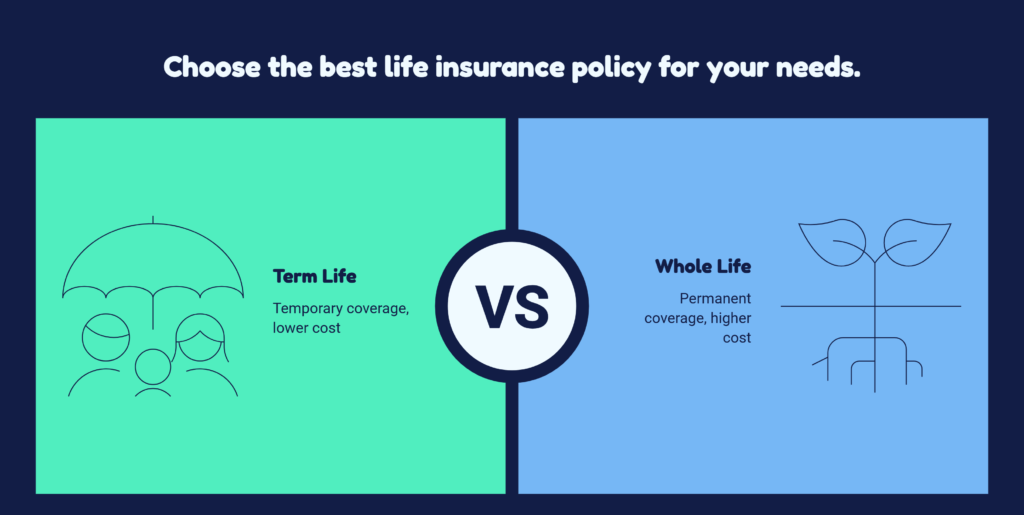
When weighing term life vs whole life insurance, term life provides temporary coverage without a cash value component at a much lower cost, whereas whole life offers permanent coverage with a built-in savings component at a significantly higher premium. Term is typically best for young families needing high coverage for a specific window of time, while whole life serves those looking for lifelong guarantees and wealth transfer capabilities.
3.2 What is final expense insurance?
Final expense insurance is a small, permanent whole life policy specifically designed to cover end-of-life costs, such as funeral services, burial plots, and lingering medical debts. These policies usually have lower death benefits, ranging from $5,000 to $25,000, making them highly accessible for older applicants.
3.3 Accident Insurance vs. Life Insurance
In the debate of accident insurance vs life insurance, accident insurance only pays a death benefit if your passing is the direct result of a covered physical accident, while standard life insurance covers death from almost any cause, including natural illness and aging. For a deeper look at accident-specific policies, we highly recommend reading The Best Colonial Life Accident Insurance Guide for 2026.
4. Cost Factors: Understanding Your Premiums
Budgeting for a policy means grasping exactly how insurers calculate your monthly or annual bills.
4.1 What is the average life insurance cost?
Life insurance cost is determined by variables like your age, medical history, gender, and coverage amount, with healthy individuals often paying between $20 and $50 per month for a standard term policy.
4.2 How do life insurance rates by age vary?
Life insurance rates by age scale upward significantly as you get older, meaning locking in a policy in your 20s or 30s will secure much lower fixed premiums compared to starting a brand new policy in your 50s or 60s. Insurers view age as the primary risk factor, which is why procrastination can be incredibly expensive.
4.3 How to lower life insurance premiums
If you are wondering how to lower life insurance premiums, you can achieve this by purchasing coverage at a younger age, improving your physical health (such as quitting smoking or losing weight), opting for term coverage instead of permanent, and aggressively comparing quotes from multiple providers. A healthy lifestyle and a proactive approach are your best tools for saving money.
5. Choosing a Provider: Reviews and Top Picks
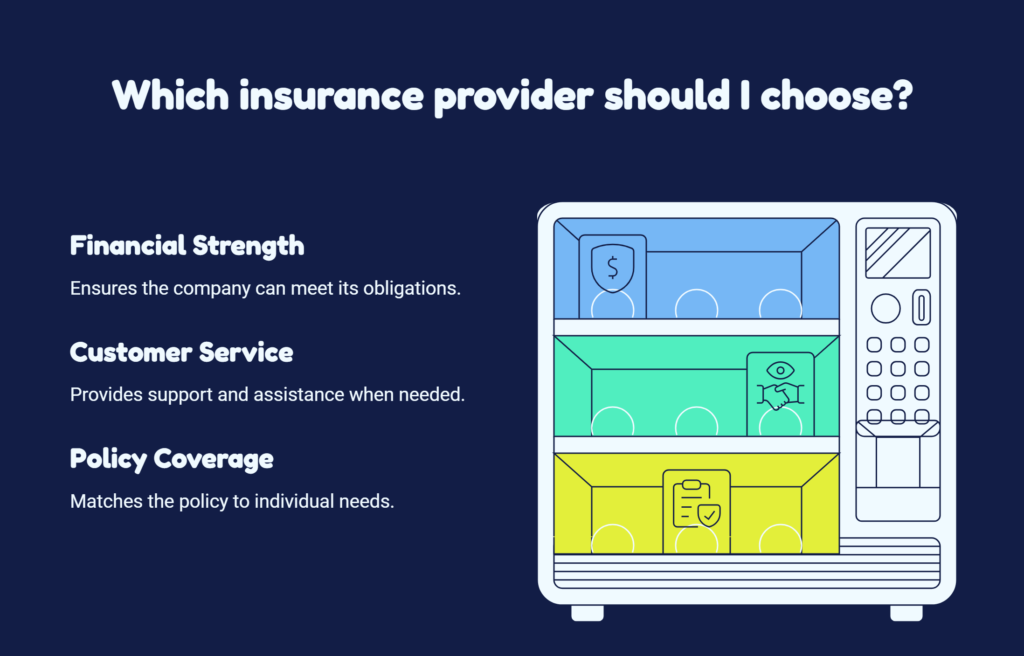
Not all insurance carriers are created equal. The financial strength and customer service record of a company are just as important as the policy itself.
5.1 The best final expense insurance companies
The best final expense insurance companies are those that offer guaranteed issue options without strict medical exams, have a proven track record of fast claim payouts to grieving families, and provide stable premium rates that never increase as the policyholder ages. Look for companies with high ratings from independent agencies like AM Best.
5.2 Reading life insurance company reviews
Reading life insurance company reviews is essential because these independent evaluations reveal real customer experiences regarding hidden policy fees, the speed of death benefit payouts, and the overall reliability of the insurer’s customer service department. For instance, evaluating an insurer’s transition periods and claim processes is thoroughly covered in our Great Western Insurance Company Review: Policies, Claims, and the Wellabe Transition.
5.3 The top senior life insurance providers
The top senior life insurance providers specialize in accommodating older applicants by offering simplified underwriting processes, relaxed medical requirements, and policies tailored to fit within fixed retirement budgets. For a closer look at a popular provider in this space, check out the Open Care Life Insurance: 2026 Guide to Costs, Policies, and Reviews.
6. Special Situations: Seniors and No Exam Policies
Standard underwriting isn’t ideal for everyone, especially those with pre-existing conditions or older applicants who require streamlined approval processes.
6.1 Securing life insurance for seniors
Securing life insurance for seniors involves finding policies that specifically account for age-related health conditions, often focusing on smaller death benefits intended to cover final debts rather than replacing decades of future lost income. You can learn more about tailored senior plans by checking out Loyal American Life Insurance: Your Complete 2026 Guide.
6.2 What is no medical exam life insurance?
No medical exam life insurance is a specialized policy that bypasses the traditional physical health check, relying instead on a detailed health questionnaire and electronic background checks to approve coverage quickly.
6.3 Obtaining life insurance without a health exam
Obtaining life insurance without a health exam is ideal for individuals with pre-existing medical conditions or a severe aversion to doctors, though it typically comes with slightly higher monthly premiums and lower maximum coverage limits than fully underwritten plans. This trade-off of cost for convenience is a popular choice for fast, guaranteed peace of mind.
7. Claims and Legal Help: Protecting Your Payout
The true test of any policy is the claims process. Unfortunately, beneficiaries sometimes face hurdles when trying to access the funds they are owed.
7.1 Unclaimed Benefits
Millions of dollars are lost in the system simply due to lack of communication. According to the National Association of Insurance Commissioners (NAIC), their Life Insurance Policy Locator tool has connected consumers with more than $6 billion in unclaimed life insurance and annuity benefits since 2016. You can read the official report here:
National Association of Insurance Commissioners (NAIC)
7.2 A denied life insurance claim
A denied life insurance claim occurs when an insurer officially refuses to pay the requested death benefit, usually citing material misrepresentation on the initial application, a failure to pay past premiums, or death by a cause specifically excluded in the policy terms.
7.3 Life insurance beneficiary disputes
Life insurance beneficiary disputes happen when multiple family members or parties contest who is rightfully entitled to the death benefit, a situation often triggered by outdated policy designations, recent divorces, or conflicting instructions in estate documents.
7.4 Life insurance lawyers
A life insurance lawyer is a legal professional who specializes in fighting delayed payouts, formally appealing denied claims, and navigating complex beneficiary disputes to ensure the rightful heirs receive their intended financial benefits. If you are facing a rejection letter, understanding your legal rights is critical; read Denied Payout? How a Life Insurance Lawyer Can Save Your Claim for actionable steps. (Note: While life insurance protects against mortality risks, managing physical assets requires different tools, which you can explore in our Property and Casualty Insurance Hartford: Eye-Opening Guide.)
8. Frequently Asked Questions
Are life insurance payouts taxable?
In the vast majority of cases in the United States, the death benefit paid out to a beneficiary is not considered gross income and is therefore completely tax-free. However, if the payout is delayed and earns interest, that specific interest portion may be subject to taxation.
Can I have multiple life insurance policies?
Yes, it is entirely legal and very common to hold multiple policies. Many people have a small policy provided by their employer and a larger, private term policy they purchased independently to ensure full coverage for their family.
What happens if I miss a premium payment?
Most life insurance policies include a standard 30-day grace period. If you miss a payment, your coverage remains active during this window. If you fail to pay by the end of the grace period, your policy will lapse, meaning you lose your coverage and your beneficiaries will not receive a payout.
Can I change my beneficiary later?
Yes, you can update your beneficiaries at any time, provided you have a revocable beneficiary designation. It is highly recommended to proactively review and update this information after major life events such as marriage, divorce, or the birth of a child.
Does life insurance cover suicidal death?
Most life insurance policies include a suicide clause. This typically dictates that if the policyholder dies by suicide within the first two years of the policy (the contestability period), the death benefit will not be paid, though premiums are generally refunded. After this period, the death benefit is usually paid out to the beneficiaries.
Can I withdraw money from my life insurance policy?
You can only withdraw money or take out a loan if you have a permanent life insurance policy (like whole or universal life) that has accumulated sufficient cash value over time. Term life insurance does not build cash value and therefore cannot be borrowed against.
What happens if I outlive my term life insurance policy?
If you outlive a standard term policy, the coverage simply expires. You will not receive a payout or a refund of your premiums unless you specifically purchased a “return of premium” rider. If you still need coverage, you will need to apply for a new policy or convert your expiring term to a permanent policy if your contract allows it.
Do I have to take a medical exam to get covered?
Not necessarily. While traditional policies require a medical exam to secure the lowest rates, many insurers now offer “no-exam” or “simplified issue” policies. These rely on health questionnaires and electronic background data, making approval faster, though they often come with slightly higher premiums and lower coverage limits.
9. Conclusion
Navigating the life insurance landscape does not have to be an overwhelming process. By understanding the basics, comparing term and whole life options, and familiarizing yourself with cost factors, you can secure the financial future of your loved ones with confidence. Whether you are seeking a standard policy in your 30s or looking into final expense options as a senior, the most crucial step is to act early and communicate clearly with your beneficiaries. Always remember to read reviews, compare quotes, and consult with a licensed professional to find the perfect fit for your unique situation.
Disclaimer: The information provided on this website is for general educational and informational purposes only. We provide insurance-based information for consumers in the USA, but we do not directly offer or sell insurance policies. This content does not constitute professional financial or legal advice. Always consult with a licensed insurance broker or financial advisor before making any decisions regarding your coverage.