Making Insurance Simple, One Insight at a Time.

Business Insurance Guide: Powerful Steps to Protect Your Assets
Master commercial coverage with our essential business insurance guide. Learn smart strategies to protect your revenue and secure high-value policies easily.
Quick Summary
Commercial insurance provides financial protection against property damage, legal liability, workplace injuries, and operational disruptions. Selecting the right policy requires assessing your specific industry risks, understanding key cost drivers, and choosing between independent brokers and direct insurers. By regularly reviewing policy limits, implementing risk management protocols, and maintaining regulatory compliance, business owners can protect their investments while keeping insurance costs manageable.
Table of Contents
Table of Contents
- Business Insurance Basics: Core Concepts and Mechanics
- Essential Coverage Types for Commercial Protection
- Business Insurance Cost Factors and Premium Reduction
- How to Choose a Provider: Brokers, Direct Insurers, and Reviews
- Special Industry Situations: Retail, Convenience Stores, and Cyber Threats
- Claims Management and Compliance Standards
- Frequently Asked Questions (FAQs)
- Conclusion
1. Business Insurance Basics: Core Concepts and Mechanics
Understanding commercial coverage starts with answering a simple question: what is business insurance? Business insurance is a contract between a commercial enterprise and an insurance provider where the carrier promises to cover specified financial losses caused by accidents, property damage, legal claims, employee injuries, or unexpected operational halts. It serves as a financial safety net that prevents a single lawsuit or property damage event from bankrupting a business.
Knowing how does business insurance work requires looking at the risk transfer process. A company pays a regular fee called a premium to the insurance carrier. In exchange, the carrier agrees to absorb covered losses up to specified limit amounts. When an accident or disaster occurs, the business owner files a claim, pays an agreed upon deductible, and the insurer pays for repair costs, medical fees, or legal defense expenses according to the terms outlined in the policy contract.
When exploring the available types of business insurance, companies typically start with core coverages before adding specialized policies. The primary types of business insurance include general liability insurance, commercial property insurance, professional liability protection, workers’ compensation, and cyber liability policies. Choosing the correct combination ensures that your physical assets, legal liabilities, and financial earnings remain protected under varying circumstances.
2. Essential Coverage Types for Commercial Protection
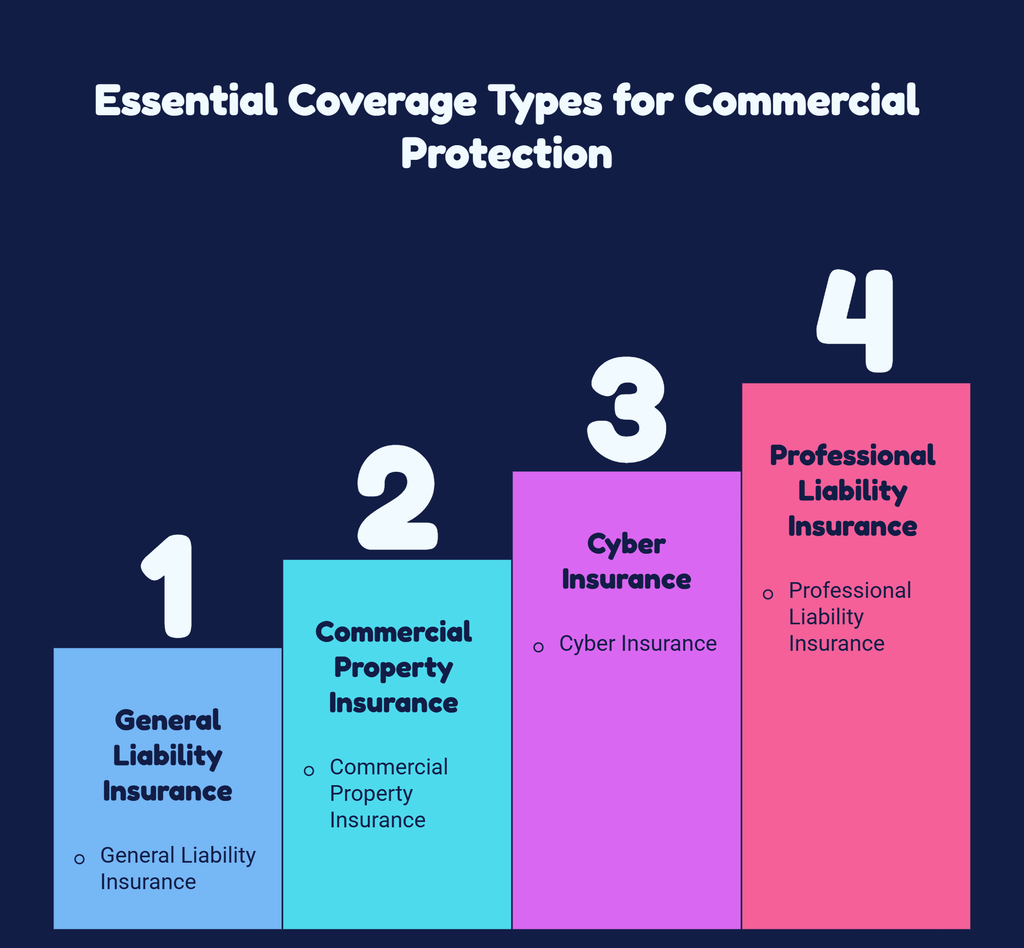
General Liability Insurance
General liability insurance is a foundational commercial policy that pays for third party claims involving bodily injuries, property damage, and personal or advertising injuries on your premises or during business operations. For instance, if a customer slips on a wet floor inside your office or store, general liability covers their medical expenses, legal representation, and court judgments up to your policy limit.
Commercial Property Insurance
Commercial property insurance is a policy that reimburses a business for physical loss or damage to its buildings, inventory, equipment, tools, and office furniture resulting from perils such as fire, storm damage, vandalism, or theft. Whether you own or lease your workspace, commercial property insurance guarantees that physical assets can be repaired or replaced without depleting operational reserves.
Cyber Insurance
Cyber insurance is a specialized policy that covers financial recovery costs, legal expenses, customer notification fees, regulatory fines, and extortion demands following a digital breach or network attack. Modern businesses handle vast amounts of sensitive client data, making digital threats an immediate concern. For an in depth look at emerging digital risks and underwriting changes, read our guide on Cyber Insurance News & Trends: Complete 2026 Guide.
Professional Liability Insurance
Professional liability insurance, also referred to as errors and omissions (E&O) insurance, protects service providers and advice based businesses against legal claims alleging professional negligence, misrepresentation, inaccurate advice, or contractual failure. If a client suffers financial loss due to a mistake in your work or service delivery, professional liability handles defense costs and legal settlements.
3. Business Insurance Cost Factors and Premium Reduction
Determining your expected business insurance cost requires analyzing your business type, coverage selection, and payroll scale. The average business insurance cost for basic general liability ranges from $40 to $100 per month for small enterprises, but overall premiums vary significantly based on industry risk levels.
Factors That Affect Commercial Insurance Rates
Several critical factors that affect commercial insurance rates directly influence what carriers charge:
- Industry and Risk Exposure: High risk industries like construction pay significantly more than low risk consultancy firms.
- Company Size and Revenue: Larger revenues and higher employee counts increase total liability exposure.
- Location: Operating in areas prone to natural disasters or higher crime rates increases property and liability premiums.
- Claims History: Businesses with a clean record pay lower rates compared to those with repeated claims.
- Coverage Limits and Deductibles: Choosing higher coverage limits raises premiums, while selecting higher deductibles lowers them.
According to data published by the Insurance Information Institute, commercial lines account for approximately 50 percent of the total U.S. property and casualty insurance industry premiums, emphasizing the massive scale and economic importance of commercial coverage across all sector sizes.
How to Lower Business Insurance Premiums
If you are wondering how to lower business insurance premiums, there are several proven strategies to reduce ongoing costs:
- Bundle Coverage: Combine general liability and commercial property into a Business Owner’s Policy (BOP) to secure package discounts.
- Increase Deductibles: Raising your out-of-pocket deductible directly lowers monthly premium costs.
- Implement Safety Programs: Establish formal safety training, workplace security measures, and fire prevention protocols.
- Audit Annual Payroll and Revenue: Ensure policy estimates match actual operational figures so you do not overpay for unneeded coverage.
4. How to Choose a Provider: Brokers, Direct Insurers, and Reviews
Selecting the right commercial provider determines how efficiently your claims are processed and how tailored your coverage remains over time. Knowing how to choose a business insurance company involves checking financial stability ratings through agencies like A.M. Best, assessing industry specific coverage options, reviewing customer service reputation, and evaluating claim processing speeds.
Business Insurance Broker vs Direct Insurer
When evaluating a business insurance broker vs direct insurer, the primary difference lies in representation and choice:
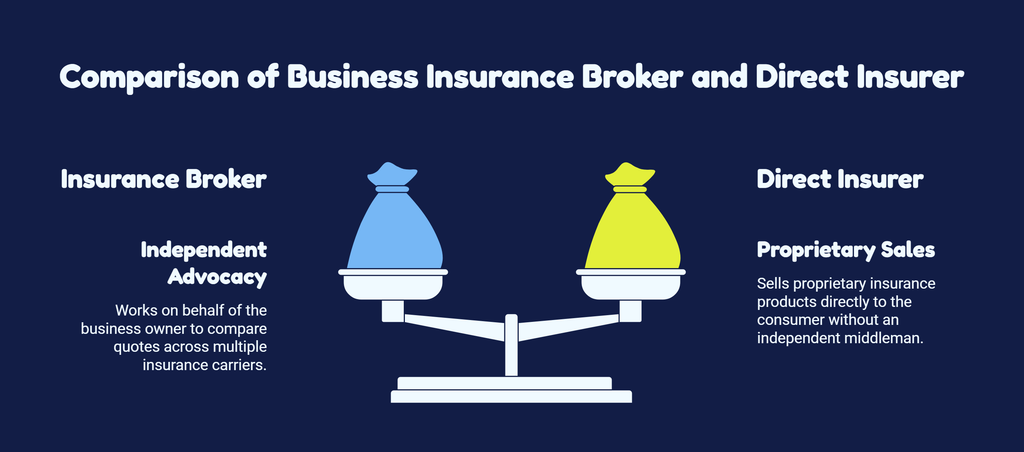
- Insurance Broker: An independent licensed professional who works on behalf of the business owner to compare quotes across multiple insurance carriers. To understand the regulatory frameworks that govern insurance intermediaries and consumer protection standards, consult our guide on Insurance Mediation Directive: Guide to Requirements & IDD.
- Direct Insurer: A single insurance carrier that sells its proprietary insurance products directly to the consumer without an independent middleman.
While direct insurers may offer streamlined online purchasing, brokers provide tailored advisory support and independent comparison across various markets.
Evaluating Reviews and Ratings
Analyzing small business insurance reviews helps owners identify carrier reliability, hidden policy exclusions, and claim payout performance before signing a policy contract. Reviewing real feedback exposes how carriers behave during active losses. For an example of detailed carrier evaluations, check our La Familia Insurance Review: Shocking Truth Exposed post to see how service quality varies across providers.
5. Special Industry Situations: Retail, Convenience Stores, and Cyber Threats
Special Industry Coverages
Retail Store Insurance
- Slip & Fall Injuries
- Shoplifting Losses
- Inventory Damage
Cyber Threats Coverage
- Ransomware Attacks
- Data Breach Costs
- Phishing Fraud
Convenience Store Policies
- Gas / Spill Incidents
- Late Night Risk Exposure
- Employee Theft
Retail Store Insurance
Retail store insurance is a bundled policy package designed to protect physical retail businesses against customer slip and fall injuries, inventory theft, property damage, and business interruption losses. Retailers face heavy foot traffic and physical inventory risks daily. Avoid common coverage errors by reviewing our detailed report on Mart Insurance Exposed: Devastating Retail Policy Traps.
Small Business Cyber Risk
Small business cyber risk refers to the heightened vulnerability of smaller companies to digital security threats, ransomware, phishing, and customer data theft due to limited cyber defenses. Smaller firms are frequently targeted by cybercriminals who assume small business IT infrastructures are easier to breach than enterprise networks.
Insurance Coverage for Convenience Stores
Insurance coverage for convenience stores is a specialized commercial setup tailored to high turnover, extended hours, and unique liabilities. Convenience stores require specialized protection for gas pump environmental hazards, late night robbery exposure, customer slip and falls, and employee theft.
6. Claims Management and Compliance Standards
The Business Insurance Claims Process
The business insurance claims process is the step by step procedure a business owner follows to receive compensation after a loss:
- Report the Incident: Notify your insurance agent or carrier immediately after an incident occurs.
- Document Damage: Take photos, gather video footage, collect witness statements, and compile police reports.
- Mitigate Further Loss: Take temporary steps to prevent additional damage, such as tarping a damaged roof.
- Work with the Adjuster: An insurance adjuster investigates the claim, inspects property damage, and verifies policy terms.
- Settlement and Payout: The insurer issues payment based on approved damages minus your deductible.
Handling Denied Claims
A denied business insurance claim occurs when an insurer refuses payment because the loss involves an excluded peril, late filing, policy lapse, or insufficient documentation. If your claim is denied, carefully review the formal denial letter, collect supporting proof, and work with your broker or legal counsel to file an official claim appeal.
Regulatory and Broker Compliance
Insurance broker compliance requirements are strict regulatory laws and legal duties mandated by state insurance departments that brokers must follow. These requirements enforce transparent fee disclosures, proper handling of client premium accounts, ethical advisory standards, and valid state licensing to protect policyholders.
7. Frequently Asked Questions (FAQs)
What are the three main types of business insurance?
The three main types of business insurance are general liability insurance (covers bodily injury and property damage to third parties), commercial property insurance (covers physical business assets), and workers’ compensation insurance (covers employee work injuries and lost wages).
What are the 7 pillars of insurance?
The 7 pillars or principles of insurance are Utmost Good Faith, Insurable Interest, Indemnity, Subrogation, Contribution, Proximate Cause, and Loss Minimization. These fundamental legal principles govern all commercial insurance policies.
What are the 7 main types of insurance?
The 7 main types of commercial insurance include General Liability, Commercial Property, Professional Liability, Workers’ Compensation, Cyber Liability, Commercial Auto, and Business Interruption Insurance.
Which insurance is best for business?
The best insurance for a business depends on its operational setup, but a Business Owner’s Policy (BOP) is widely considered the best choice for small businesses. It combines general liability, commercial property, and business interruption coverage into one affordable bundle.
What are the two basic types of insurance?
The two basic categories of insurance are Property Insurance (which protects physical assets against loss or damage) and Liability Insurance (which protects against legal financial responsibility for harm caused to third parties).
What type of insurance is best for a small business?
A Business Owner’s Policy (BOP) is generally best for small businesses because it integrates general liability and commercial property protections at a discounted rate compared to buying standalone policies.
What is the 80% rule for insurance?
The 80% rule for insurance requires policyholders to purchase property insurance coverage equal to at least 80% of the property’s total replacement value. If coverage falls below 80%, the insurer will not pay the full cost of a loss, forcing the owner to pay a proportional co-insurance penalty.
What is the cheapest business insurance?
General liability insurance is typically the cheapest business insurance policy, with basic coverage plans starting around $25 to $45 per month for low risk, home based, or sole proprietorship businesses.
Do I need business insurance if I have an LLC?
Yes, an LLC protects your personal assets from business liabilities, but it does not protect your business assets from lawsuits, fires, theft, or operational losses. Business insurance covers commercial losses and legal fees that can otherwise wipe out your LLC’s bank accounts.
Do I need business insurance for a sole proprietorship?
Yes, sole proprietors face unlimited personal liability for business debts, lawsuits, and property damages. Carrying business insurance protects both your personal personal assets and business revenue from devastating claims.
How much is $1,000,000 liability insurance a month?
A standard $1,000,000 general liability policy typically costs between $30 and $75 per month for low to moderate risk small businesses.
Is $100,000 personal liability enough?
For most active commercial businesses, $100,000 in liability protection is insufficient. Legal fees and medical costs easily exceed $100,000 in moderate injury cases, which is why standard commercial policies usually start at $1,000,000 in coverage limits.
Why is business insurance so expensive?
Business insurance costs increase due to high risk industry activities, previous claim histories, inflation driving up repair costs, rising litigation fees, and geographic location exposure to weather or crime hazards.
Can you run a business without business insurance?
While you can technically run some sole proprietorships without general coverage, most states legally mandate workers’ compensation and commercial auto insurance. Furthermore, commercial landlords, clients, and lenders usually require proof of insurance before issuing contracts or leases.
8. Conclusion
Securing the right commercial coverage requires evaluating operational risks, selecting appropriate policy types, and reviewing limits regularly as your company grows. By assessing key coverage needs, understanding cost factors, working with compliant brokers or reputable direct carriers, and following structured claims protocols, you can shield your business from unexpected financial loss. Prioritize thorough coverage assessments today to ensure long term operational stability and peace of mind.
Disclaimer: The information provided on this website is for general educational and informational purposes only and does not constitute professional financial, legal, or insurance advice. While we strive to keep content accurate and up to date, policy terms, coverages, and state regulations vary. Readers should consult with a licensed insurance agent, broker, or legal professional before making any financial or purchasing decisions.