Making Insurance Simple, One Insight at a Time.


Cyber Insurance News & Trends: Complete 2026 Guide
Get the latest cyber insurance news today. Explore policy changes, market trends, and expert tips to keep your business protected in 2026.
Quick Summary
Keeping up with cyber insurance news is vital for modern businesses navigating an increasingly complex digital landscape. From the latest regulatory changes in cyber insurance to emerging threats impacting commercial insurance news, the market is shifting rapidly. This guide explores recent developments in cyber insurance policies, breaks down how to assess your specific coverage needs, and highlights future challenges for cyber insurers. Whether you are tracking industrial cyber news or simply want to understand the current state of the cyber insurance market, this comprehensive overview provides the clarity you need to stay protected against evolving digital risks.
Table of Contents
Table of Contents
1. Latest Cyber Insurance News
The digital landscape changes daily, making Cyber Insurance News a top priority for corporate risk managers and IT professionals alike.
Recent Developments and Market Impact
Recent developments in cyber insurance policies show a distinct tightening of underwriting standards. Carriers are responding to the severe impact of cyber attacks on the insurance market by requiring policyholders to prove they have robust cybersecurity infrastructure in place before offering coverage. Additionally, cyber insurance trends and predictions point toward a rise in customized policies rather than one-size-fits-all solutions.
Regulatory Changes and Claim Trends
We are also seeing significant regulatory changes in cyber insurance. Governments worldwide are implementing stricter data privacy laws, which directly influence cyber insurance claim trends. Insurers are now dealing with higher payout demands for ransomware recovery and legal defense fees. Furthermore, shifts in the broader financial landscape, including insurance M&A news, are leading to consolidations among specialty insurance providers, which may affect premium pricing in the near future.
2. Understanding Cyber Insurance
Before diving into a policy, it is essential to build a foundational understanding of what these products actually do.
What is Cyber Insurance?
Cyber insurance is a specialized product designed to protect businesses from the financial fallout of internet-based risks, data breaches, and malicious software attacks.
Types of Coverages and How It Works
When exploring the types of cyber insurance coverages, policies are generally split into two categories:
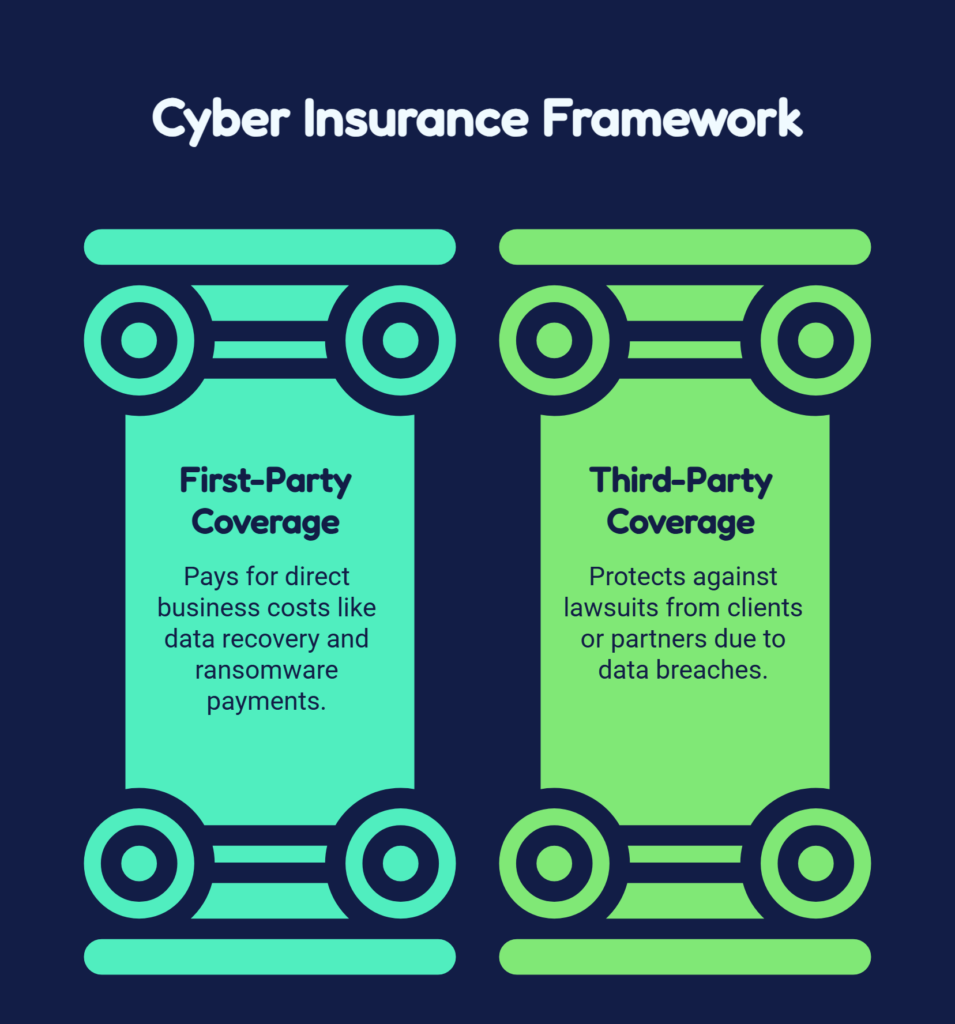
- First-Party Coverage: Pays for the direct costs your business incurs, such as data recovery, ransomware extortion payments, and customer notification efforts.
- Third-Party Coverage: Protects you if clients or partners sue your business for failing to prevent a breach.
Benefits and Limitations
The primary benefits of having cyber insurance include financial stability during a crisis and access to expert incident response teams. However, it is equally important to understand the limitations of cyber insurance policies. Much like the detailed policy evaluations required in our comprehensive guide to Open Care Life Insurance legalities, understanding your cyber policy exclusions is crucial. Acts of war, pre-existing vulnerabilities, or a failure to maintain standard security protocols can result in a denied claim.
3. Choosing the Right Cyber Insurance
Selecting a policy requires careful analysis of your digital footprint and operational vulnerabilities.
Assessing Needs and Comparing Providers
Knowing how to assess cyber insurance needs starts with a thorough risk audit. You must evaluate the volume of sensitive data you store and your reliance on cloud infrastructure. When comparing cyber insurance providers, look beyond the premium price. Evaluate their incident response network and their track record for paying out claims efficiently.
Cost Factors and Common Mistakes
The cost of cyber insurance varies wildly based on several factors. Underwriters will consider your industry, company size, and historical data security hygiene. One of the most common mistakes in choosing cyber insurance is underestimating the required coverage limits. Businesses often purchase minimal policies that do not cover the true cost of business interruption during an extended network outage.
4. Cyber Insurance for Businesses
No matter your company size, digital liability is an unavoidable reality.
Why Businesses Need Coverage
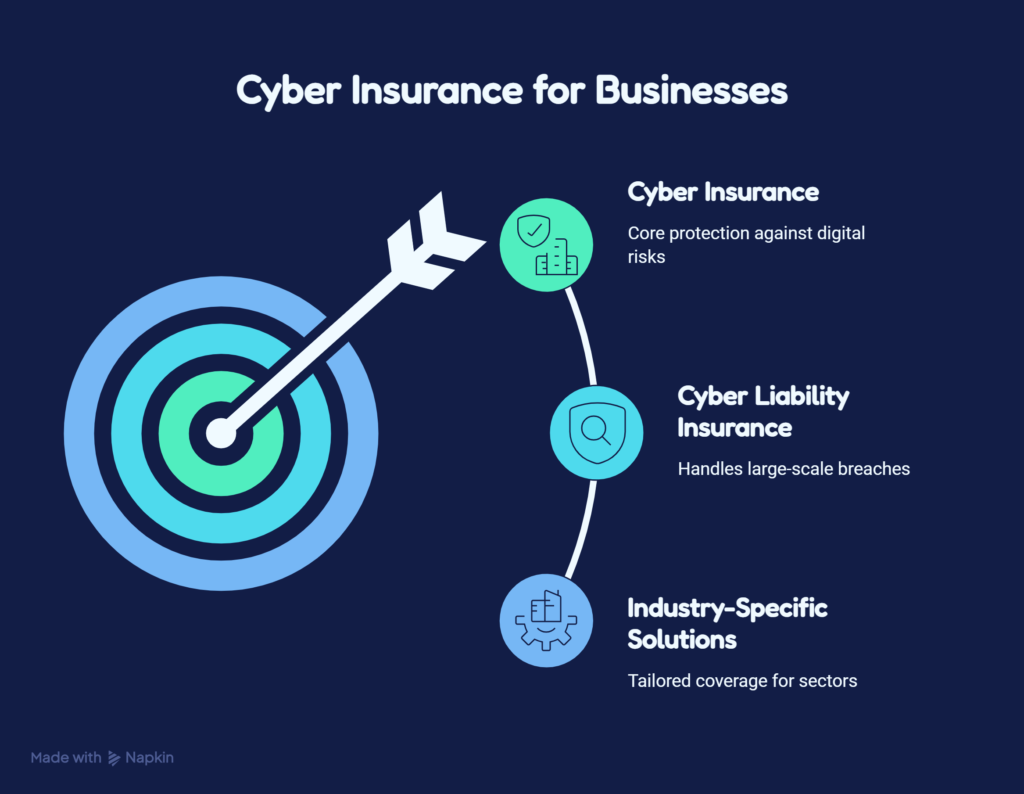
Why businesses need cyber insurance is simple: a single breach can bankrupt a company. Cyber insurance for small businesses provides a critical safety net, as smaller operations frequently lack the capital to recover independently. Conversely, cyber liability insurance for enterprises is designed to handle massive, multi-jurisdictional data breaches and complex legal defense requirements.
Industry-Specific Solutions
Different sectors face entirely different threat landscapes. For example, industrial cyber news frequently highlights attacks on manufacturing grids and supply chains, requiring highly specific property damage add-ons. Just as healthcare facilities must navigate complex PHCS PPO network billing codes and regulations, they also require industry-specific cyber insurance solutions that heavily prioritize HIPAA compliance and patient data protection.
5. Future of Cyber Insurance
Looking ahead, the industry must adapt to an increasingly hostile threat environment.
Emerging Threats and Technology
The future of cyber insurance is tied directly to the evolution of artificial intelligence and deepfake technology. Emerging threats and cyber insurance news evolution go hand in hand, with the role of technology in cyber insurance expanding to include AI-driven underwriting and continuous threat monitoring.
Global Perspectives and Risk Management
From cyber insurance news UK to regulatory updates in the United States, global perspectives on cyber insurance news show a unified push toward proactive risk management. The future challenges for cyber insurers involve accurately pricing policies for systemic risks, such as a global cloud service outage. To better understand systemic infrastructural vulnerabilities, professionals frequently turn to high-level resources provided by the Cybersecurity and Infrastructure Security Agency (CISA). Ultimately, cyber insurance’s role in risk management is shifting from a passive financial safety net to an active partnership in corporate security.
6. FAQs About Cyber Security and Insurance
What is the current state of the cyber insurance market?
The market is currently stabilizing after a period of rapid premium increases. Insurers are demanding better cybersecurity hygiene from applicants, leading to more sustainable pricing and clearer coverage definitions.
What is an example of a cyber insurance claim?
A classic example is a ransomware attack. A hacker locks a company’s internal servers and demands payment. The cyber insurance news policy covers the cost of hiring a digital forensics team, replacing compromised hardware, and potentially the ransom payment itself.
What are the top 3 cyber crimes?
Based on recent cyber security news today, the top three cyber crimes facing businesses are phishing scams, ransomware deployments, and business email compromise (BEC).
What is 90% of cyber-attacks?
Industry research consistently shows that roughly 90% of all successful cyber-attacks begin with human error, most commonly through an employee clicking a malicious link in a phishing email.
Which country is no. 1 in cyber security?
While rankings fluctuate based on specific metrics, the United States, the United Kingdom, and Israel consistently rank at the top globally regarding cybersecurity innovation, defense capabilities, and insurance market maturity.
Who is the best cyber insurance company?
There is no single “best” company, as the ideal provider depends entirely on your specific industry. It is highly recommended to work with a specialized commercial insurance broker to find a carrier that aligns with your exact operational risks.
Cyber coverage is one piece of a much bigger commercial insurance picture. Check out our Business Insurance Guide: Powerful Steps to Protect Your Assets for the full breakdown of coverage types, costs, and provider options for protecting your business.
7. Conclusion
Staying informed on cyber insurance news and information today is no longer optional for business leaders. As digital threats become more sophisticated, the insurance industry is responding with stricter underwriting, specialized coverage options, and a heavy emphasis on preventative risk management. By understanding the types of coverages available, avoiding common purchasing mistakes, and tracking breaking industry news, you can secure the exact policy needed to protect your business’s financial future.