Making Insurance Simple, One Insight at a Time.

Can I Insure a Car Not in My Name? Avoid These 2026 Mistakes
Wondering can I insure a car not in my name? Avoid costly legal risks by learning the rules for non-owner policies and state laws in our comprehensive 2026 guide.
Quick Summary
If you’re wondering can I insure a car not in my name, the short answer is that while it’s technically possible with some providers, it is generally difficult. Traditional carriers require an insurable interest, meaning you would suffer a direct financial loss if the vehicle were damaged, so they typically decline standard policies if you aren’t the registered owner. However, you can still safely secure coverage by being added as a listed driver on the owner’s existing policy, purchasing a specialized non-owner car insurance policy, or proving that you reside in the same household as the vehicle owner.
Table of Content
Table of Contents
- Understanding Insurable Interest: Can I Insure a Car Not in My Name?
- Practical Steps: How to Insure a Car That Is Not in My Name
- Alternative Policy Options: Can I Insure a Car Not in My Name?
- DMV Registration Rules: Can I Insure a Car Not in My Name?
- State Guidelines: Can I Insure a Car Not in My Name in NY, TX, or CA?
- Comparing Big Carriers: Can I Insure a Car Not in My Name with Progressive or Geico?
- Frequently Asked Questions
- Conclusion
1. Understanding Insurable Interest: Can I Insure a Car Not in My Name?
When exploring the question, can you insure something that is not in your name, you must first understand the legal foundation of insurance: insurable interest. Insurance companies exist to protect individuals from financial loss. If you ask can you insure something that is not yours, standard companies will hesitate because you do not suffer a direct financial loss if that asset is damaged.
Without vehicle ownership, a driver lacks a clear financial stake in the car itself. This creates a significant hurdle if you want to know how to insure a car that is not in your name. If an accident occurs, the payout for property damage typically goes to the titleholder of the vehicle, not the person paying the monthly premium. For this reason, underwriters look closely at the relationship between the vehicle owner and the primary policyholder to prevent fraudulent claims.
2. Practical Steps: How to Insure a Car That Is Not in My Name
If you regularly drive a vehicle owned by someone else, there are a few practical methods to ensure the vehicle is legally covered without running into underwriting issues:
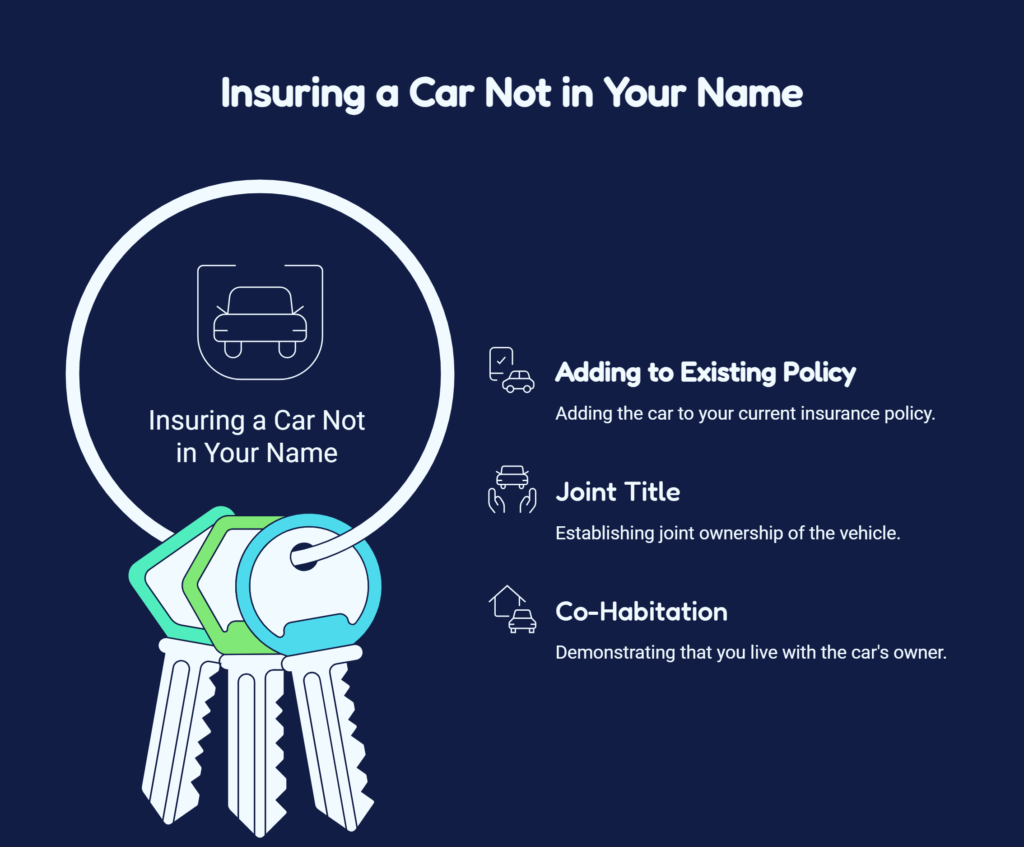
Adding a Car to an Existing Insurance Policy:
The easiest approach is for the vehicle owner to add you to their current auto policy as a listed driver. Alternatively, if you live in the same household, you may be able to add their car to your policy, provided the insurer permits multi-car policies with split ownership among household members.
Establishing a Joint Title:
If you want a seamless insurance process, you can work with the owner to update the vehicle’s title at the local DMV to include both of your names. Once your name is on the title, you have a verified insurable interest and can buy an independent policy without issue.
Demonstrating Co-Habitation:
Many insurance companies will allow you to insure a car that isn’t in your name if you and the car owner live at the same physical address. This is common for couples, roommates, or family members sharing a single residence.
If you are navigating unique coverage situations, looking at a localized alternative like the Amtex Auto Insurance Guide: Coverage, Cost & Claims can provide helpful context on how non-standard regional carriers handle complex driver scenarios.
3. Alternative Policy Options: Can I Insure a Car Not in My Name?
When a traditional policy is not a viable option, consumers turn to alternative coverage products tailored for non-owners:
Non-Owner Car Insurance Explained:
a non owner car insurance policy is designed specifically for individuals who do not own a vehicle but frequently drive borrowed or rented cars. This type of policy provides secondary liability coverage, meaning it protects you financially if you cause an accident while driving someone else’s car and their primary insurance limits are exhausted. It does not cover physical damage to the vehicle you are driving, but it keeps your liability exposure protected.
Temporary Car Insurance for Borrowed Vehicles:
If your need is short term, you might look into temporary car insurance for borrowed vehicles. While true short term policies lasting only a few days are rare among major US insurers, standard policies can often be purchased and canceled early, or the car owner’s policy may rely on permissive use rules for occasional drivers.
Insuring a Leased or Financed Vehicle:
If you are driving a vehicle that is leased or financed, the financial institution holds a lien on the title. In these cases, insuring a leased or financed vehicle requires a specialized policy that includes both comprehensive and collision coverage, along with gap insurance, usually matching strict coverage limits dictated by the leasing company.
4. DMV Registration Rules: Can I Insure a Car Not in My Name?
A common point of confusion involves the relationship between insurance and local department of motor vehicles (DMV) registries. People often ask: can I register a vehicle if the insurance is not in my name? In almost every state, the name on the vehicle registration must perfectly match the name on the auto insurance card. If they do not match, the DMV will likely reject your registration application.
Furthermore, when looking at does a vehicle have to be registered in the owners name, the answer is yes. The state requires the registered owner to match the legal titleholder. If you are trying to figure out can a car be registered to someone other than the owner, it generally cannot happen unless a joint registration or a legal transfer of ownership takes place.
Navigating these interconnected bureaucratic rules requires understanding how different layers of regulation work together. While local state DMVs manage registration, broader corporate standards dictate how products are structured. For those interested in the structural side of insurance governance, reviewing the Insurance Mediation Directive: Guide to Requirements & IDD outlines how insurance distribution frameworks maintain compliance across different jurisdictions.
5. State Guidelines: Can I Insure a Car Not in My Name in NY, TX, or CA?
Auto insurance rules are heavily regulated at the state level, meaning your options change depending on where you live.
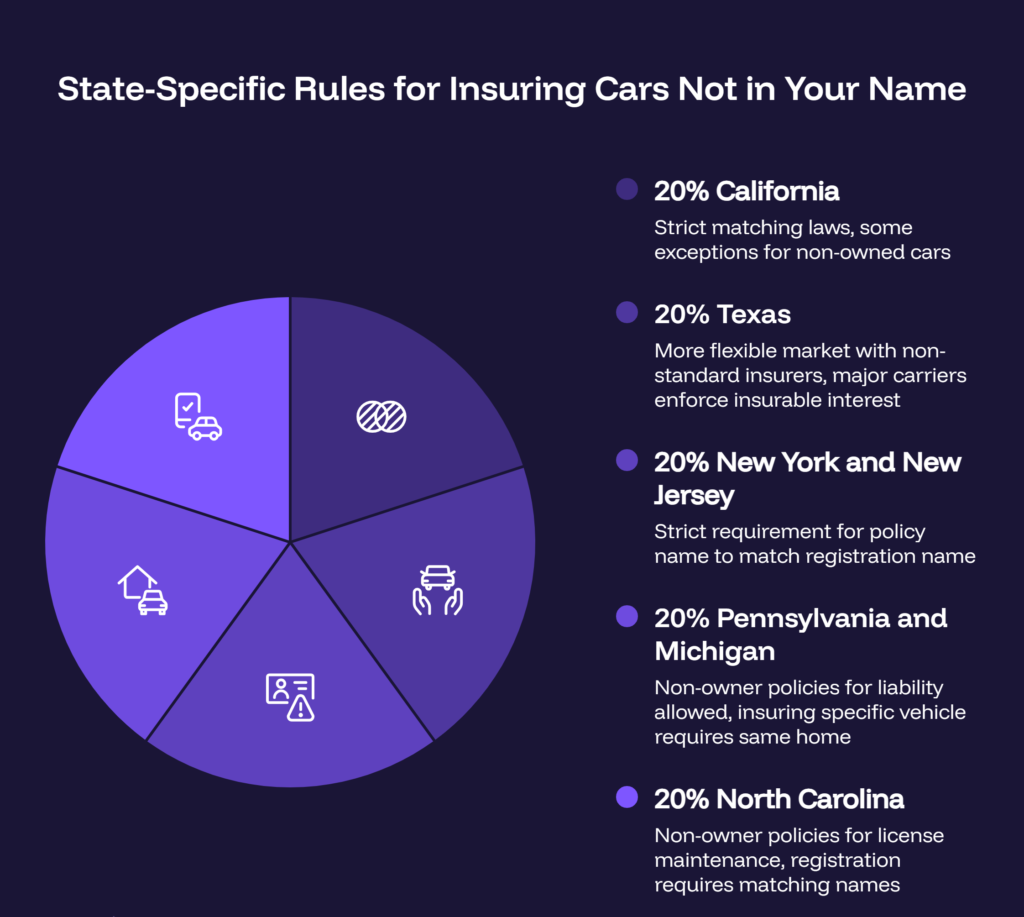
California:
If you search for can i insure a car not in my name california, you will find that California has strict matching laws for registration and insurance. However, some companies allow you to write a policy for a non-owned car if you are listed as the primary driver and the owner is excluded or listed as an additional interest.
Texas:
Looking into can i insure a car not in my name in texas reveals a slightly more flexible market with non-standard insurers, though major carriers still strictly enforce the insurable interest rule.
New York and New Jersey:
For those asking can i insure a car not in my name in ny or can i insure a car not in my name in nj, these states strictly require the insurance policy name to match the vehicle registration name to prevent registration suspension.
Pennsylvania and Michigan:
Exploring can i insure a car not in my name in pa or can i insure a car not in my name in michigan shows that while you can easily purchase a non-owner policy for liability, insuring a specific vehicle registered to someone else requires living in the same home.
North Carolina:
If you query can i insure a car not in my name in nc, North Carolina allows non-owner policies specifically to help individuals maintain their driver’s license, but registering a car requires an insurance policy matching the owner’s name.
6. Comparing Big Carriers: Can I Insure a Car Not in My Name with Progressive or Geico?
Every insurance brand has specific underwriting guidelines regarding vehicle ownership. If you check community discussions online, such as a can i insure a car not in my name reddit thread, you will see highly varied experiences based on the carrier chosen.
Progressive Guidelines
When asking can i insure a car not in my name with progressive, the company generally allows you to insure a vehicle you do not own if you live with the vehicle owner and list them on the policy. If you search for can someone else insure my car if the title is under my name progressive, the owner can keep the title in their name while your joint Progressive policy keeps the vehicle legal on the road.
Geico Guidelines
If you look into can i insure a car not in my name geico, Geico generally requires the policyholder to be the registered owner of the vehicle. However, they do offer robust non-owner liability policies if you do not have regular access to a specific vehicle but need coverage for occasional use.
7. Frequently Asked Questions
Can someone else insure my car if the title is under my name?
Yes, someone else can insure your car if the title is under your name, but most insurance companies will require that person to live in your household or be added to a joint policy where your insurable interest as the owner is formally acknowledged.
Can you insure a car that is not registered in your name?
Generally, you cannot insure a car that is not registered in your name on a standalone policy. Most insurance companies and state DMVs require the names on the vehicle registration and the auto insurance policy to match exactly.
Can you be on someone else’s car insurance if you don’t live with them?
Typically, you cannot be added to someone else’s car insurance if you do not live with them. Auto insurers calculate risk based on where the vehicle is parked overnight. However, exceptions exist for students away at college or family members under specific co-ownership agreements.
Can you be on someone else’s car insurance in another state?
Being on a policy in another state is highly restricted. Insurance policies must be rated for the specific state where the car is garaged. If you drive the vehicle in a different state long term, it must have a policy compliant with that specific state’s laws.
Can you insure a car that is not registered yet?
Yes, can you insure a car that is not registered yet is a common scenario when purchasing a vehicle. Insurers will allow you to buy a policy using the Vehicle Identification Number (VIN) so that you have proof of insurance, which is required before you can legally register the vehicle at the DMV.
Can I insure my son if he doesn’t live with me?
If you are asking can i insure my son if he doesn’t live with me, the answer depends on car ownership. If the car title is in your name, you can maintain the insurance policy, but you must inform the insurer where the car is garaged. If the car title is in your son’s name and he lives away from home, he will generally need his own independent policy.
Can I put my girlfriend’s car on my insurance?
You can put your girlfriend’s car on your insurance policy only if you live together and share the same household address. If you live separately, she must maintain her own policy, or you must be added as a driver on her insurance.
Can I insure a car without a license?
Yes, you can technically insure a car without a valid driver’s license with select carriers, but you cannot be listed as an active driver. You would need to list a licensed individual as the primary operator of the vehicle on the policy.
What if the car is insured but not the driver?
If an unlisted driver operates the insured vehicle with the owner’s permission, the insurance coverage usually extends to them under permissive use guidelines. However, if the driver resides in the household and is not explicitly listed on the policy, the claim could be denied under common policy exclusions.
Can I drive a car if I am not the owner?
Yes, you can drive a car you do not own as long as you have the owner’s explicit permission and the vehicle has active, valid primary insurance coverage that includes permissive occupants.
Ownership rules are just one piece of how auto insurance policies work. For the complete picture, including coverage types and choosing the right provider, see Auto Insurance Guide: How to Lower Your Premiums.
8. Conclusion
While the basic answer to can i insure a car not in my name is complicated by the requirement of insurable interest, clear solutions exist for almost every driver. Whether you decide to be added to the vehicle owner’s policy, purchase a dedicated non-owner insurance policy, or establish a joint title at the DMV, protecting yourself from liability is essential. Because every insurance provider and state regulatory body enforces different matching rules for titles, registrations, and insurance cards, it is always wise to contact a licensed agent or consult the National Association of Insurance Commissioners to confirm the exact guidelines for your region before driving a vehicle you do not own.